Original film · Probability
Should you switch doors? The Monty Hall problem, explained
Your first pick has a one-in-three chance, and the host's goat can't change that. Play a thousand games, add a hundred doors, and see why switching wins two times out of three.

Transcript
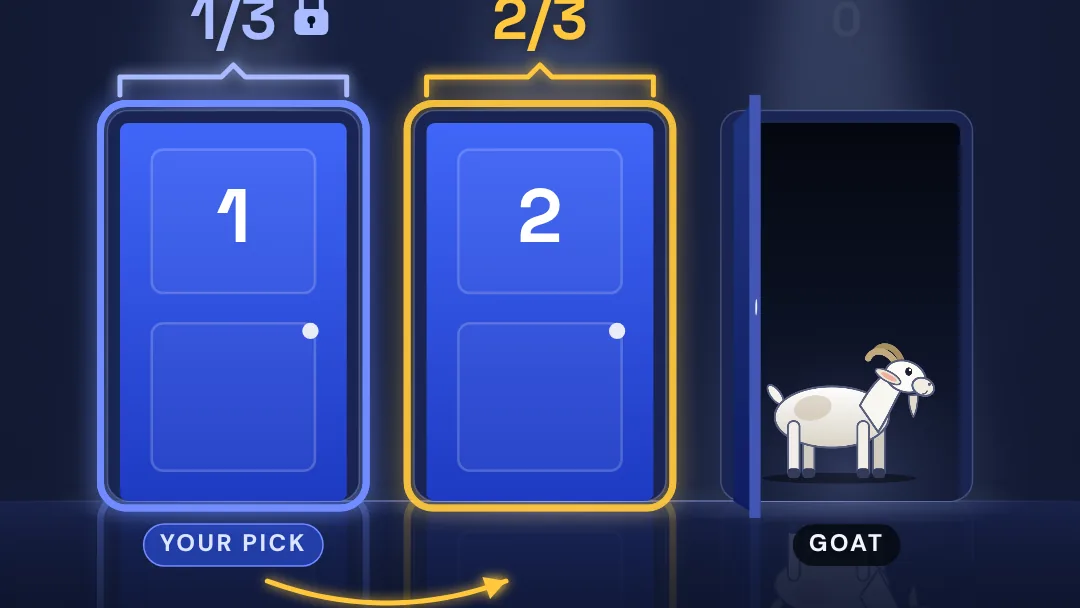
Should you switch doors? Here's the game. Three doors: one car, two goats. You pick door one. The host, who knows where the car is, opens another door and shows you a goat. Then he asks: do you want to switch? It feels like fifty-fifty. Two doors left, one car. But it isn't. When you picked, you had a one-in-three chance. Nothing the host does can change that, because he can always find a goat to show you. So the other two-thirds didn't vanish. They all landed on the one door he left closed. Switching wins two times out of three. Now play a thousand games. Sticking settles near thirty-three percent. Switching settles near sixty-seven. Still not convinced? Add doors. With a hundred doors, you pick one, and the host opens ninety-eight goats, skipping just one door. Would you stick with your first random guess? Switching wins ninety-nine times in a hundred. One catch: it only works because the host knows where the car is, never reveals it, and always offers the switch. Try it yourself at Explainer Tools dot com.