Big ideas.
Small experiments.
Stories, visual lessons, and practical guides for learning something together.
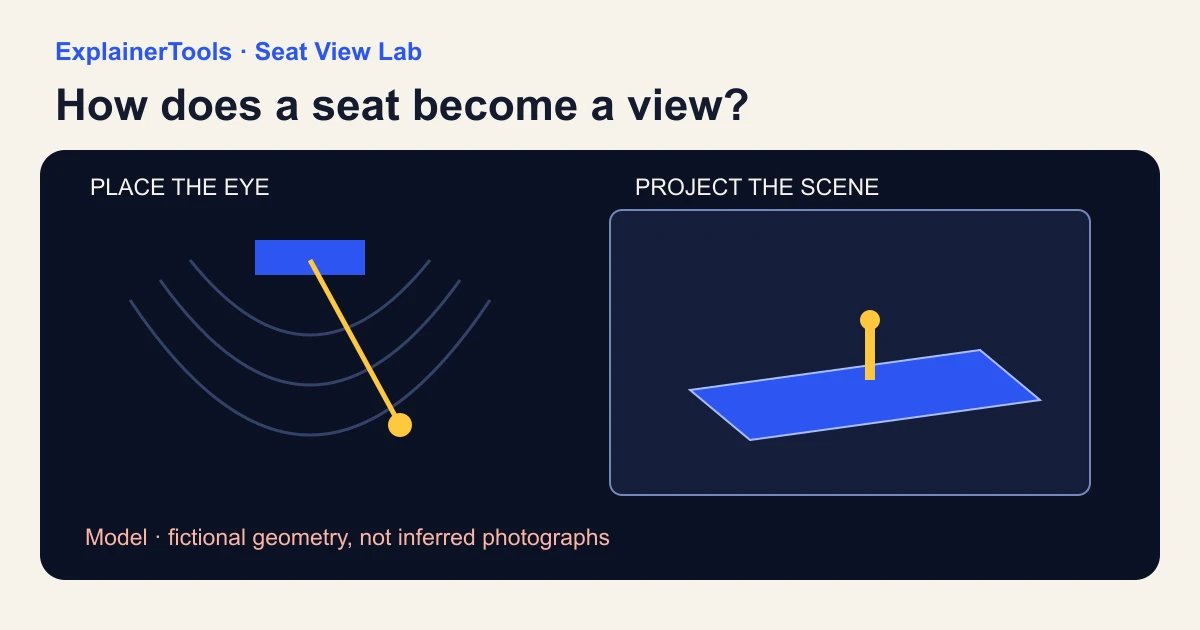
How does a seat become a view?
A seat position, a target and perspective are enough to draw a new view of a fictional stage. Explore the geometry, not a claim of photo reconstruction.
3 min read
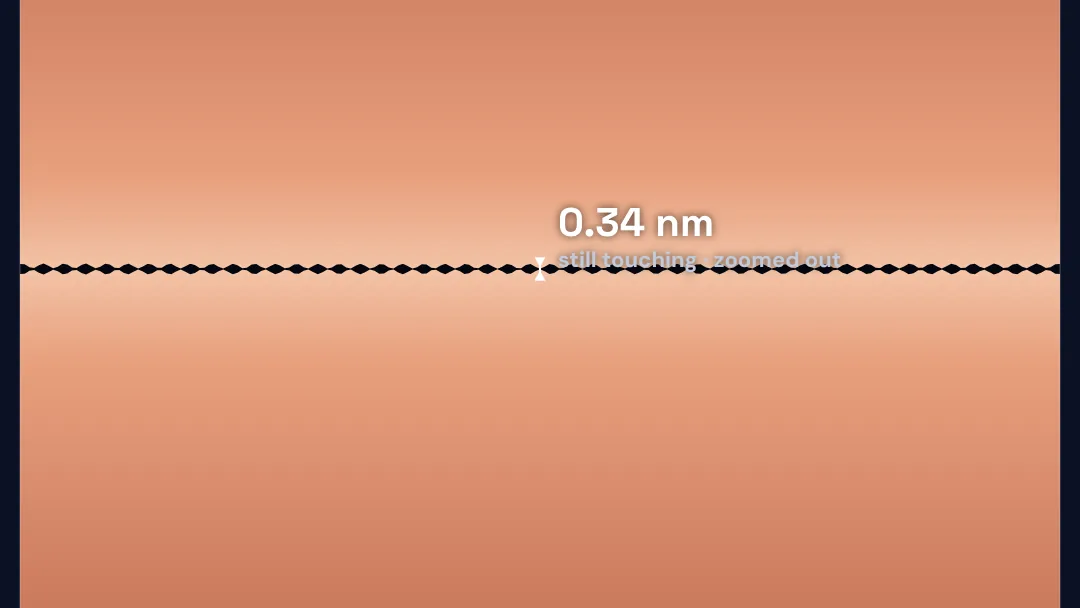
Do your fingers ever really touch?
A viral film halves the gap between two fingertips 26 times. Halving can’t stop anything, but electron clouds can, at about a third of a nanometre.
4 min read
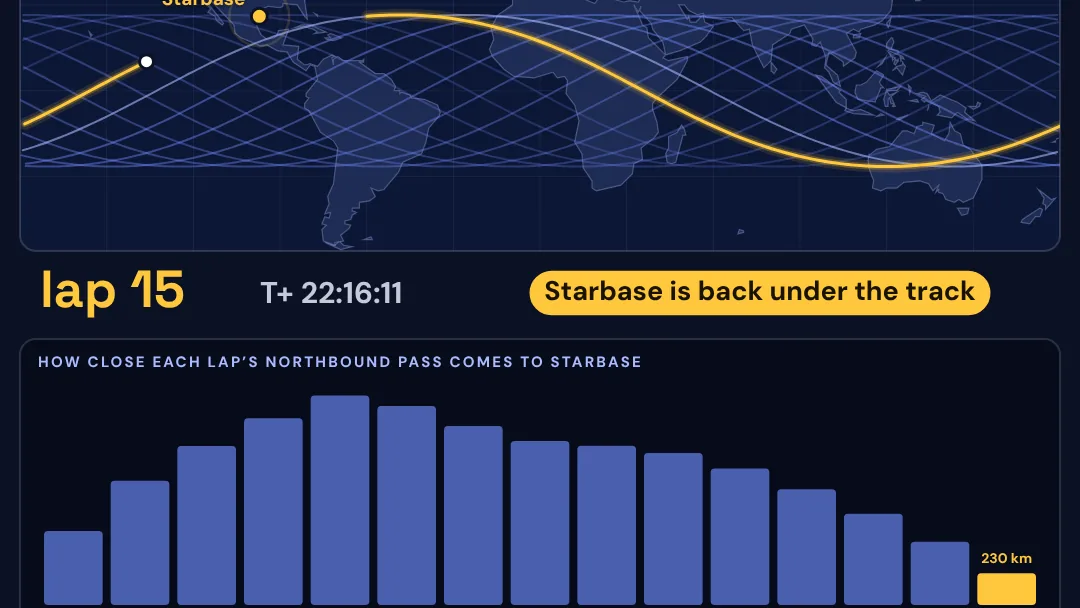
How do you catch both halves of a rocket?
Starship Flight 15 is set to try two catches: the booster 6½ minutes after liftoff, the ship 22½ hours later, once Earth turns Starbase back under its path.
4 min read
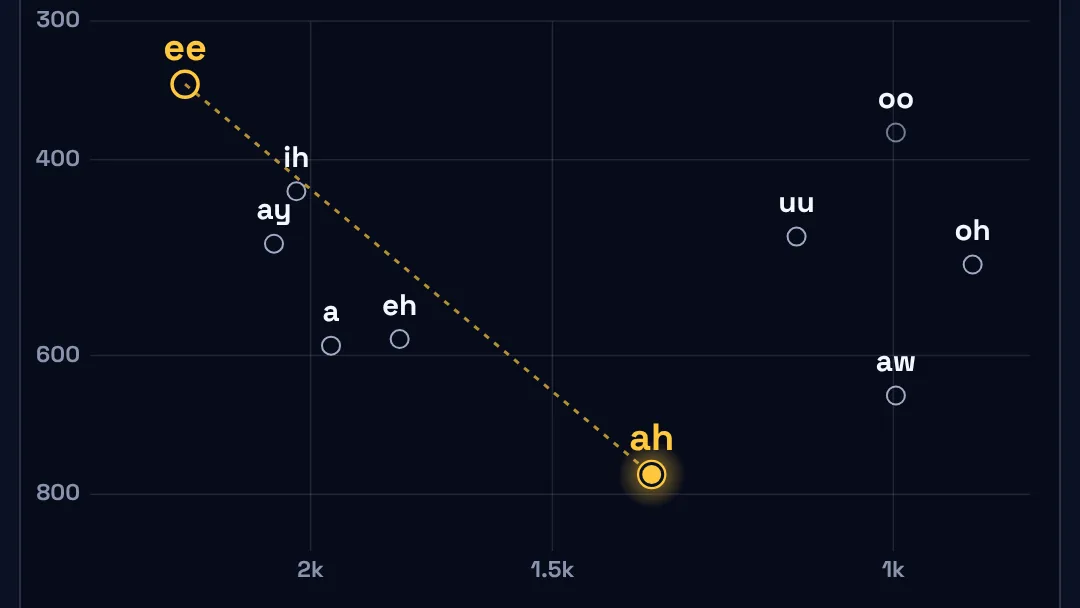
How does one buzz become every vowel?
Your vocal folds make the same buzz for every vowel. The throat and mouth are a tube, and its resonances, the formants, decide whether you hear “ee” or “ah”.
4 min read
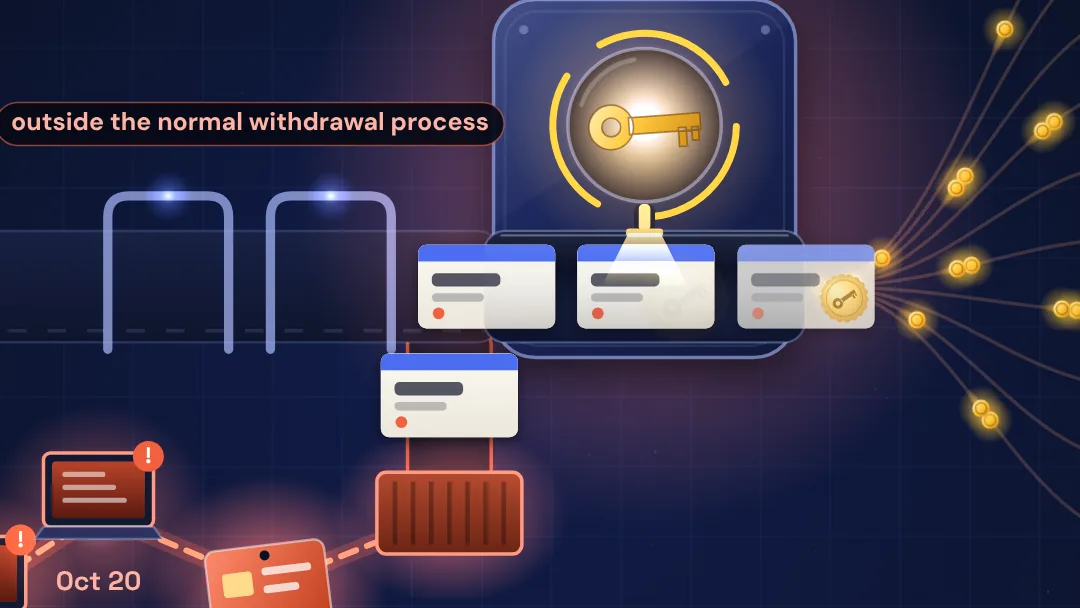
How did hackers drain Binance without the key?
Binance says attackers moved about $6.34 billion out of its hot wallets without a leaked key. A signature proves a key said yes, not that anyone meant it.
4 min read
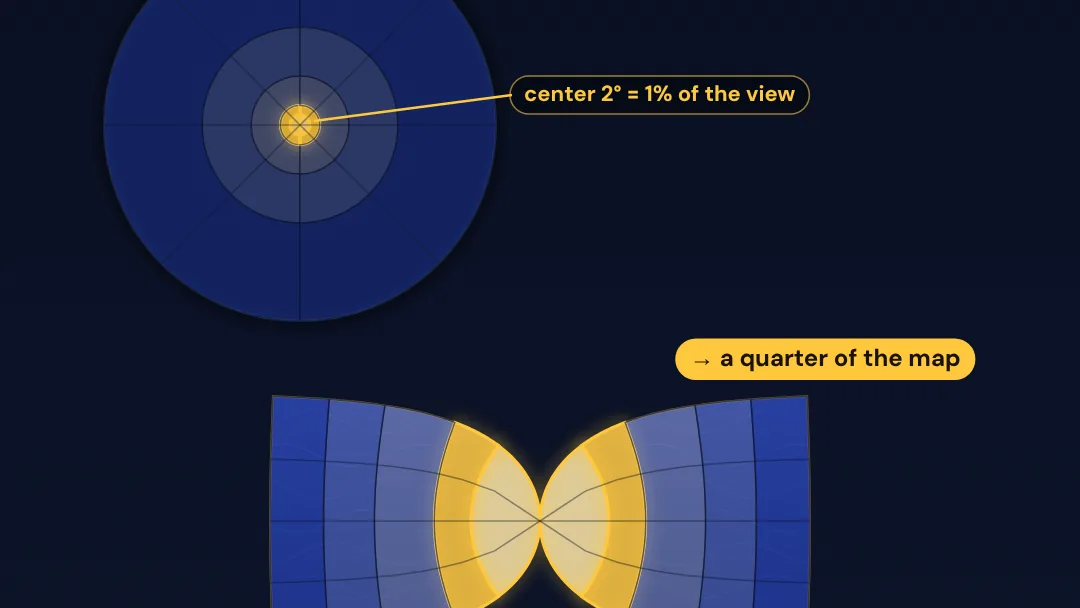
How could a brain implant let a blind person see?
Elon Musk says Neuralink’s Blindsight is ready, waiting on regulators. Zap one spot of the visual cortex and a person sees a dot of light; enough dots draw a picture.
4 min read
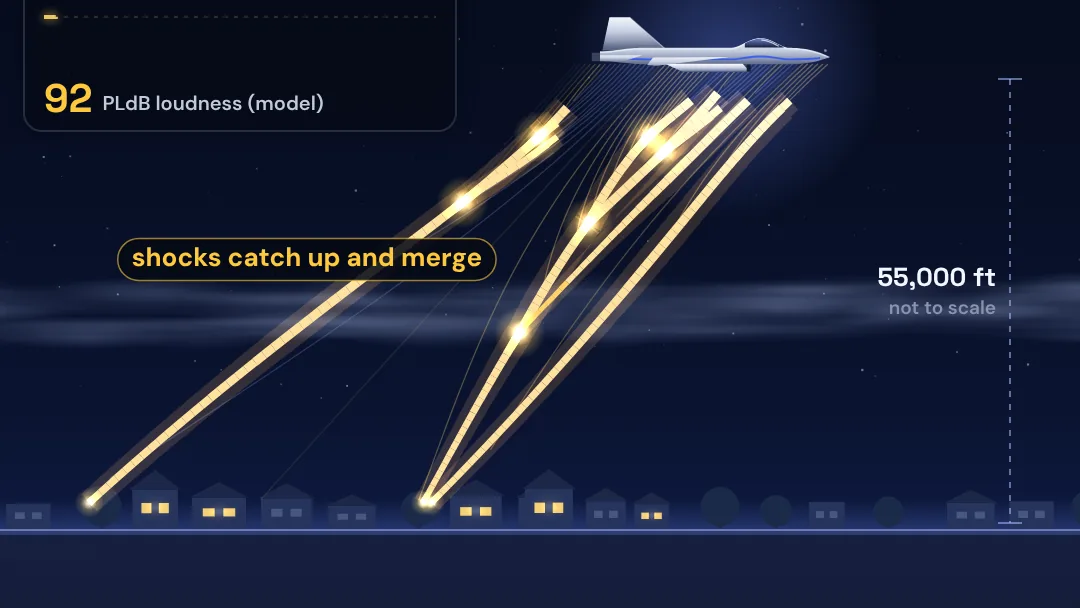
How do you fly faster than sound without a sonic boom?
Every supersonic jet makes shock waves. On an ordinary jet they merge on the way down into a double boom; NASA’s X-59 is shaped so they stay apart and arrive as a soft thump.
4 min read
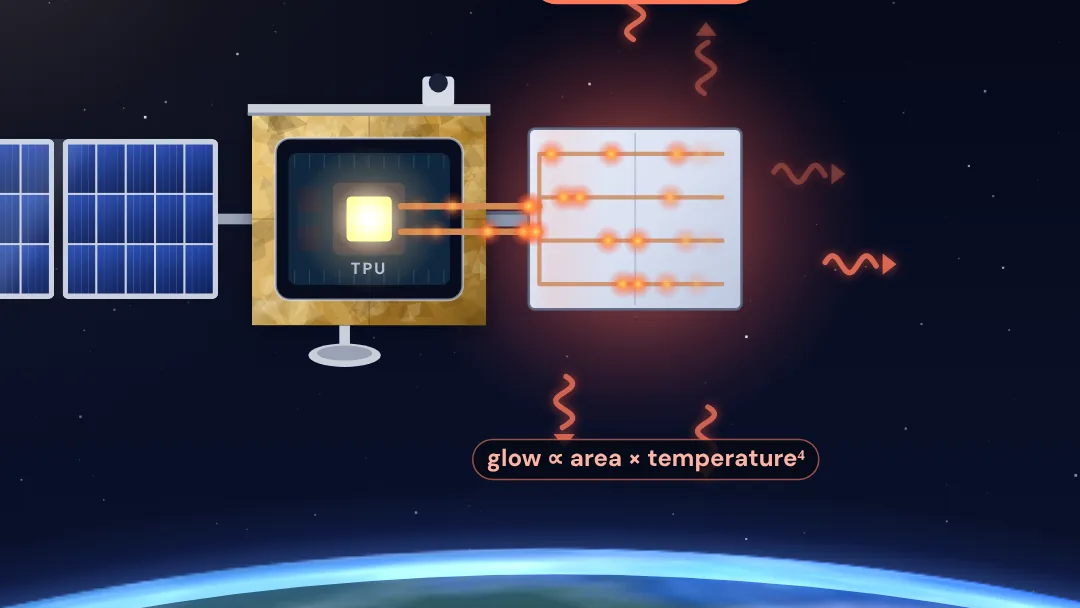
Why can Google's AI chip in orbit only run in bursts?
Google’s AI chip in orbit wrote a haiku, but reportedly runs only about 15 minutes at a time. In a vacuum heat leaves only as infrared glow, and a small radiator can’t keep up.
4 min read
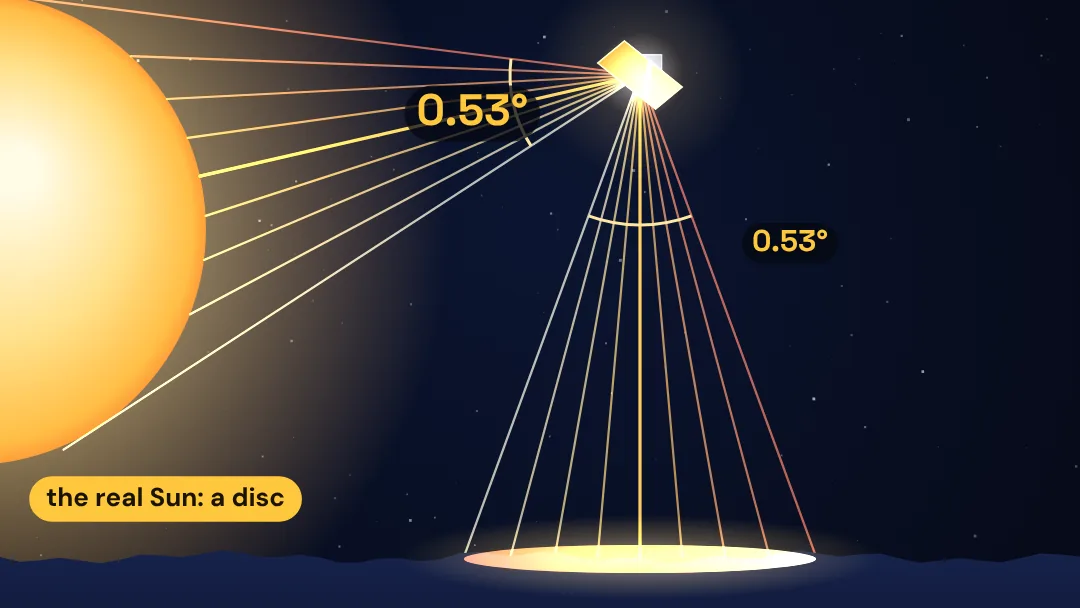
Can a mirror in orbit light up the night?
A startup wants to beam sunlight down after dark. The Sun’s half-degree disc spreads each mirror’s light into a spot nearly 6 km wide, so a bigger mirror only makes it brighter.
4 min read
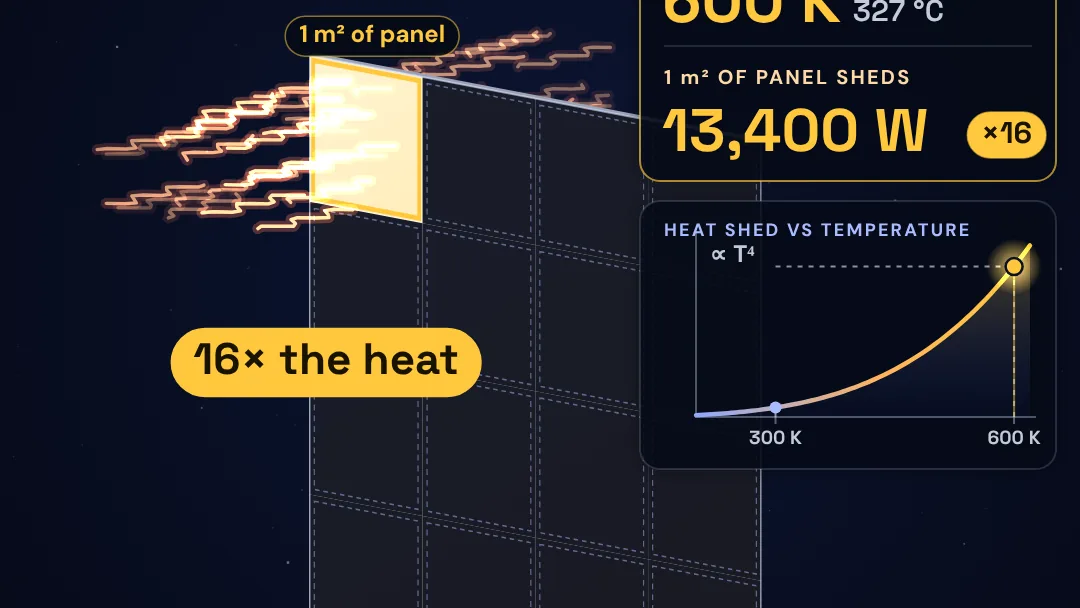
If space is so cold, why is cooling a spacecraft so hard?
Deep space is about −270 °C, yet the space station needs radiators as long as tennis courts. With no air to carry heat away, it can only leave as infrared light.
4 min read
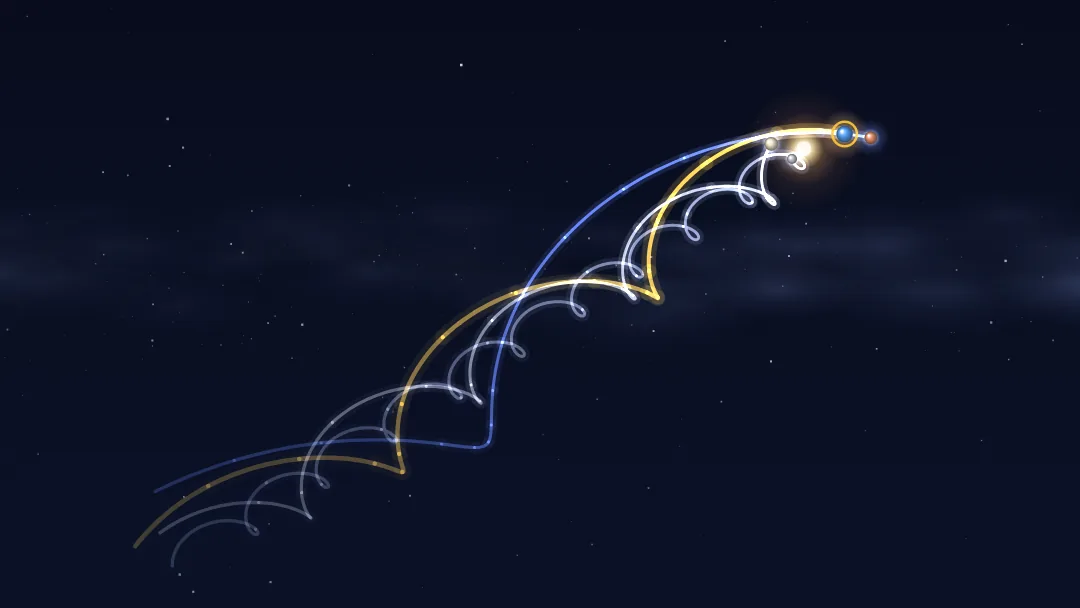
Does Earth really corkscrew through space?
Seen from the galaxy, Earth’s orbit is a coil, but stretched almost straight: 7.3 billion km long a year and 300 million km wide, tilted about 60°, not a vortex.
4 min read
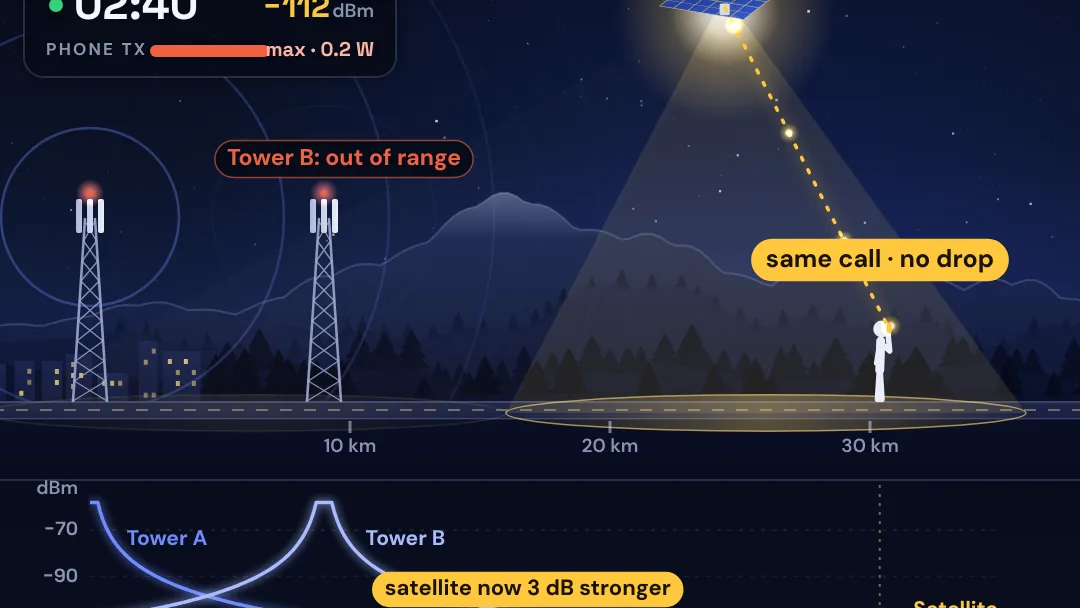
How can your phone hop from a cell tower to a satellite mid-call?
AT&T and AST SpaceMobile say they handed a phone from a tower to a satellite in October. The satellite pretends to be just another tower; the hard part is that it’s 100 times farther away.
3 min read
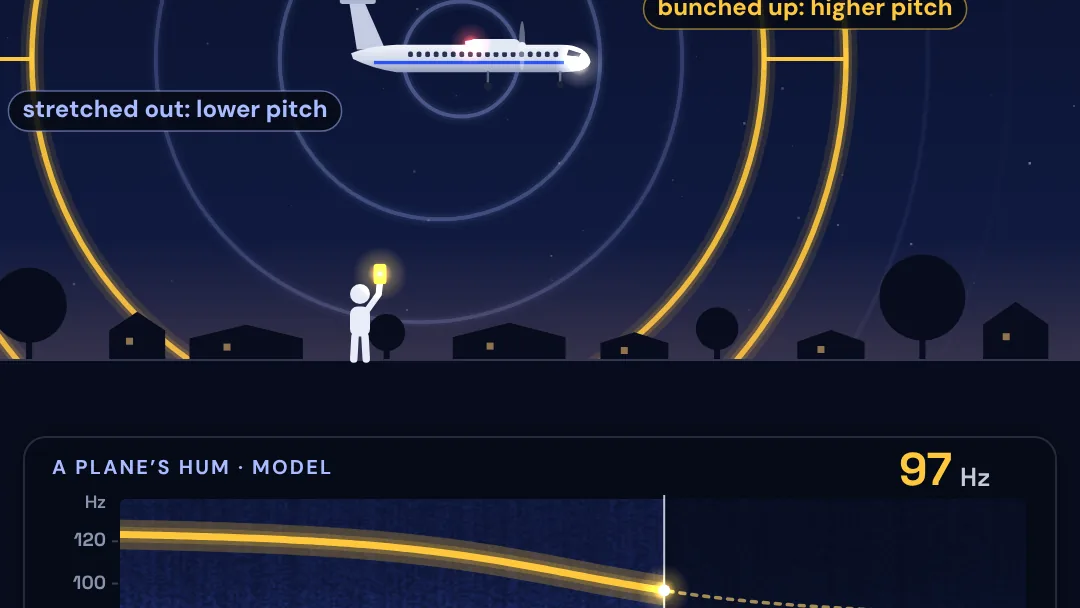
Can a plane's sound give away where a video was filmed?
A passing plane’s hum drops in pitch, and the drop is quick right under it and slow far to the side. With public flight tracks, Colsto says that pinned a video to about 100 m.
4 min read
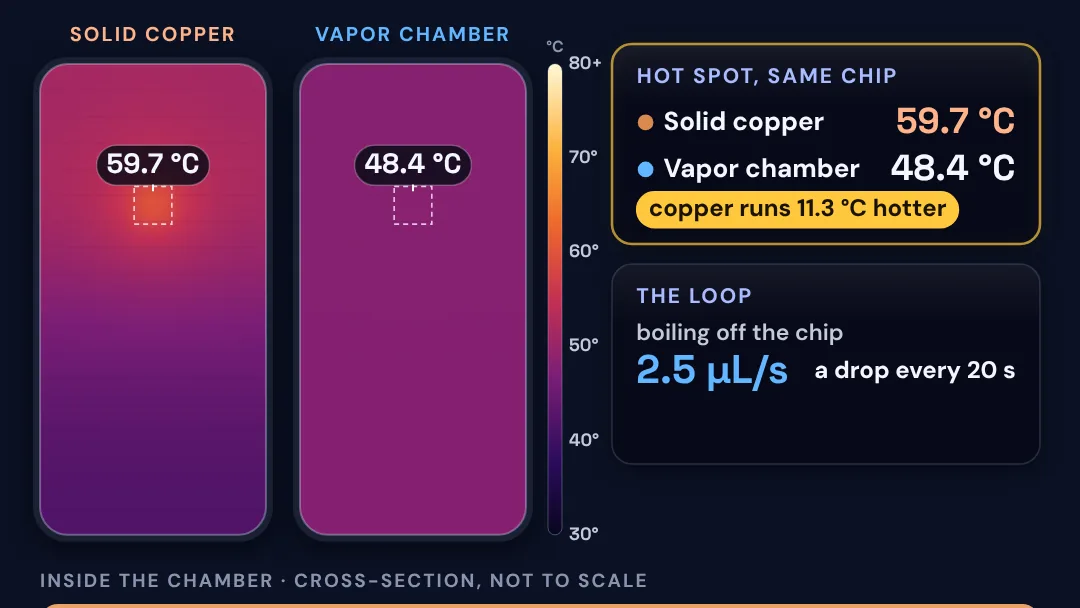
How does a vapor chamber cool a phone?
A vapor chamber is a sealed copper pocket with a little liquid and almost no air, so the liquid boils at phone temperatures and carries the chip’s heat away. The catch is the wick.
4 min read
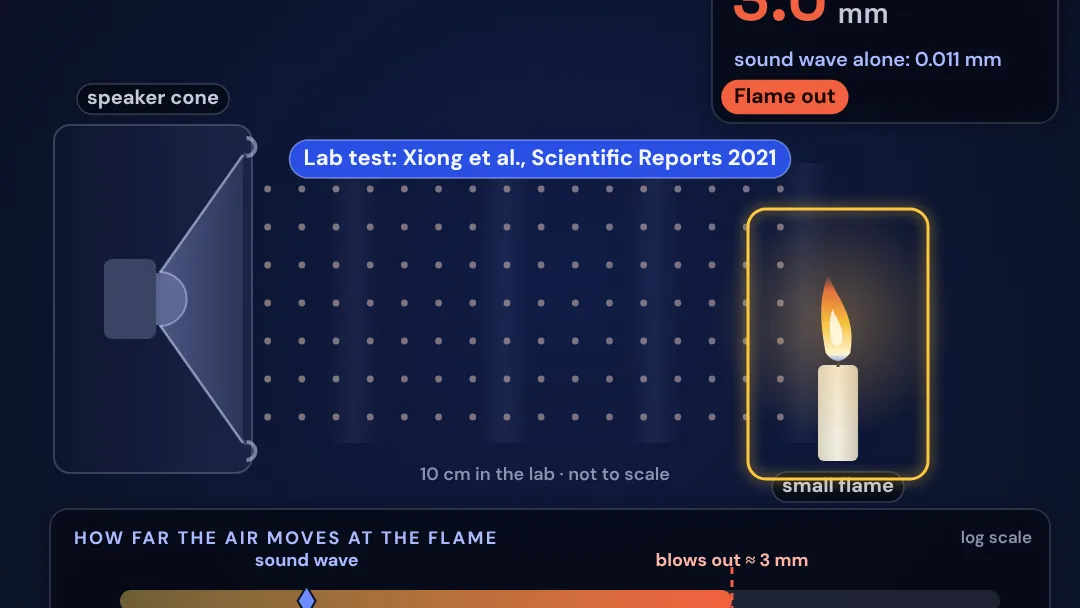
How can sound put out a fire?
A student in Mexico put out small fires with a 30 Hz hum and won gold in Indonesia. It isn’t really the sound: the speaker’s cone shoves air, and a lab flame blows out when it sways about 3 mm.
4 min read
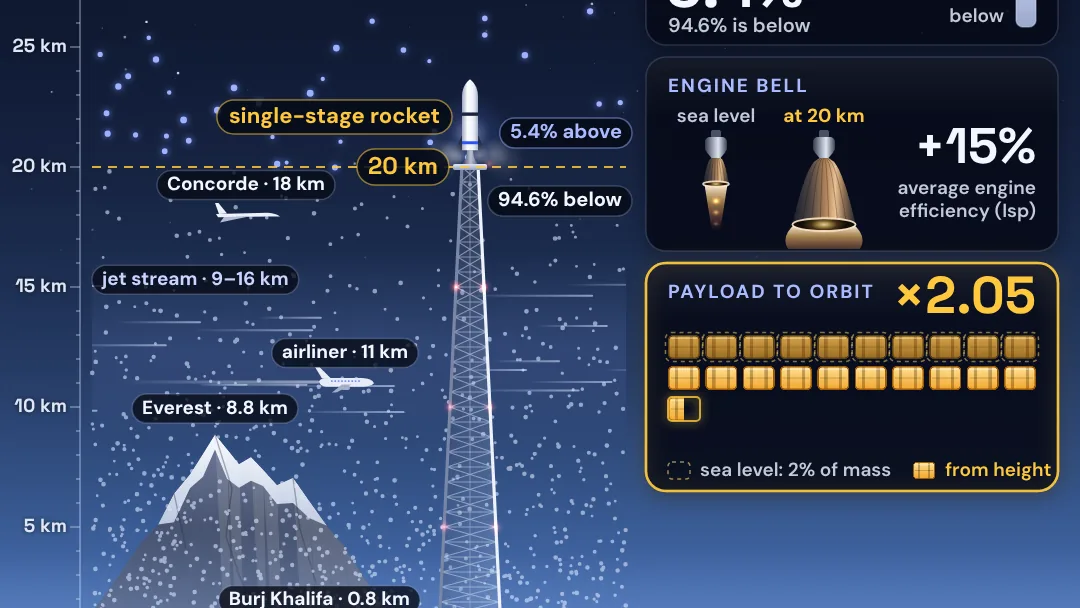
Why launch rockets from a 20 km tower?
From 20 km up, 94.6% of the air is below the rocket. A NASA study found a single-stage rocket launched there carries about twice the payload, mostly because the engine can use a bigger bell. The catch: orbit is about speed, not height.
4 min read
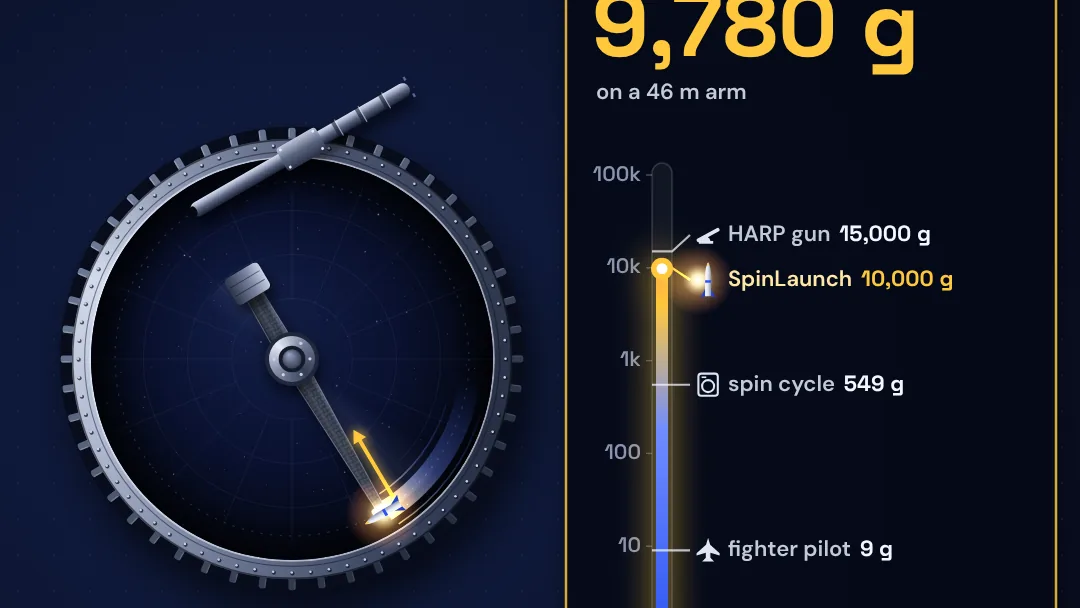
How does SpinLaunch throw rockets into space?
SpinLaunch spins a projectile in a vacuum chamber and lets go at up to 4,700 mph. The force grows with the square of the speed, so the payload feels about 10,000 g, more than a thousand times a fighter pilot’s limit.
4 min read
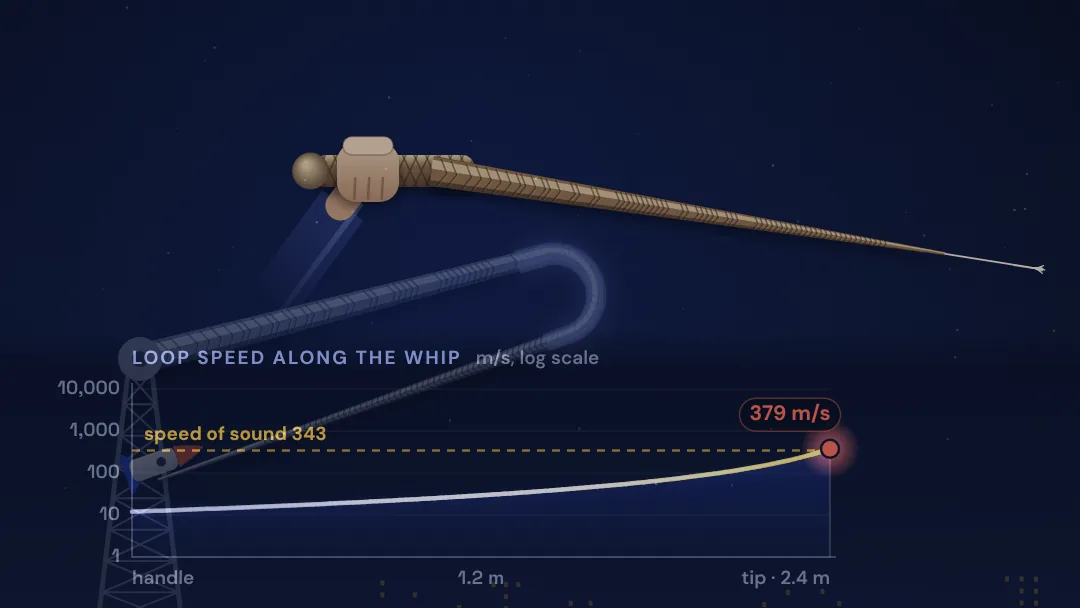
Why does a whip crack?
A whip crack is a tiny sonic boom. A loop rolls down a tapering whip, the same energy is carried by less and less mass, and the tip ends up faster than sound. Neal Stephenson has written five essays about giant steel ones.
4 min read
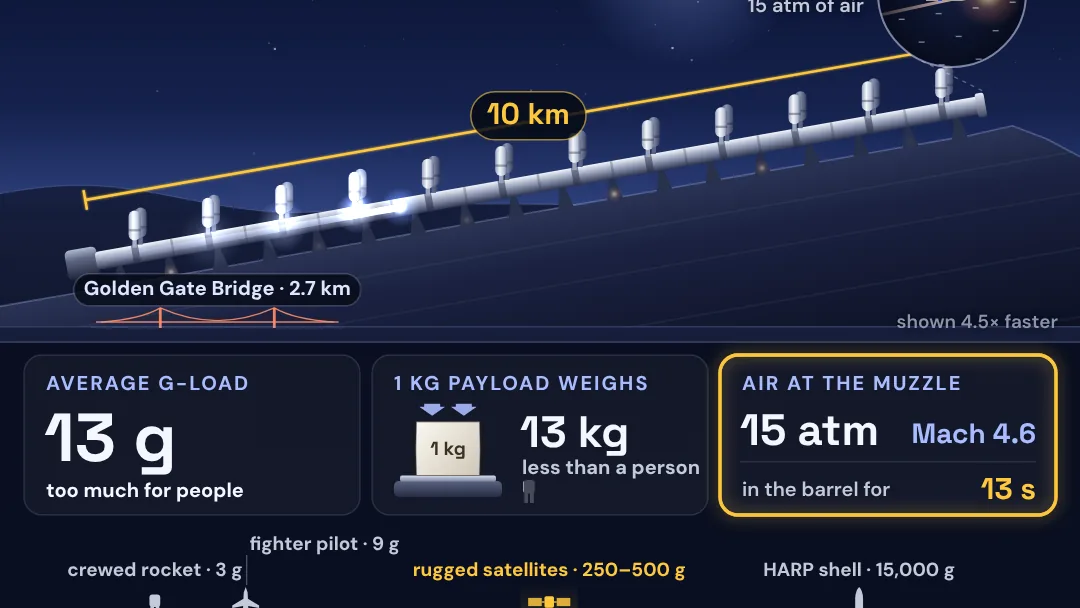
Why build a 10 km space gun?
Longshot wants to fire payloads toward orbit from a gun 10 km long. A short barrel has to shove with thousands of g; spread the same push over 10 km and near-orbital speed costs a few hundred g. Rugged satellites can take that. People can’t.
4 min read
Towers, slings, whips and space guns: Neal Stephenson’s launch ideas
Before Blue Origin built rockets, Neal Stephenson helped it study the alternatives. Four of the ideas he talked about on Core Memory, each with an interactive tool and a short film, and why radical launch ideas were uninsurable.
5 min read
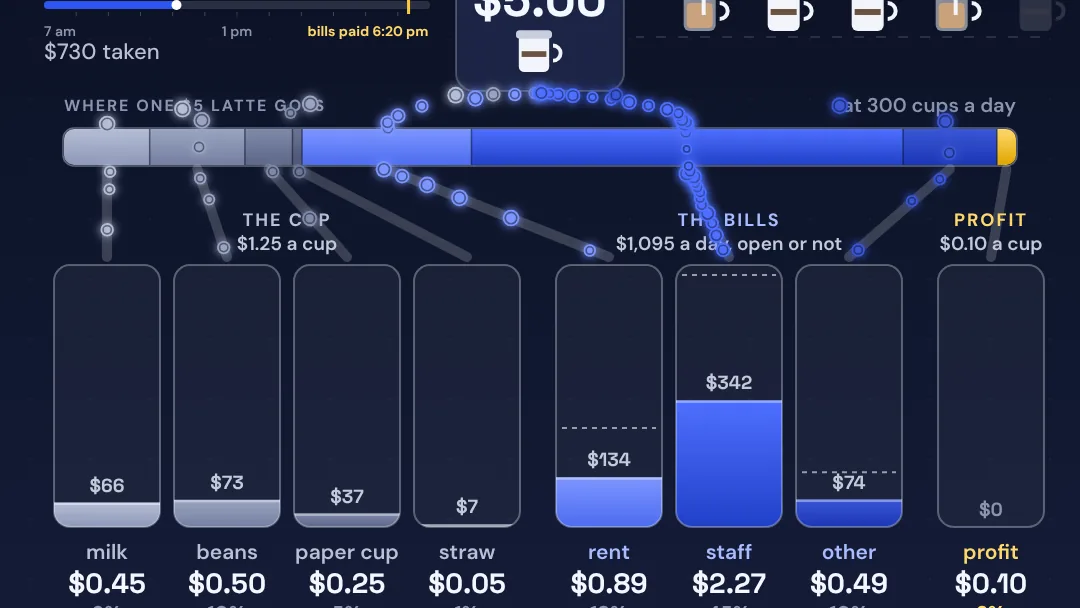
Why does a $5 latte earn ten cents?
The cup itself costs $1.25. The rest goes to rent, staff and the lights, owed whether anyone walks in or not. At 300 cups a day the first 292 only pay the bills, so on a normal café day nothing is earned until 6:20 pm; that is why a busy café can earn a dime a latte, and why 50 more customers change everything.
3 min read
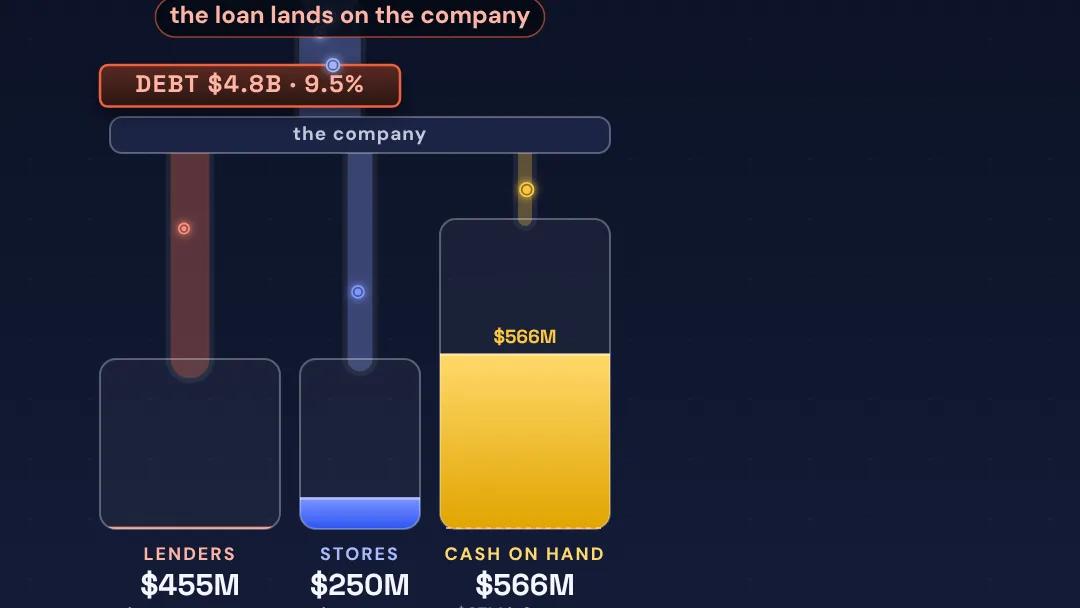
How did $5 billion of debt sink Toys “R” Us?
In its last full year Toys “R” Us earned $792 million before interest. The 2005 buyout had put about $5 billion of debt on the company, and interest took $457 million of that every year. Drop sales 10% and the arithmetic turns deadly.
4 min read
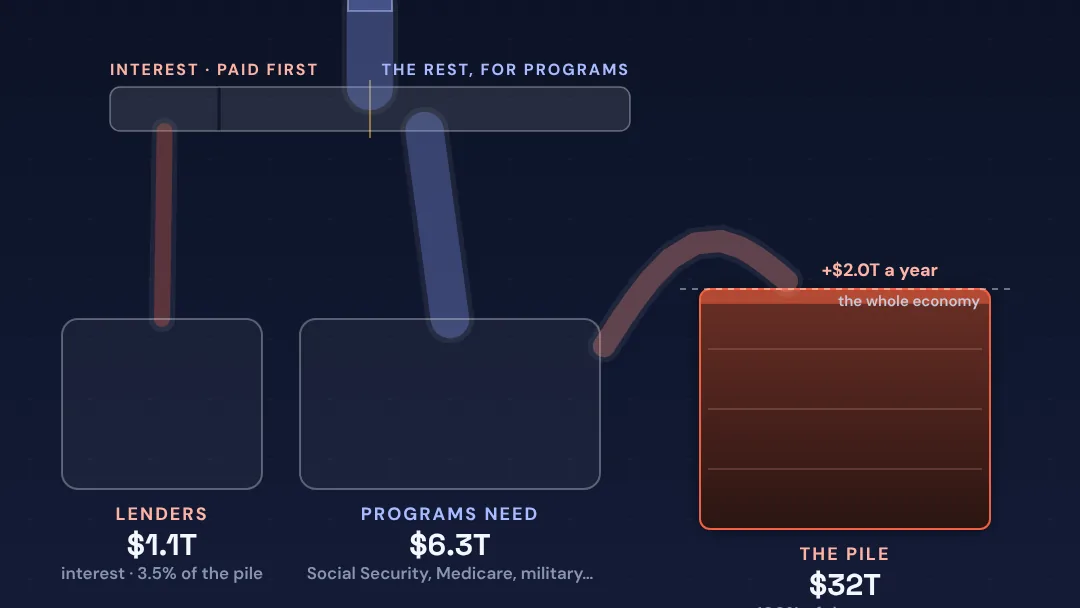
Why does the national debt snowball?
The United States now pays over a trillion dollars a year in interest, more than its entire military. Interest is paid first, what is left goes to programs, and the shortfall is borrowed onto the pile, which charges interest on itself. Two engines drive the snowball, and one of them runs even with a balanced budget.
4 min read
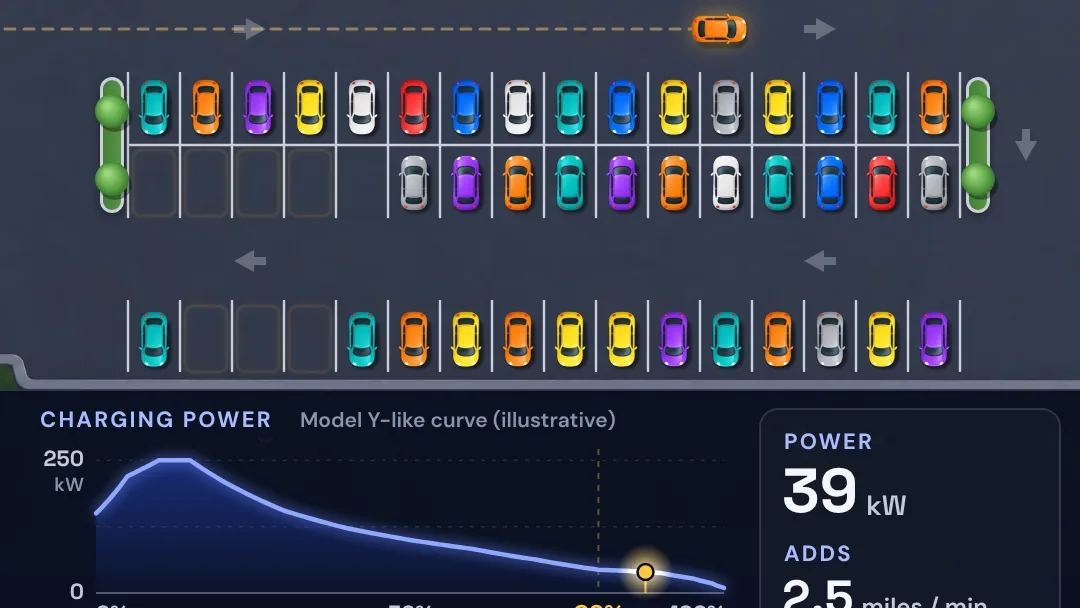
Why does an electric car charge fast to 80%, then crawl to full?
Near empty, lithium ions slot into the battery easily and the charger runs flat out. Near full, pushing them in fast risks plating lithium metal, so the car turns the power down, and the last 20% takes about as long as the first 70.
3 min read
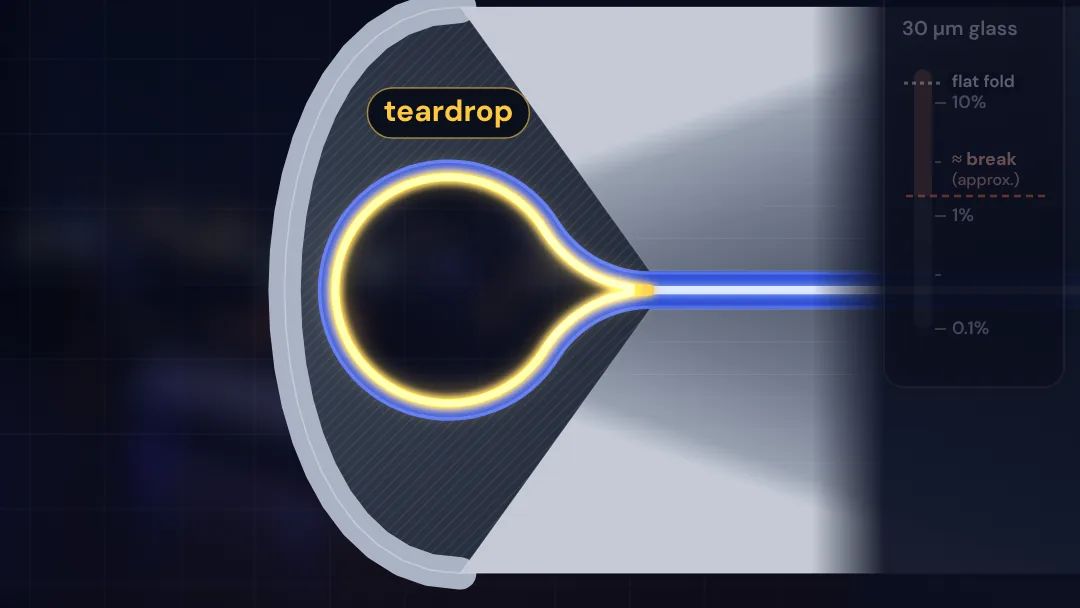
How does a folding phone close flat without creasing its screen?
A gentle bend needs room. A U-shaped fold leaves that room between the halves; a teardrop tucks it inside the hinge. The geometry, a test to try, and what the model can’t tell you.
4 min read
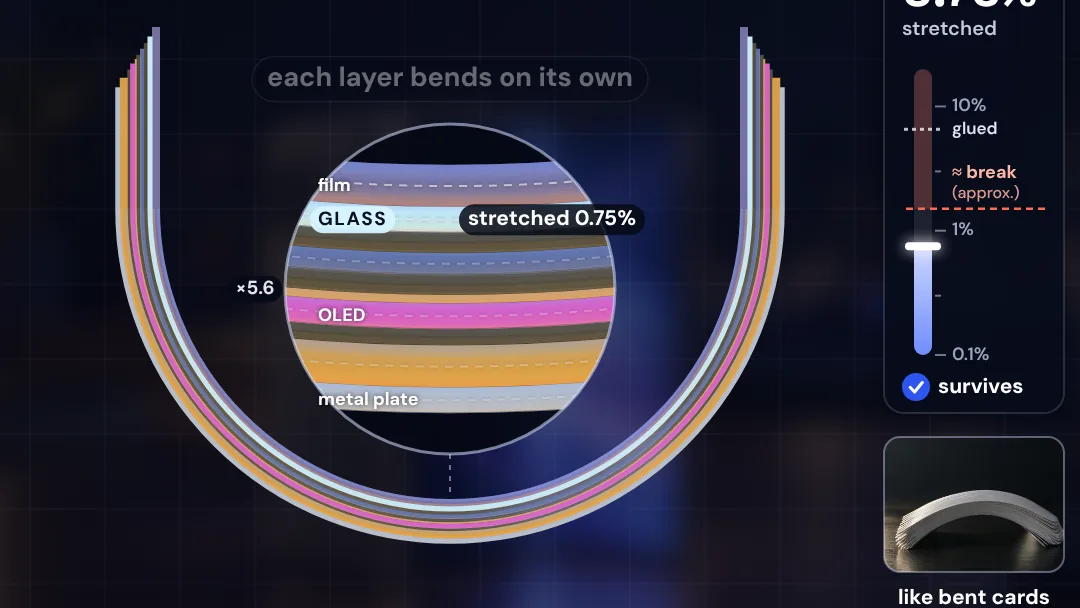
How does a folding phone’s glass screen bend without breaking?
Bending strains glass by about its thickness over twice the bend radius. How thin glass and sliding layers keep that small, a test to try, and what the model can’t tell you.
4 min read
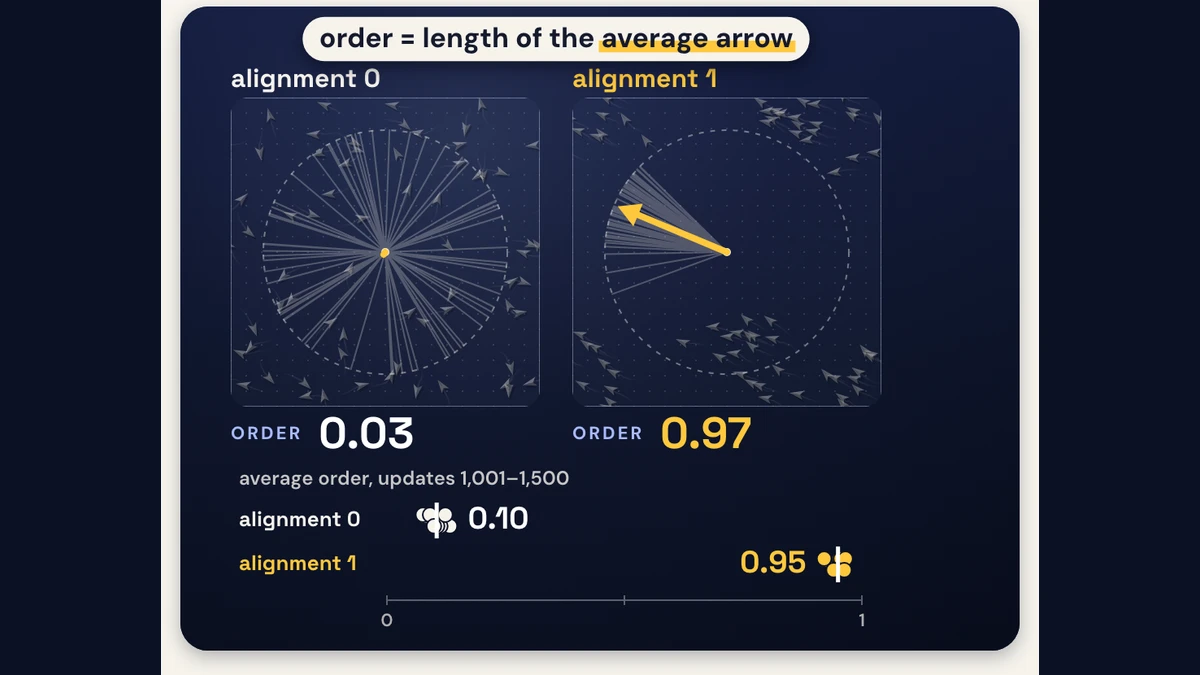
How do local rules create shared direction?
Compare seeded runs of a local-alignment model and follow directional order without confusing it with a tight flock.
4 min read
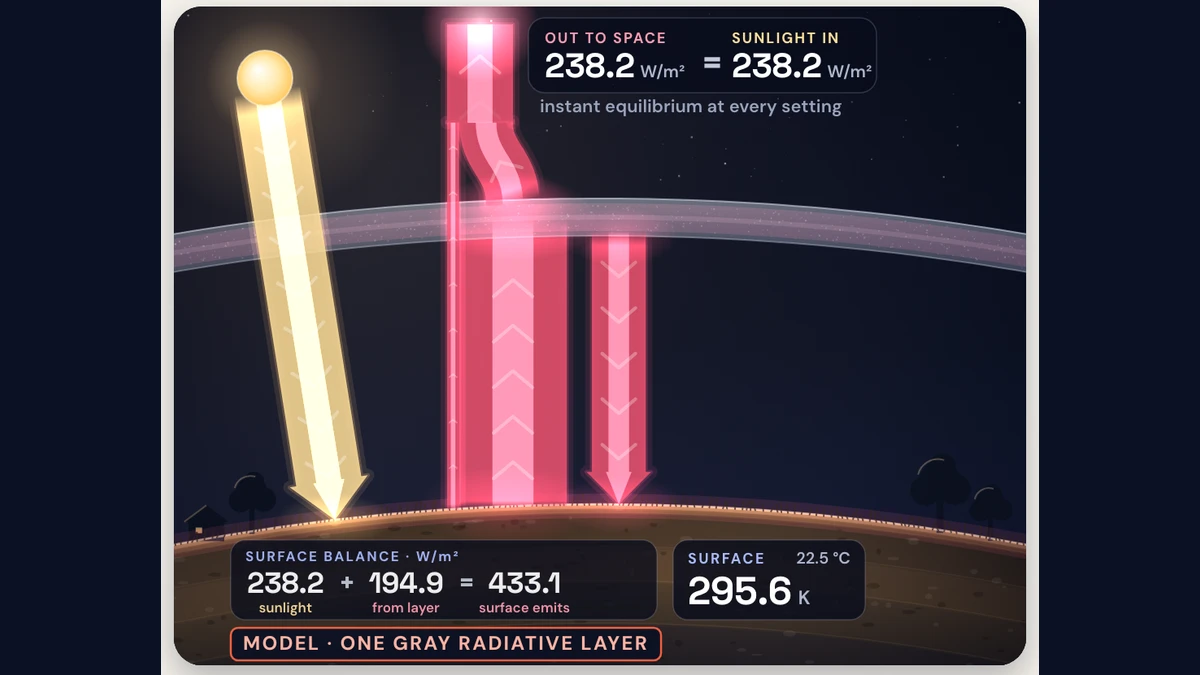
Why does the ground stay warm?
Follow sunlight and infrared through a one-layer equilibrium model, then see what its simplified atmosphere leaves out.
4 min read
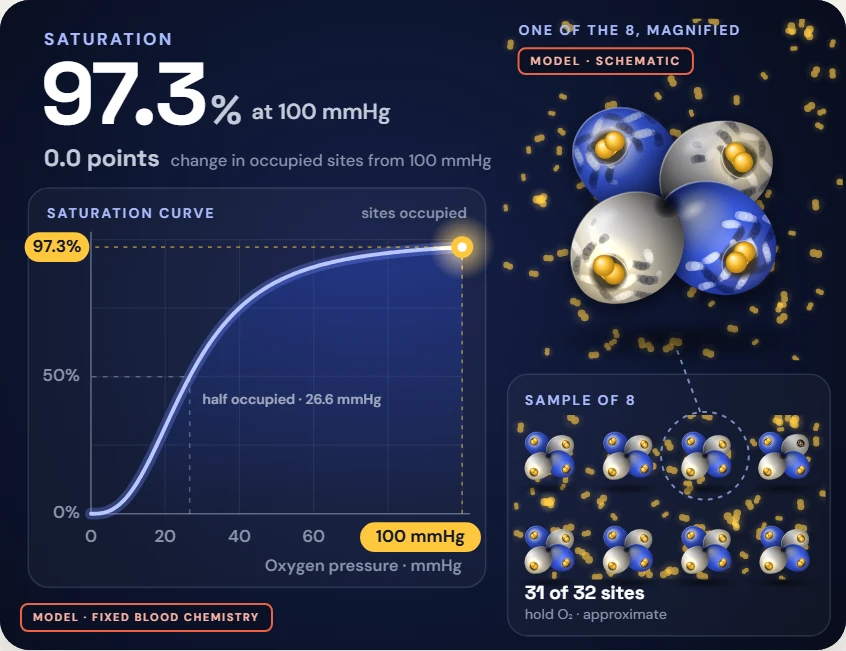
Why does oxygen let go?
Move oxygen pressure down the hemoglobin curve and see why saturation changes: cooperative binding makes loading and unloading possible.
3 min read
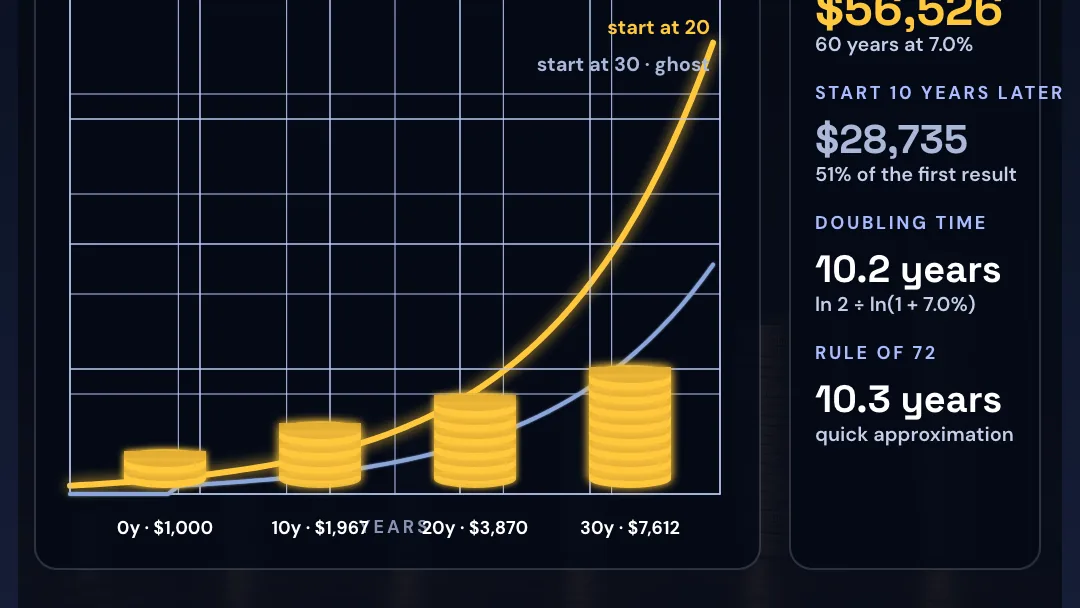
How does $1,000 become about $58,000?
At an illustrative constant 7%, growth earns growth of its own. The same percentage adds much more money near the end than near the beginning.
3 min read
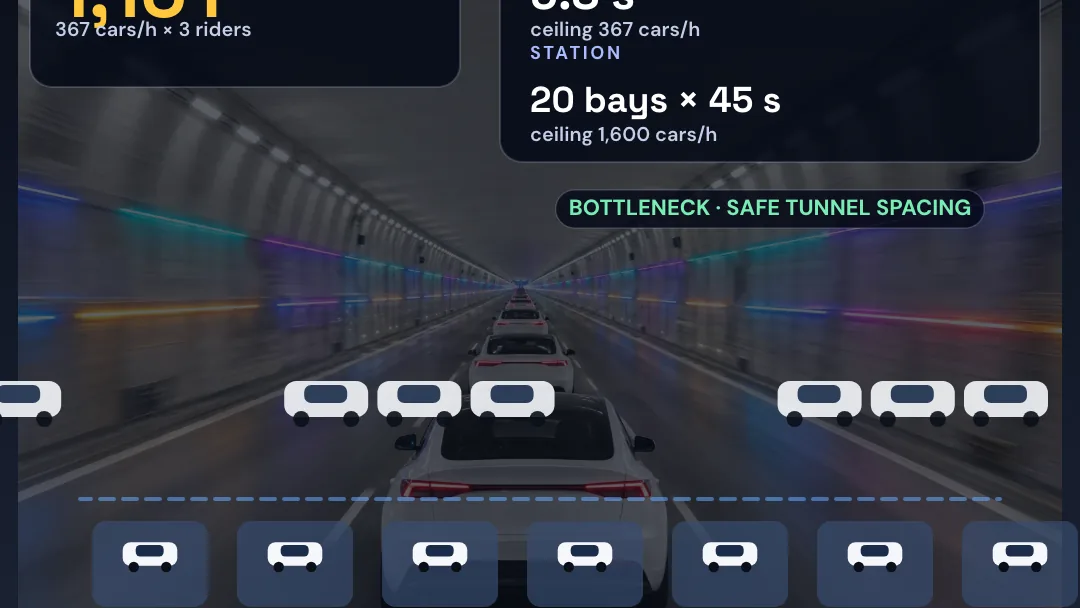
How can two-rider cars move tens of thousands of people an hour?
In the Las Vegas Loop, cars load in side bays off the main tunnel, so the line never stops. Then the gap between cars and the number of stations set how many people the loop can move.
3 min read
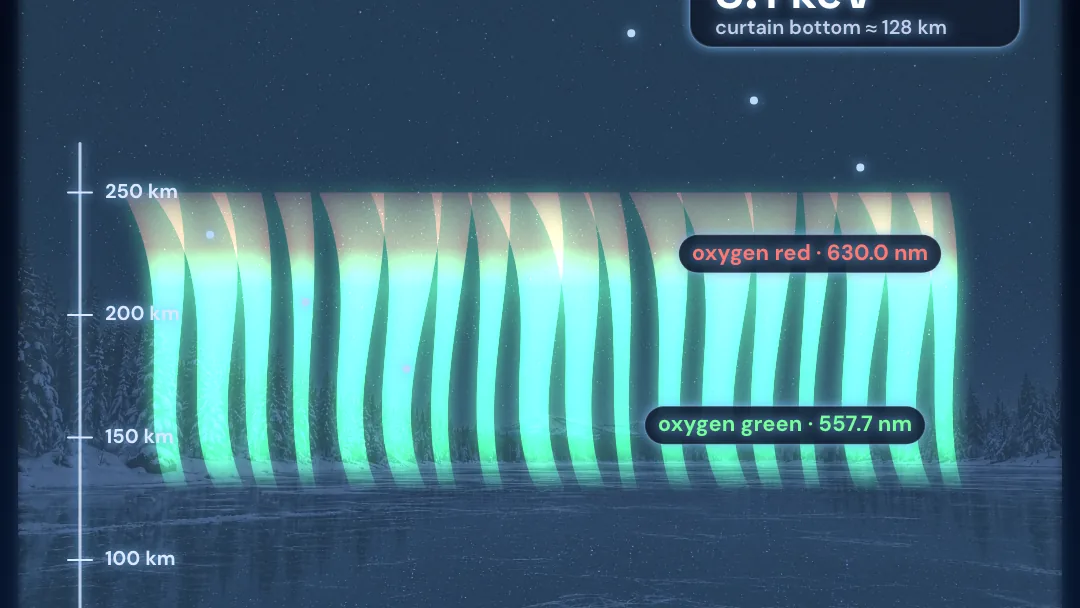
Why are the northern lights green?
Oxygen glows green through much of an aurora curtain, red in thinner air above it, while energetic particles can add nitrogen purple and pink below.
3 min read
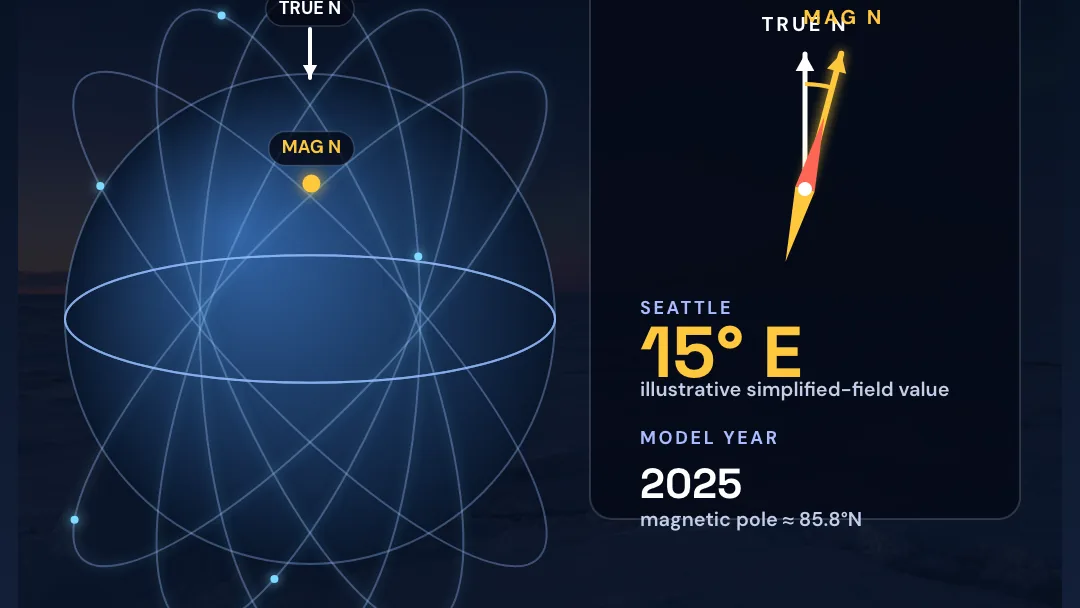
Why doesn’t a compass point to true north?
A compass follows Earth’s local magnetic field, not a map line to the geographic pole. That field changes across the globe and through time.
3 min read
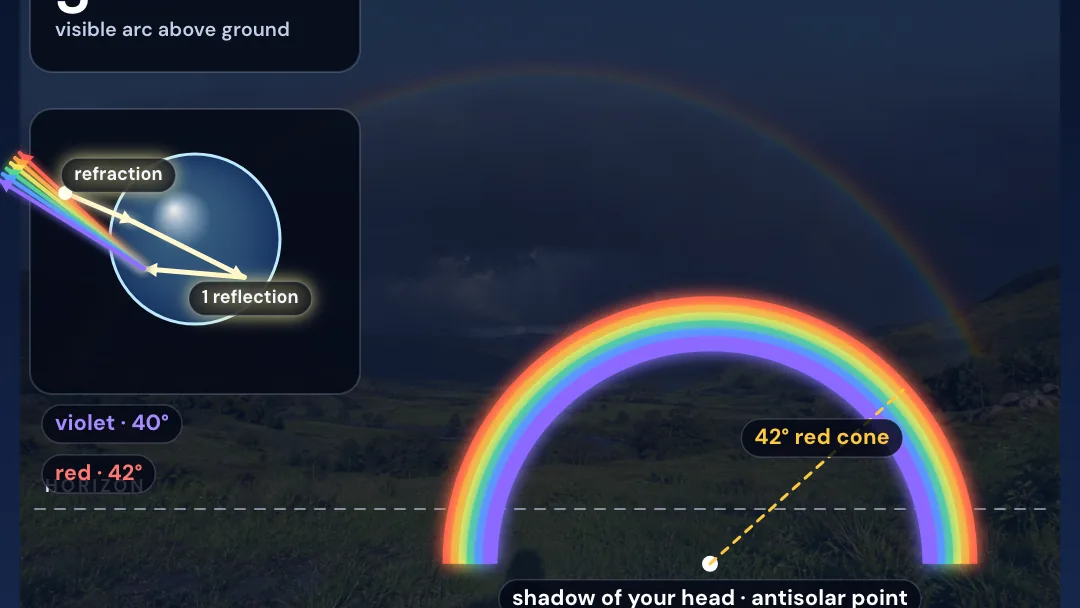
Why is a rainbow always a circle?
The bright drops all sit at nearly the same angle from the line opposite the Sun, forming a cone that your eye sees as a circle.
3 min read
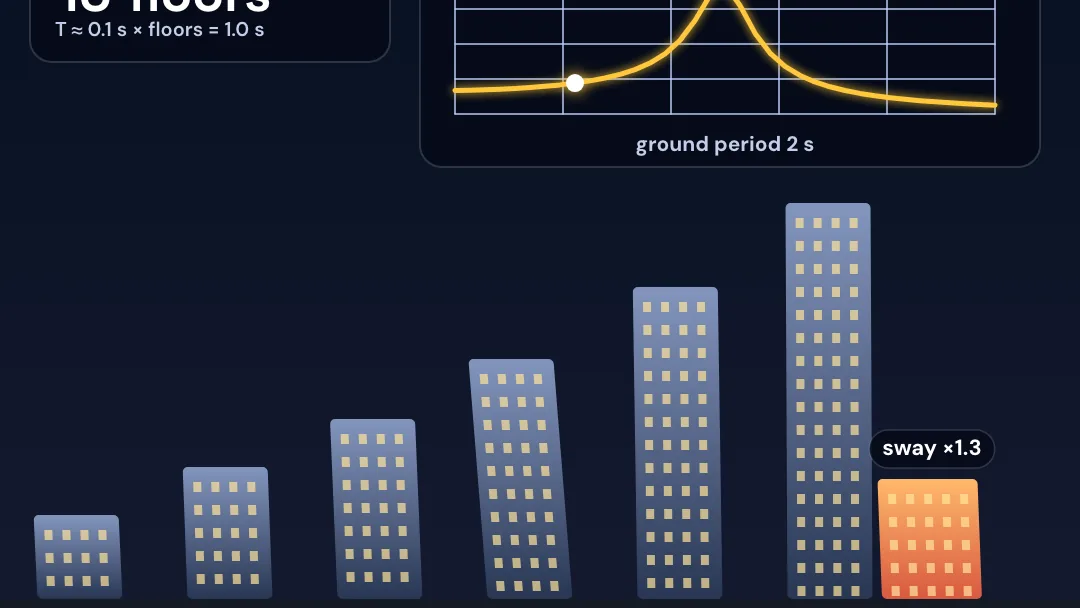
Why do some buildings resonate in earthquakes?
A building has a natural sway period. When the ground moves at nearly the same rhythm, each push can add to the last.
3 min read
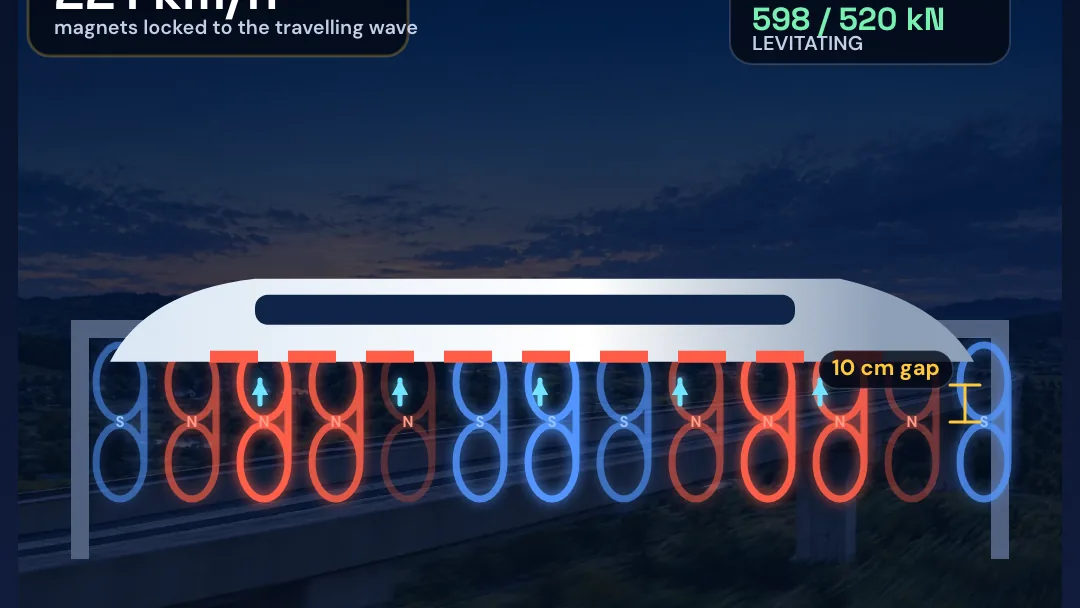
How does a maglev train float?
Passing magnets induce currents in guideway coils. Those currents push back, lifting and centering the train while a travelling magnetic wave pulls it forward.
3 min read
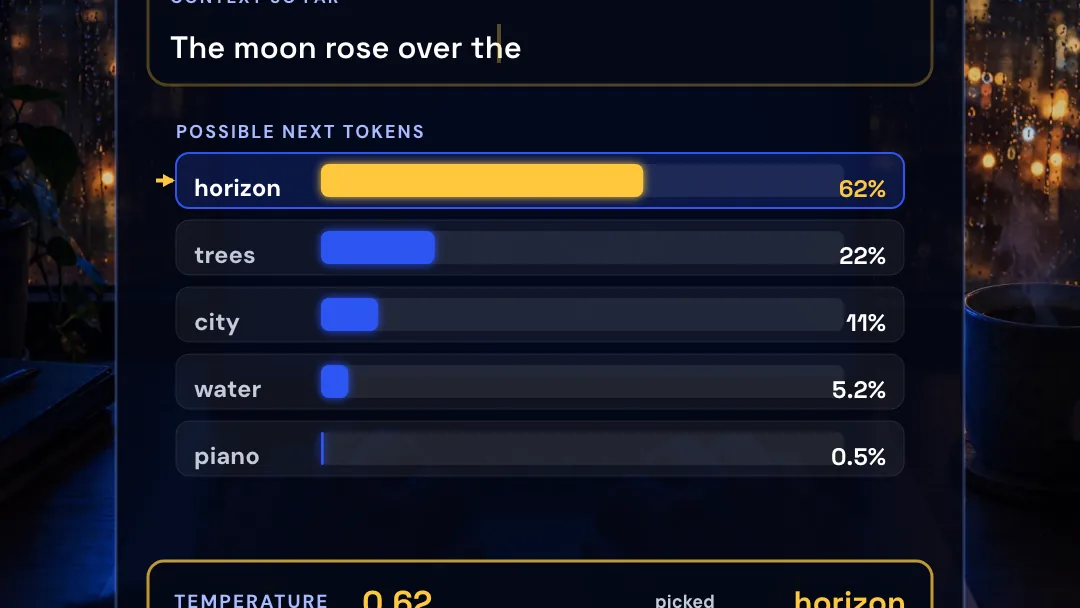
How does an AI chatbot pick its next word?
A language model scores possible next tokens, turns those scores into probabilities, picks one and repeats. Temperature changes how sharp that distribution is.
3 min read
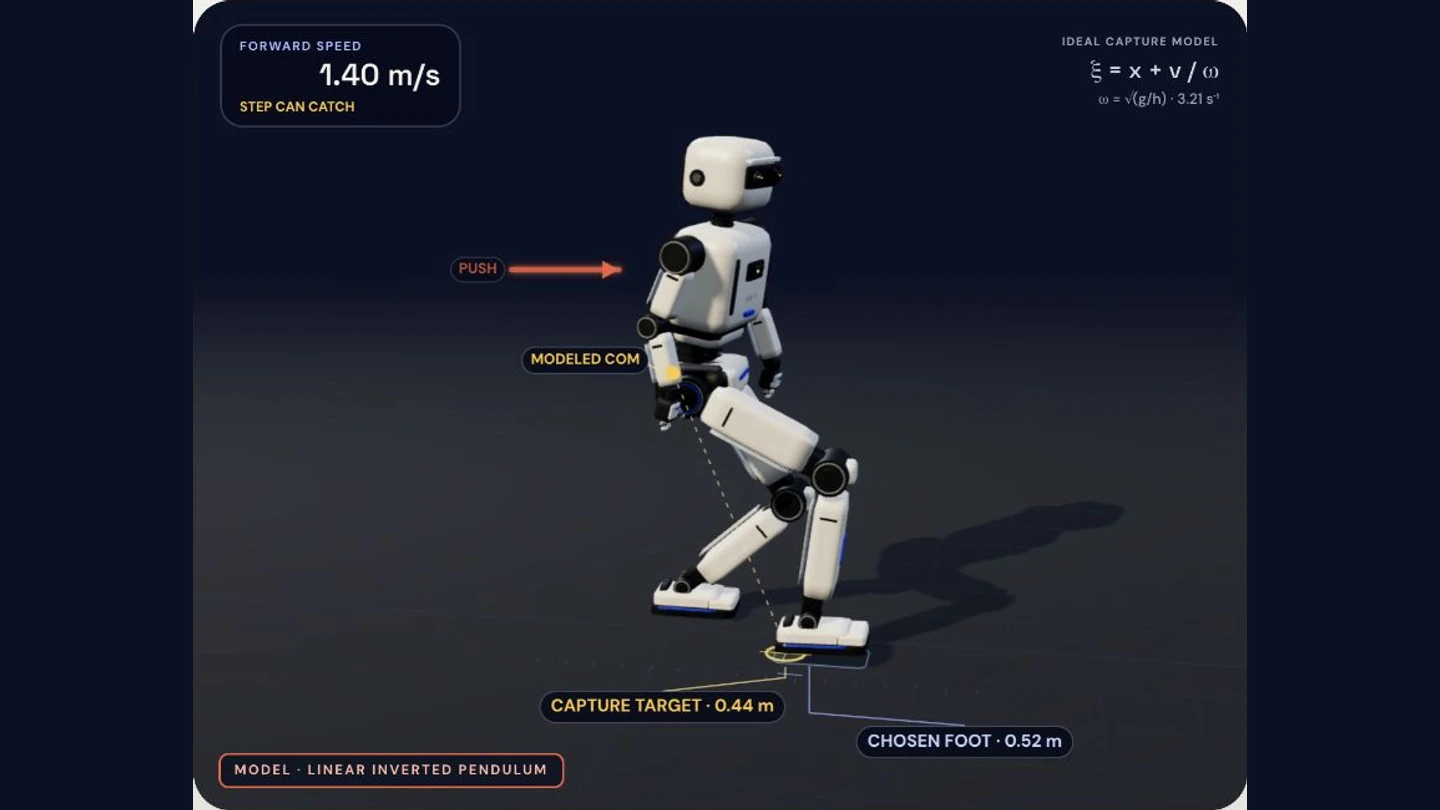
Why do walking robots fall over so easily?
Walking leans the body into a fall and catches it with the next foot. A harder push moves the capture point farther ahead.
3 min read
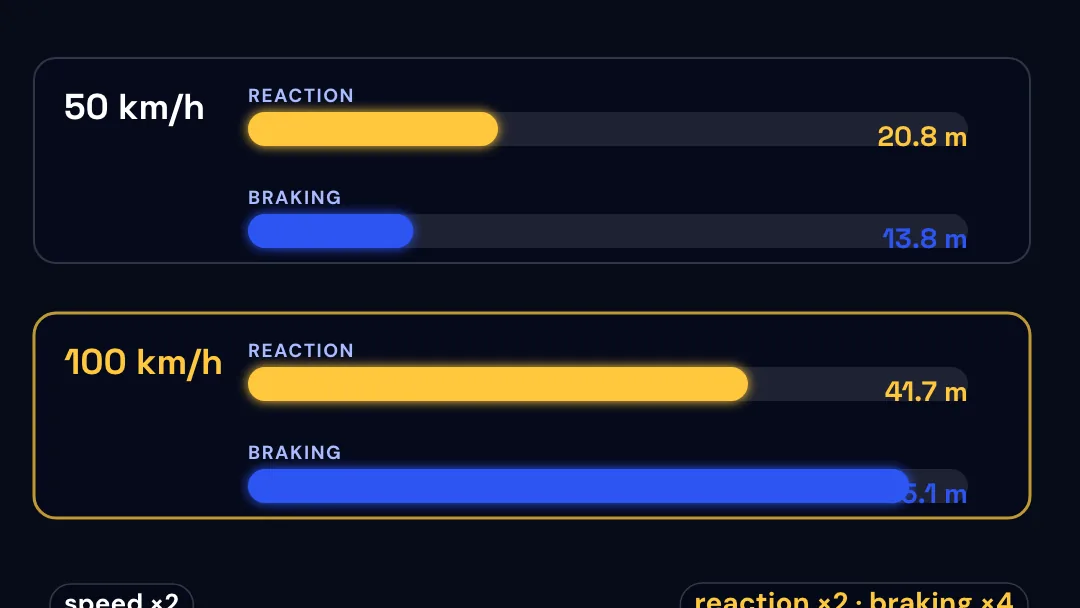
Why does twice the speed need four times the braking distance?
Stopping has two parts: reaction distance grows with speed, while braking distance grows with speed squared.
3 min read
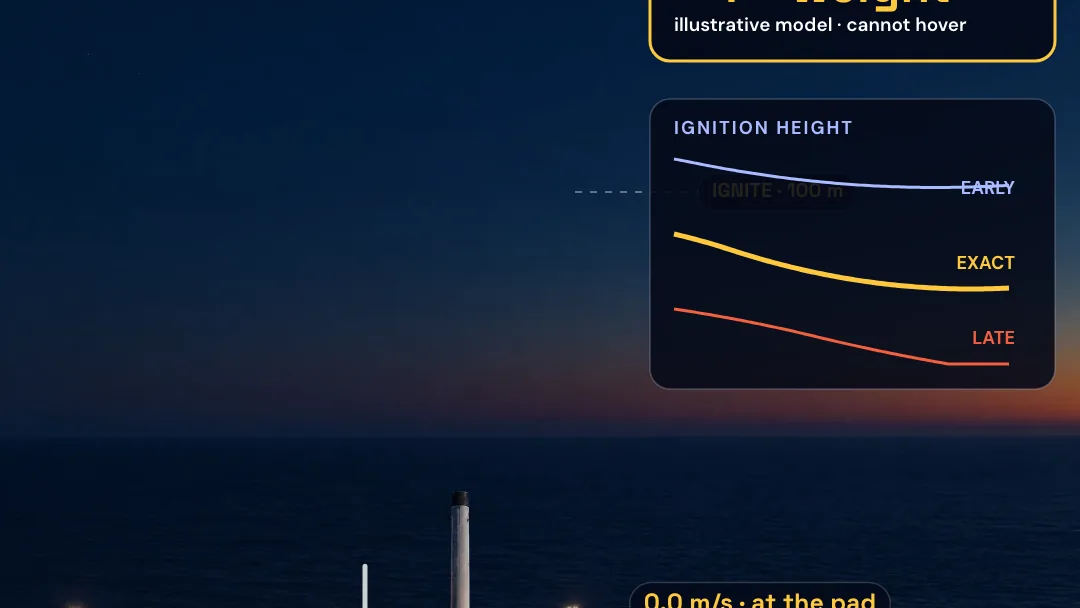
When should a falling rocket light its engine?
If minimum thrust is greater than landing weight, a booster cannot hover. Too early climbs again, too late hits, and one modeled ignition height reaches zero speed at the pad.
3 min read
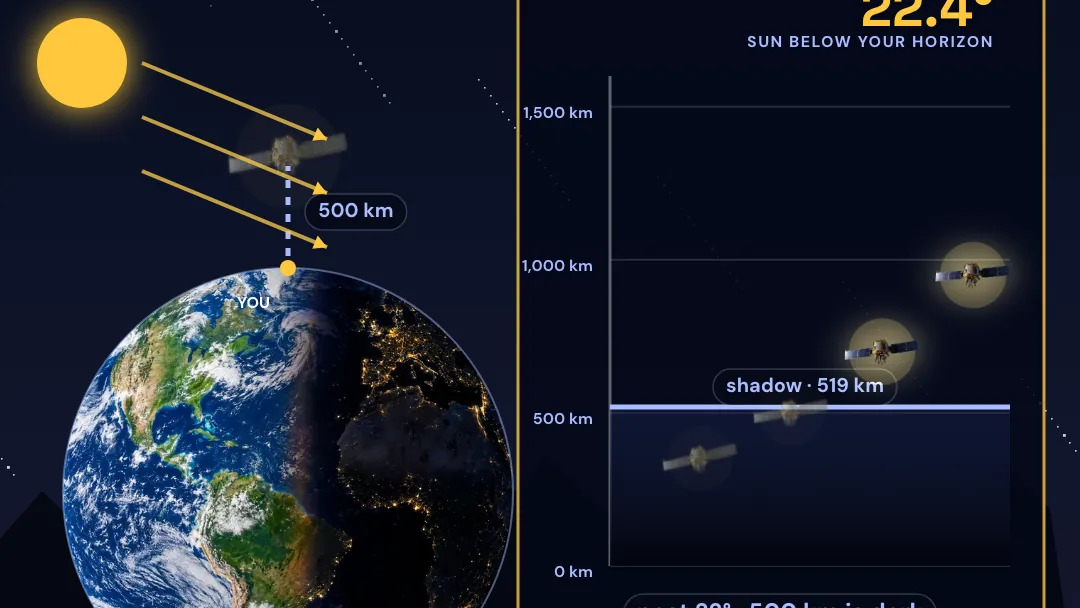
Why do you mostly see satellites just after sunset?
Your ground can be dark while a low satellite still sees the Sun. As night deepens, Earth’s shadow climbs through low orbit.
3 min read
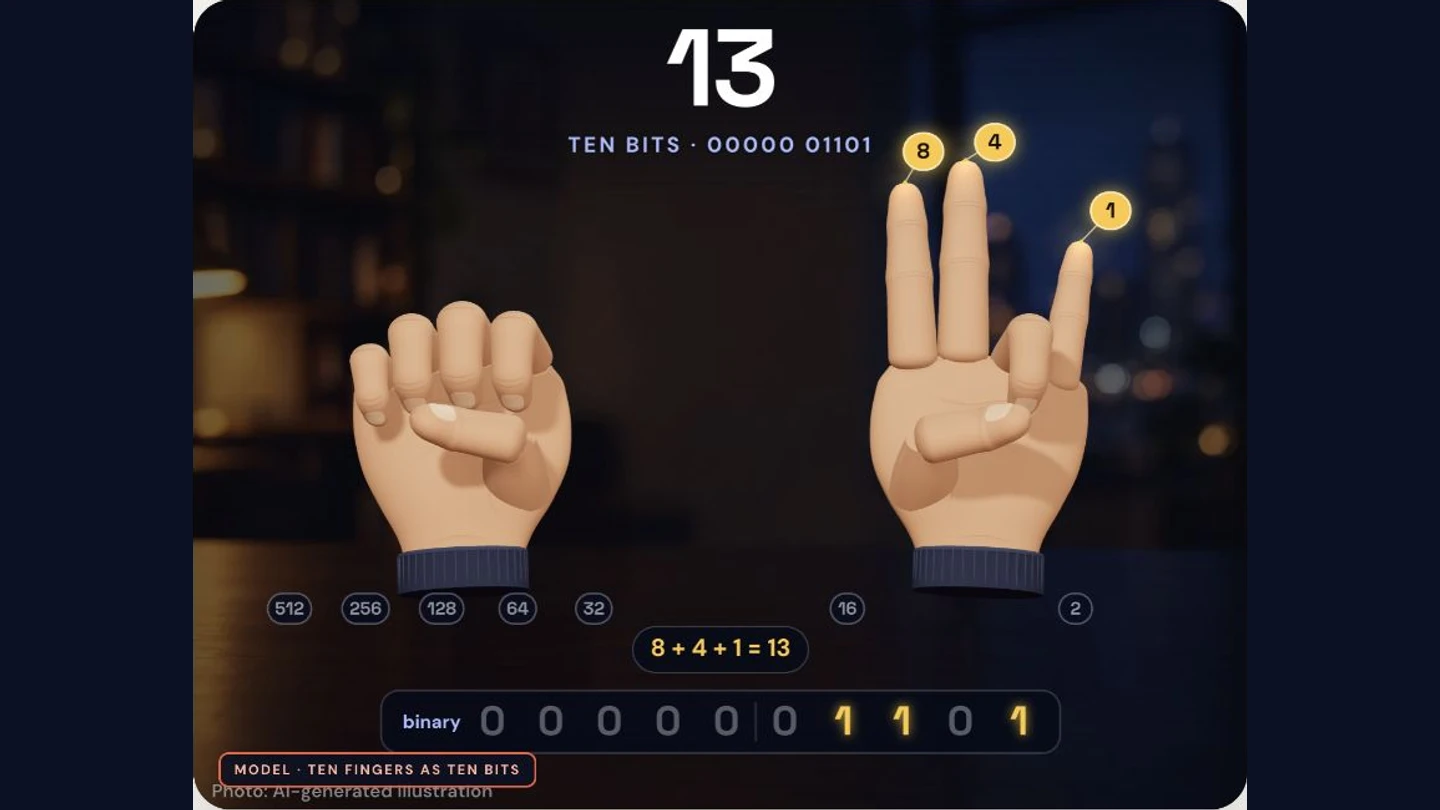
How high can you count on ten fingers?
Give each finger a power-of-two value and ten fingers become ten bits: 1,024 patterns representing every whole number from 0 through 1,023.
3 min read
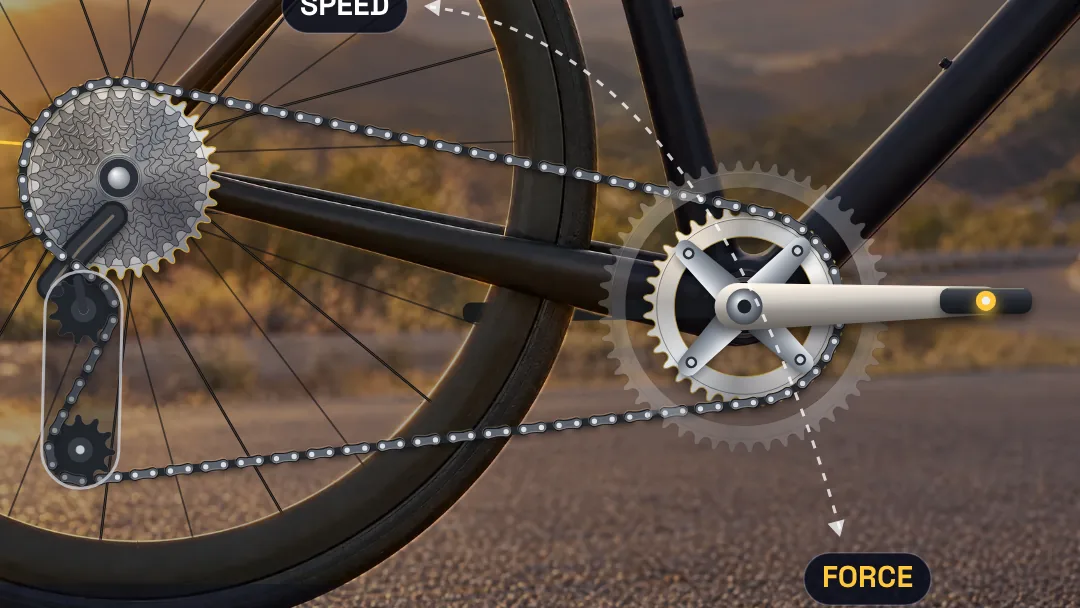
Why is a low bike gear easier on a hill?
Bike gears trade wheel speed for force. A 34/34 gear turns the wheel once per pedal turn; 50/11 turns it 4.55 times but needs about 4.5 times the foot force for the same road force.
3 min read
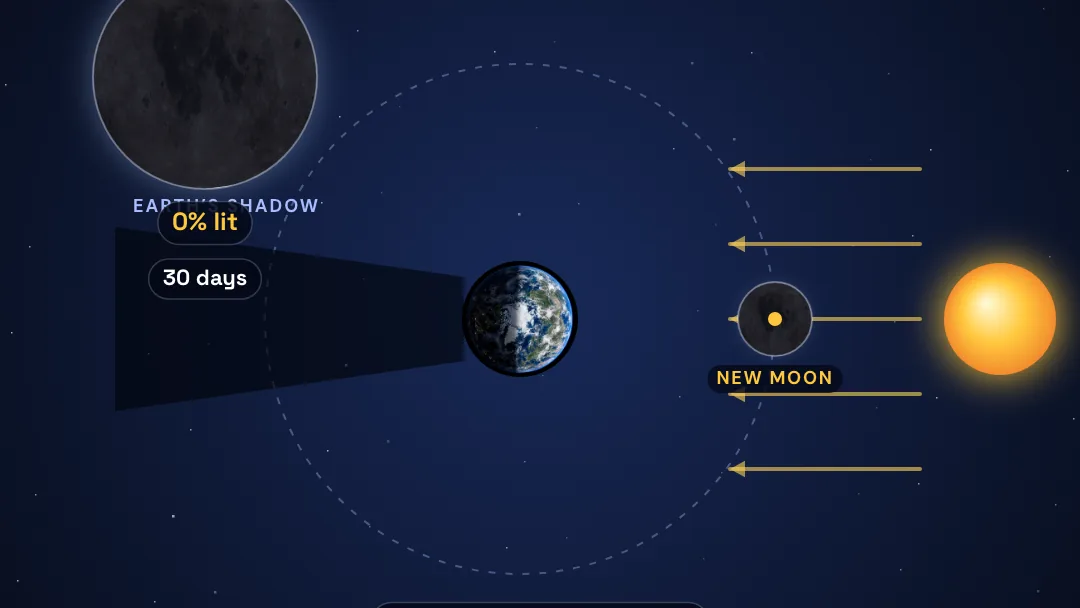
Why does the Moon change shape?
The Moon does not change shape. Sunlight always lights half of it; what changes is how much of that bright half faces Earth.
3 min read
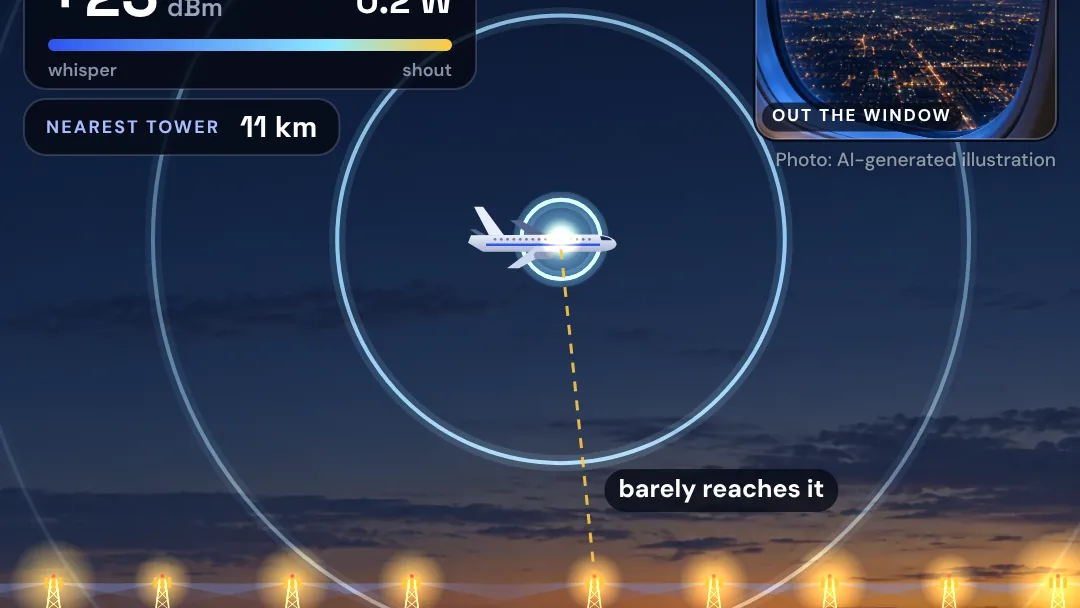
Why does airplane mode matter?
A phone turns its power up or down to reach the nearest tower. At cruising altitude it may shout at full power, which can disturb networks on the ground.
4 min read
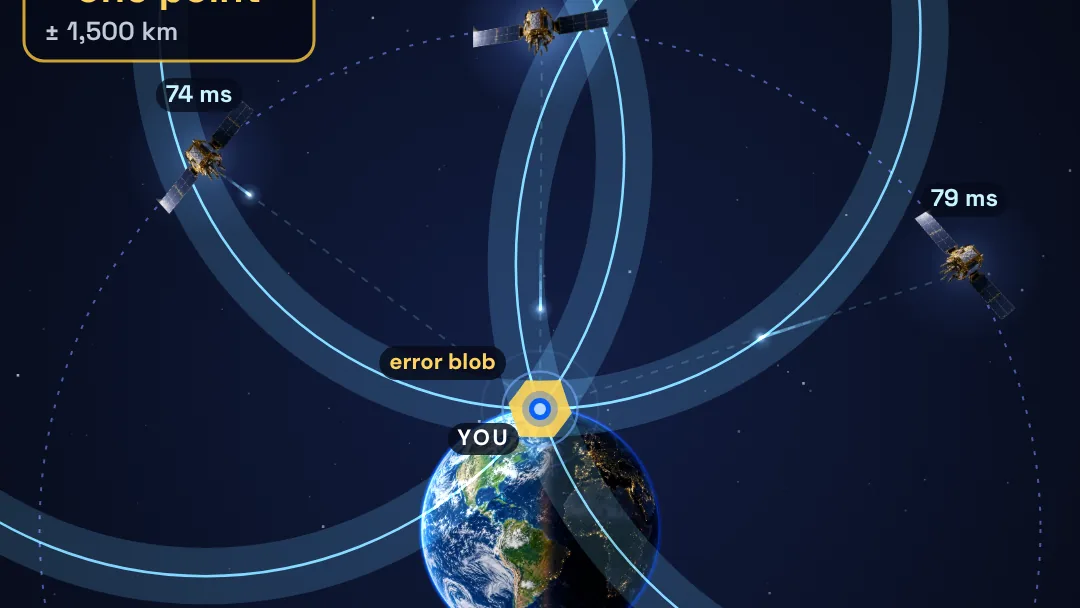
How does GPS know where you are?
Your phone only listens. Each satellite’s timed signal gives a distance, and four satellites fix your position and the error in the phone’s own cheap clock.
4 min read
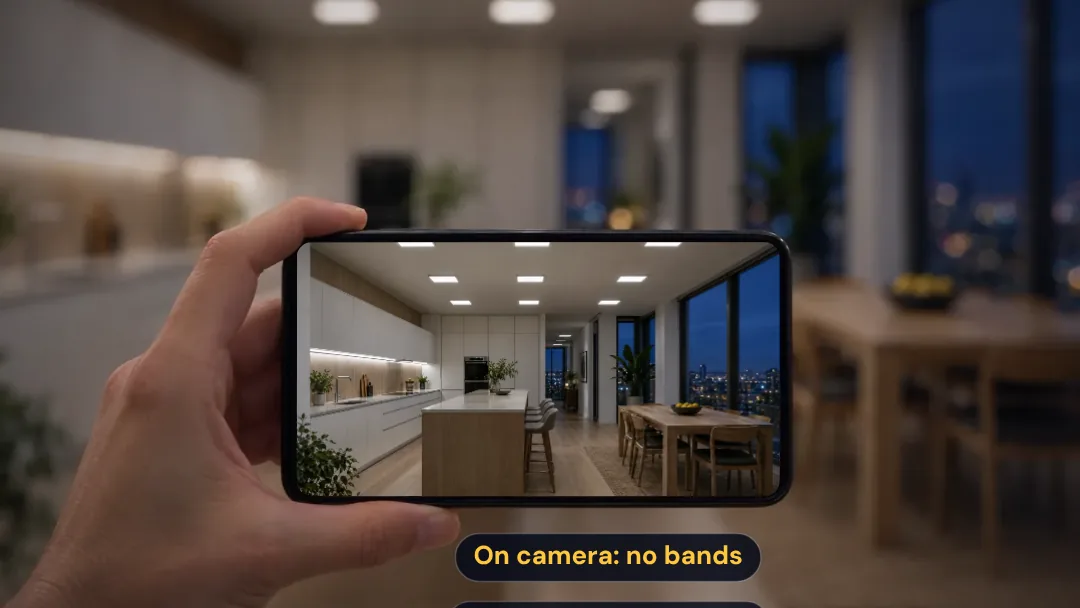
Why do LED lights flicker on camera?
Many LEDs pulse with the mains power, 100 or 120 times a second. A phone reads rows one at a time, so exposures that miss whole pulses leave dark bands.
4 min read
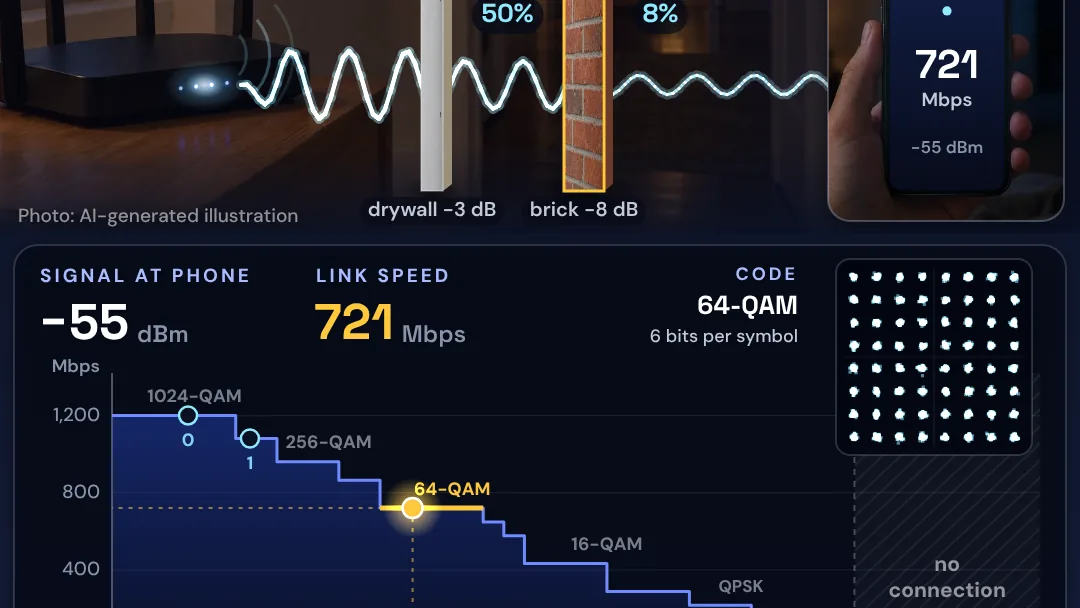
Why does Wi-Fi slow down through walls?
Every wall soaks up some Wi-Fi: drywall about half, concrete a tenth or less. As the signal fades, the link drops to slower, sturdier codes step by step.
4 min read
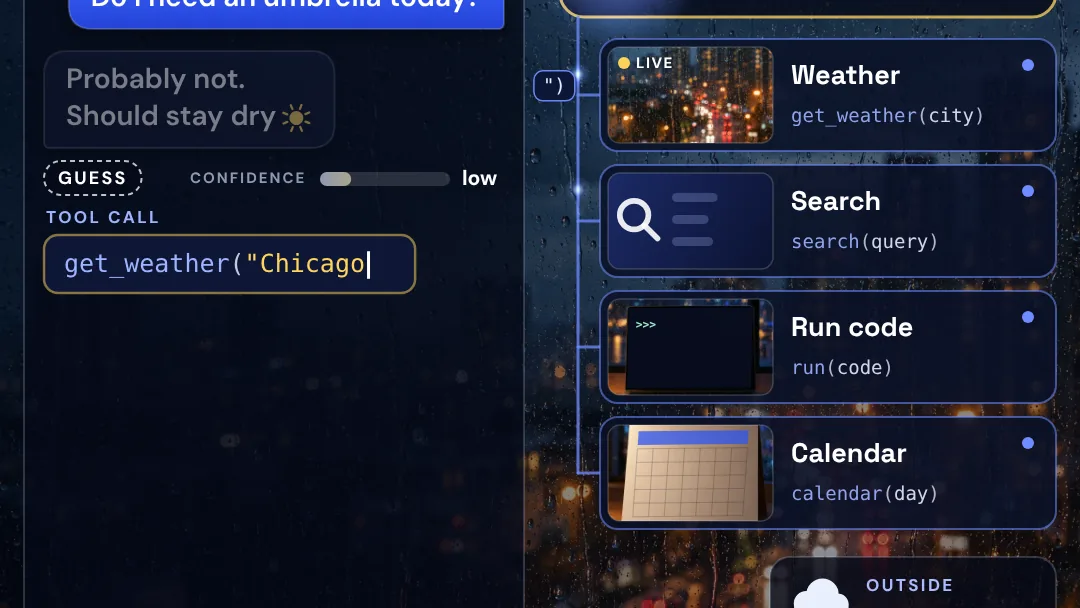
Why do AI agents need tools?
Alone, a language model can only guess today’s weather from its training. With tools, it writes a request, and the guess becomes a lookup.
4 min read
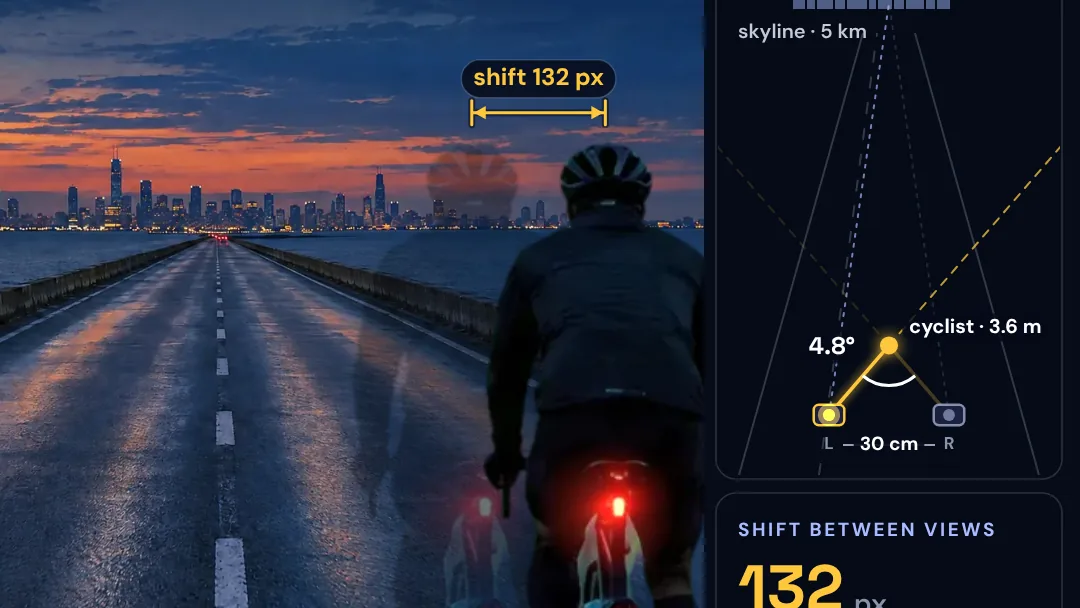
How can a camera tell how far away something is?
Close one eye, then the other, and your thumb jumps. Two cameras set a little apart measure that shift, and the closer the object, the bigger the shift.
4 min read
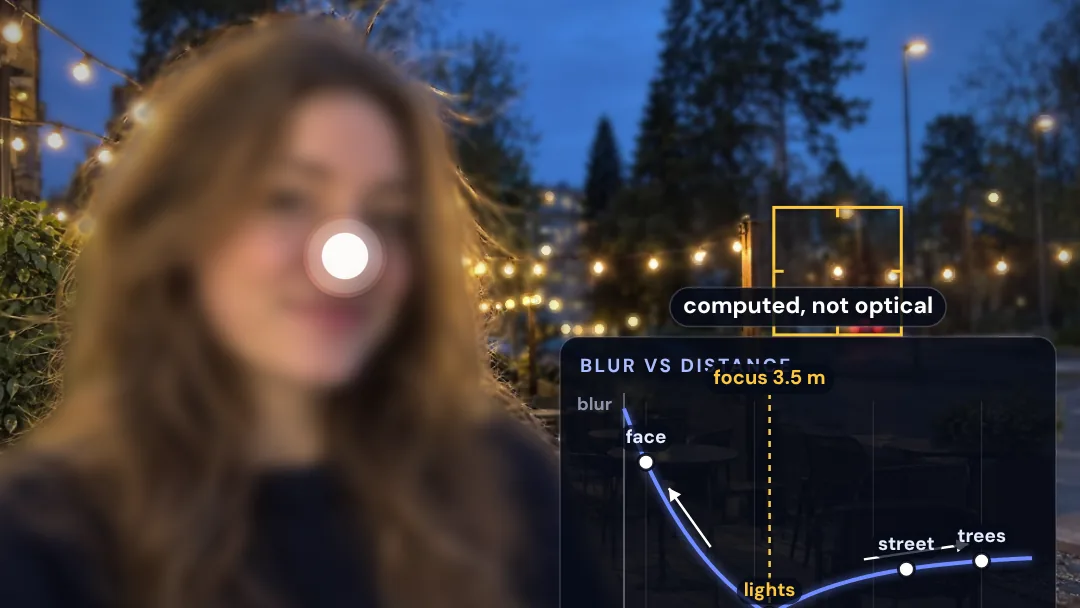
How does Portrait Mode fake a blurry background?
A phone’s small lens keeps almost everything sharp. Portrait Mode estimates how far each part is, then blurs it by distance from the focus point.
4 min read
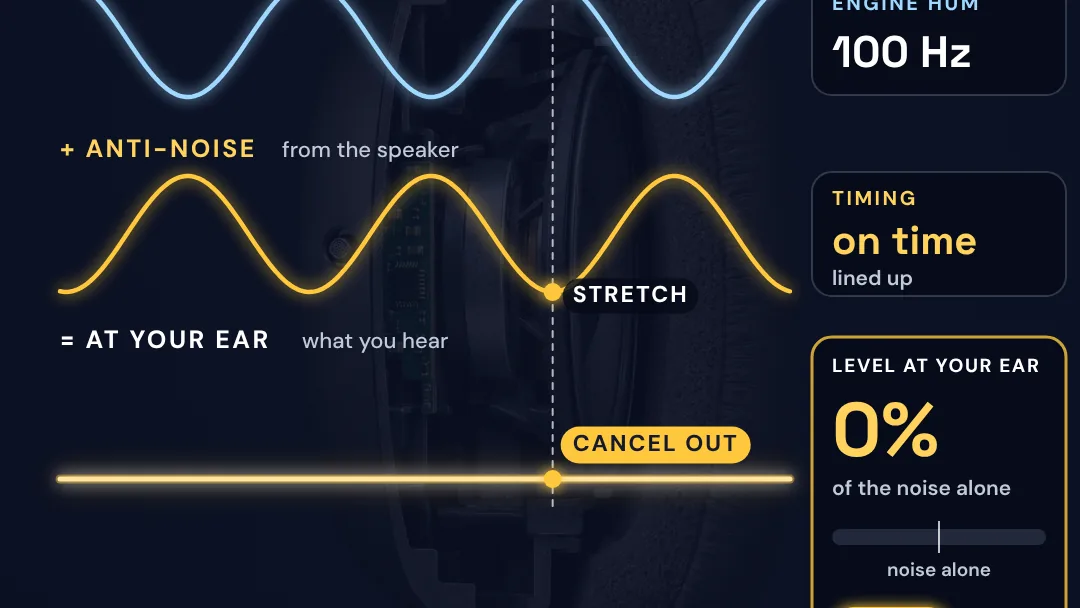
How do noise-cancelling headphones work?
Headphones play the opposite of the noise, so the two waves cancel. Get the timing wrong and they add up, which is why steady engine hums cancel best.
4 min read
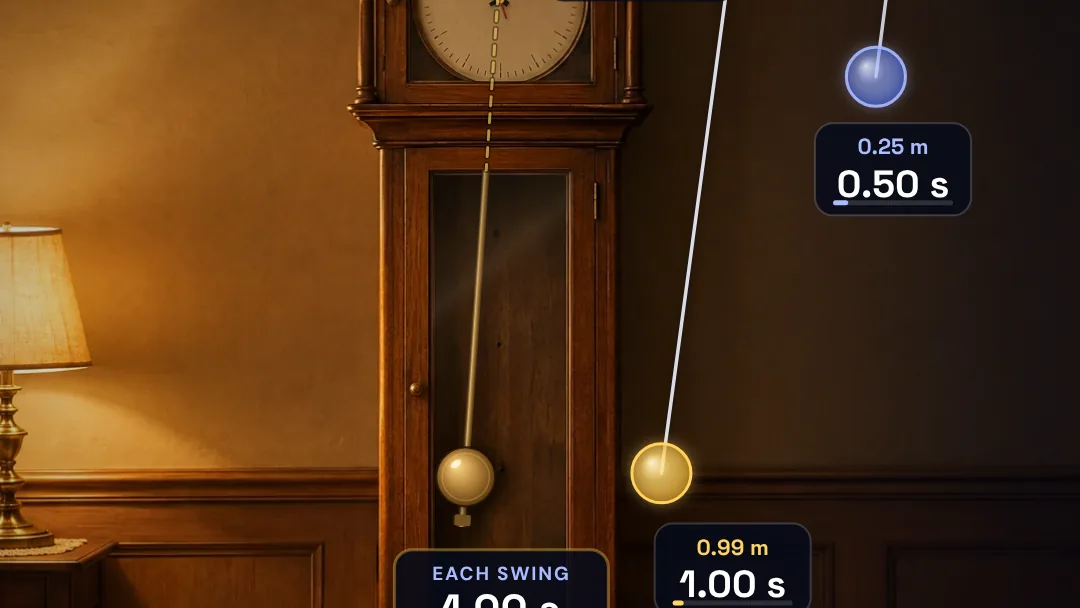
Why do grandfather clocks have such long pendulums?
A pendulum’s swing time depends on its length, not its weight. Four times the length gives twice the time, so a one-meter pendulum swings once a second.
4 min read
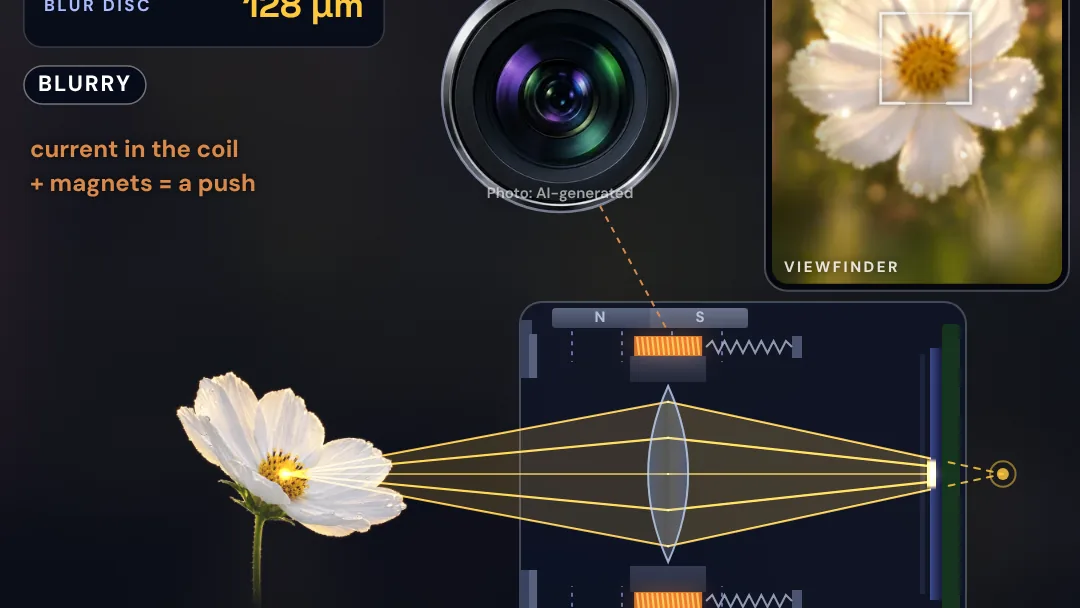
How does your phone camera focus?
Light from each point meets at one spot. A tiny motor slides the lens less than a millimeter to land that light on the sensor, until it runs out of travel.
4 min read
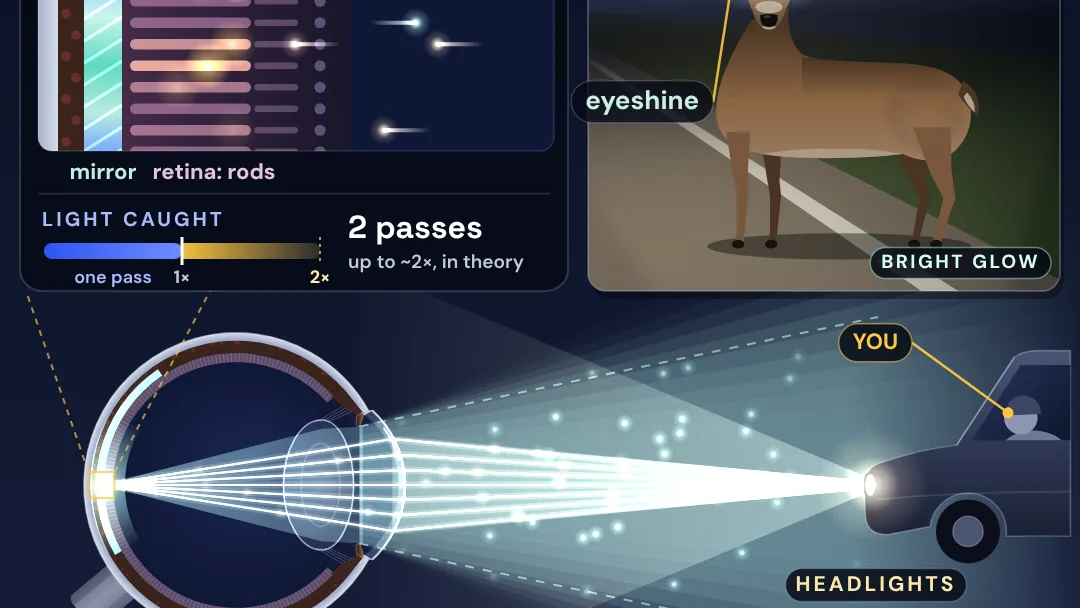
Why do deer freeze in headlights?
A mirror behind a deer’s eye sends your headlights back. Drag it away, step to the side of the road, and see what biologists still don’t know about the freeze.
5 min read
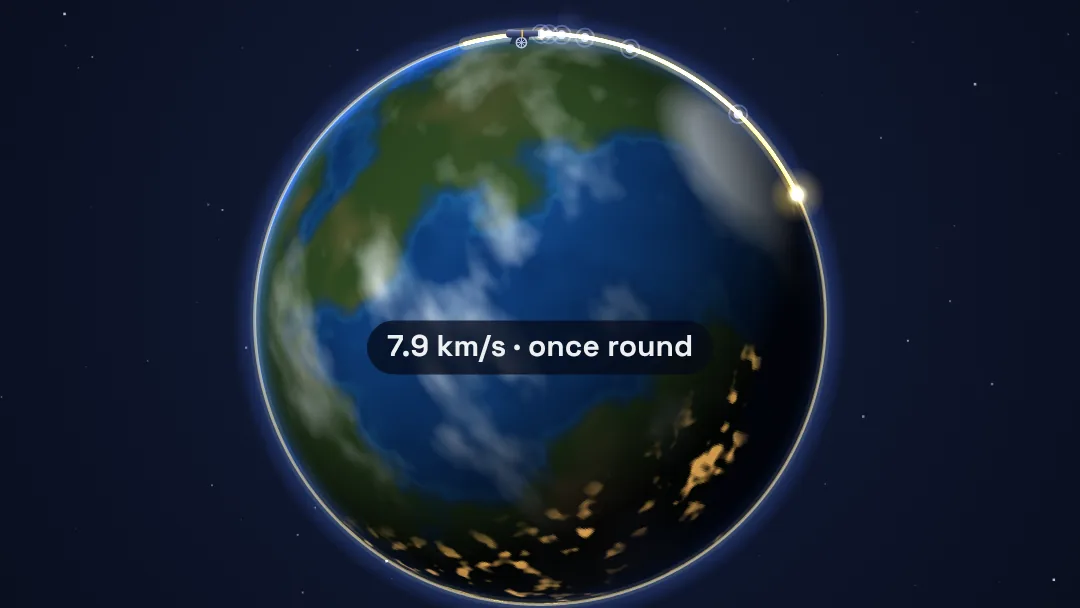
Why don't satellites fall down?
Satellites never stop falling. Speed up Newton's cannon until Earth curves away as fast as the ball drops, then stop a leaky cup by dropping it.
5 min read
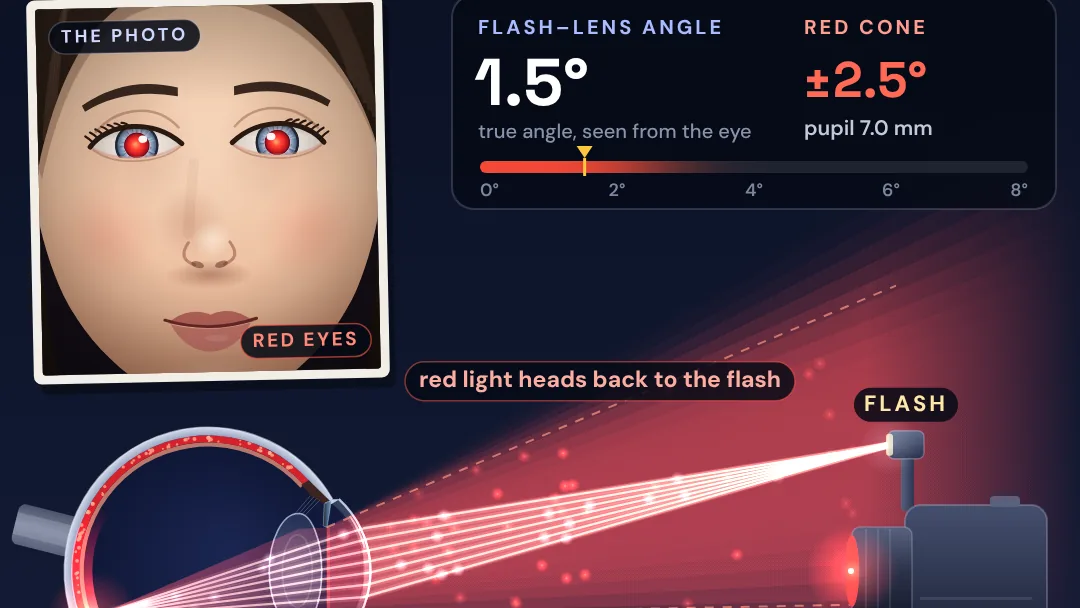
Why do eyes glow red in flash photos?
A flash lights up the blood-rich back of the eye. Drag the flash away from the lens and watch the red glow miss the camera, then watch your own pupils shrink.
5 min read
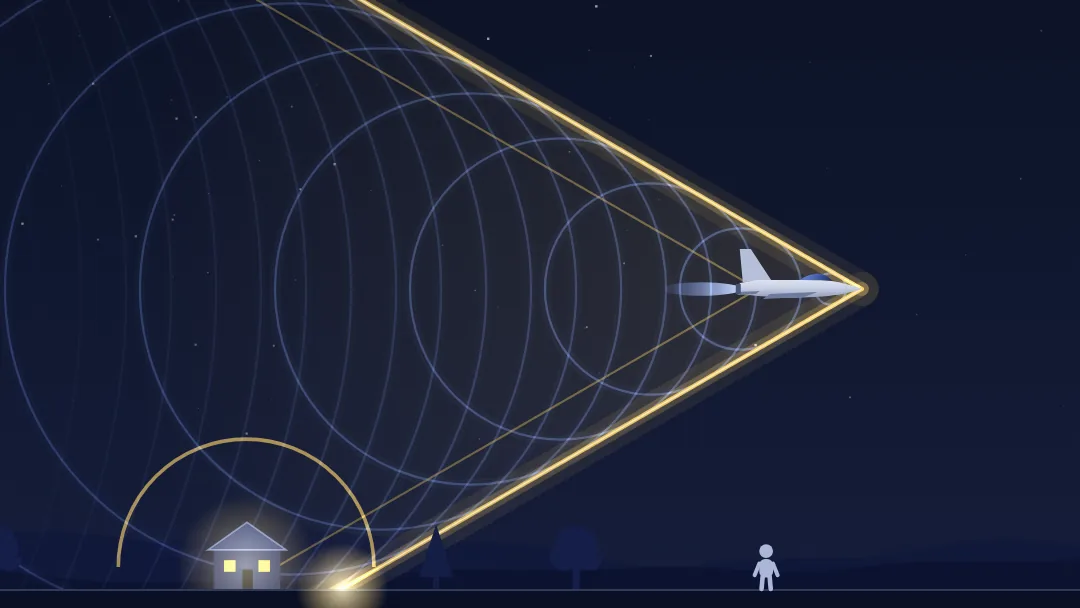
What makes a sonic boom?
A supersonic jet outruns its own sound, and the rings pile into a cone. Drag the speed past Mach 1 and watch the boom sweep the ground behind the plane.
5 min read
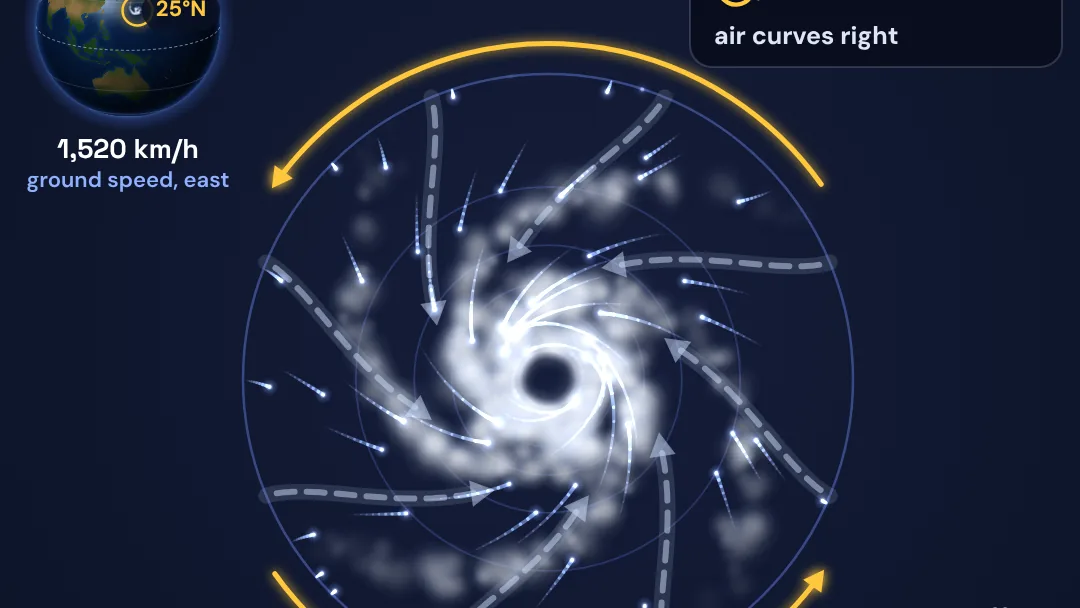
Why do hurricanes spin?
Air rushing into a storm curves on a turning Earth. Drag the storm across the equator to watch its spin flip, then test which way your sink drains.
5 min read
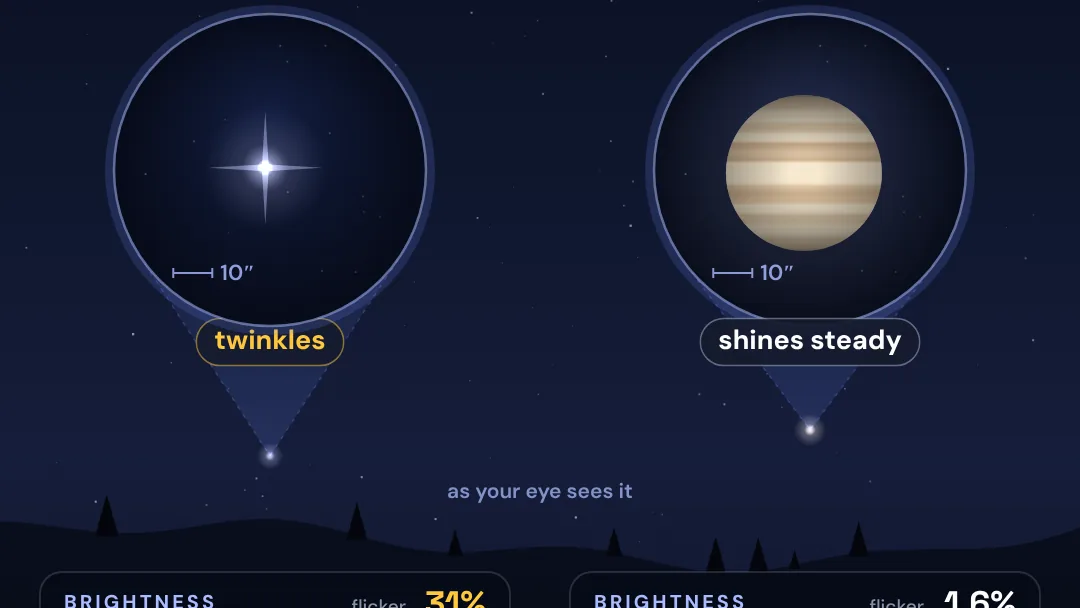
Why do stars twinkle but planets don't?
Starlight crosses moving pockets of warm and cool air. Grow a star into Jupiter's disk and watch its twinkle average away into a steady glow.
5 min read
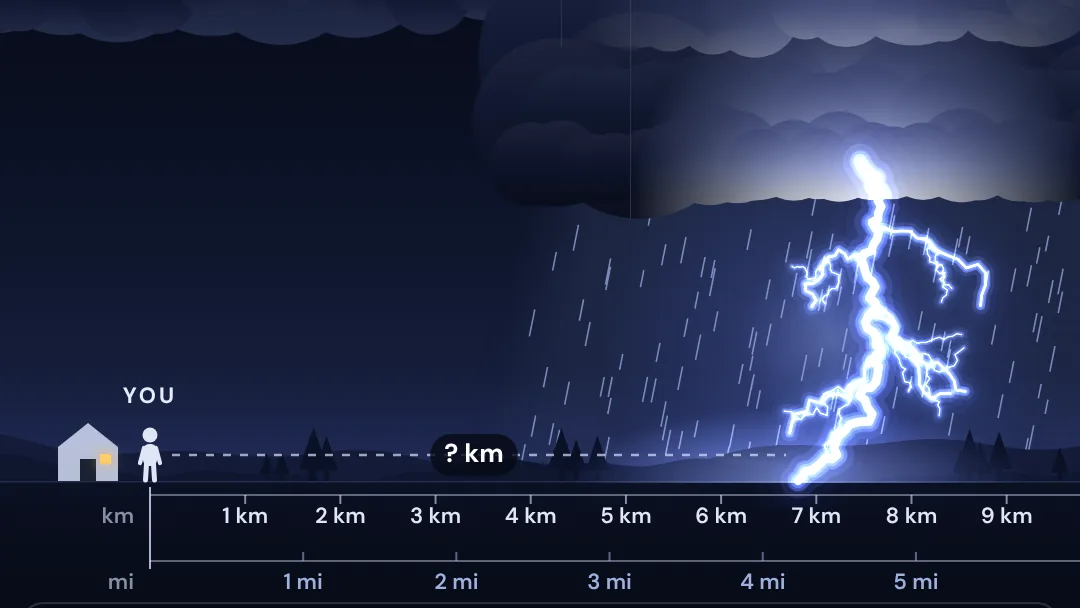
How far away was that lightning?
Count the seconds from flash to thunder and divide by three for kilometers. Drag a strike closer and see why sound sets the count, not light.
5 min read
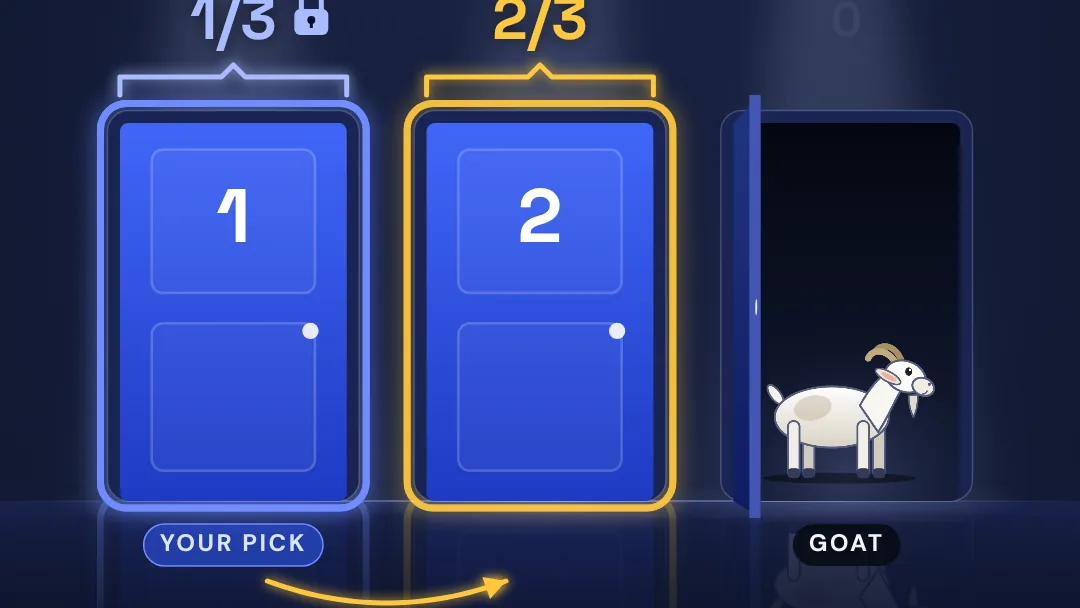
Should you switch doors in the Monty Hall problem?
Pick a door, watch the host reveal a goat, then stick or switch. Play a thousand games and see why switching wins two times in three.
5 min read
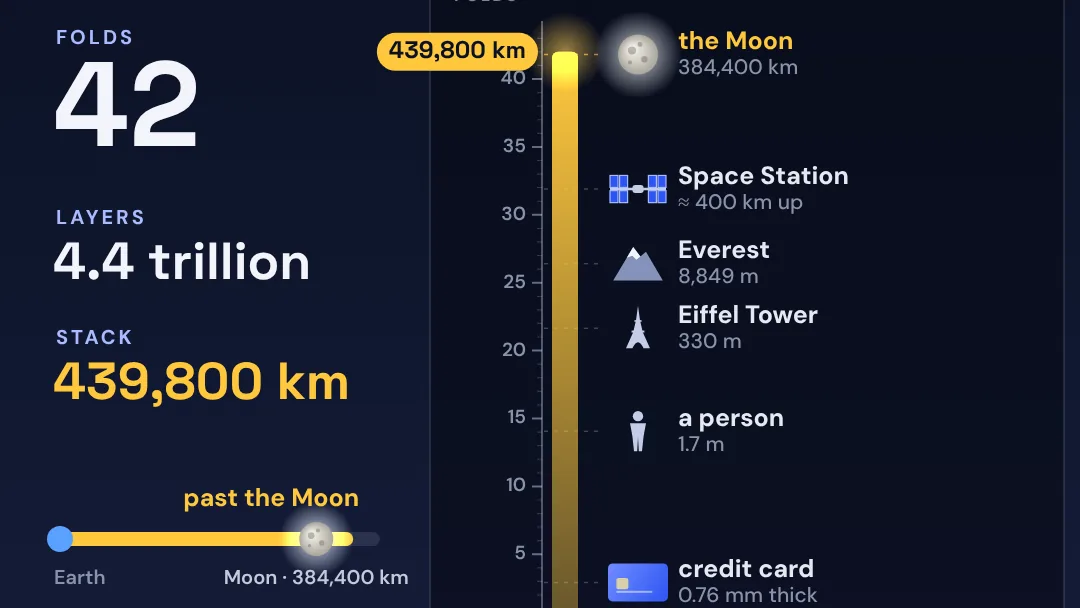
Why is paper so hard to fold more than seven times?
Every fold doubles the stack, and every bend eats more paper. Drag the strip longer for 12 folds, and see why 42 would reach past the Moon.
5 min read
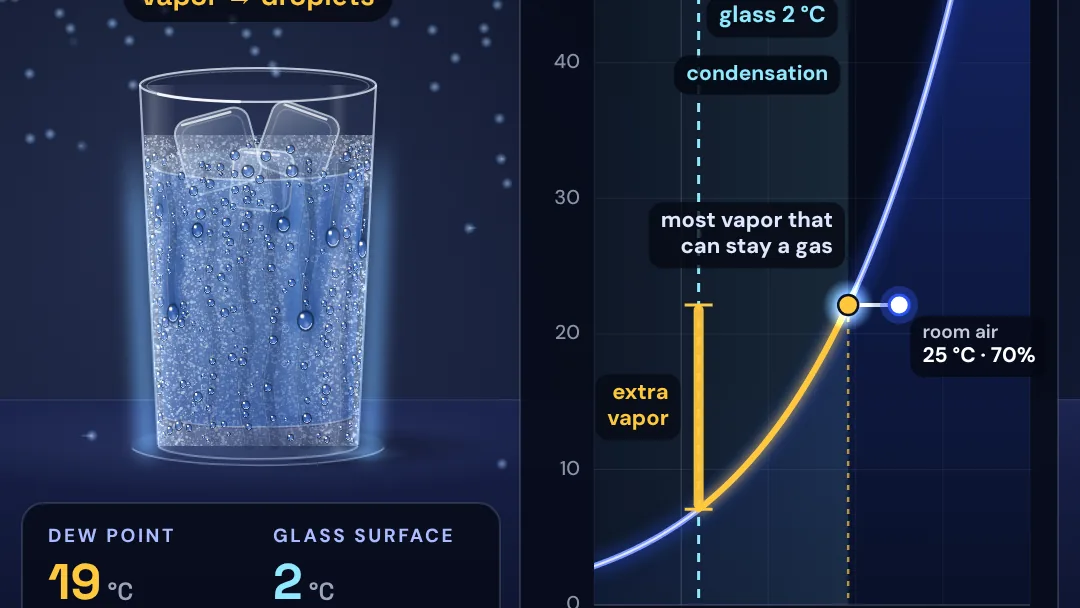
Why does a cold glass sweat?
The water on a cold glass comes out of the air. Drag the humidity down and watch the dew point fall below the glass until the droplets dry up.
5 min read
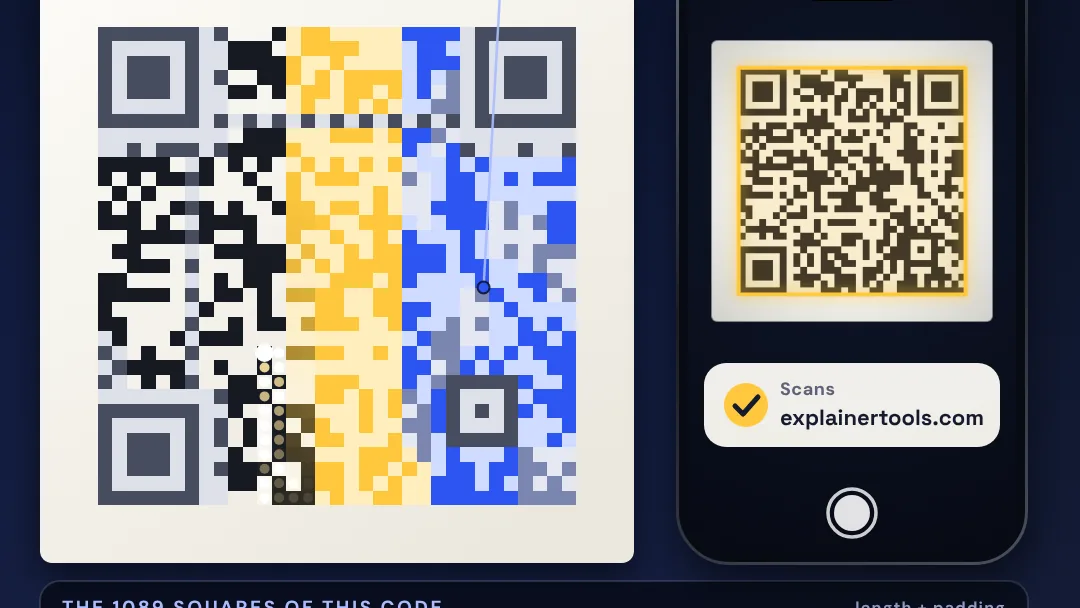
Why does a torn QR code still scan?
Nearly half the squares in our QR code are backup built from your link. Tear chunks out and watch a real decoder rebuild them, until a corner goes.
5 min read
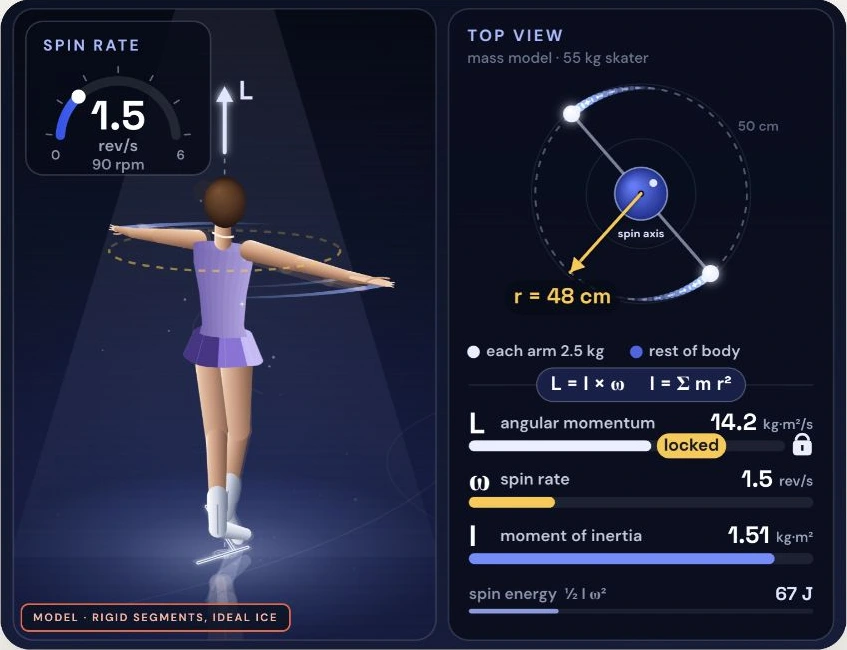
Why do skaters spin faster with their arms in?
A spinning skater pulls her arms in and turns 2.8 times faster, with no outside push. Drag them in yourself, then feel it on an office chair.
5 min read
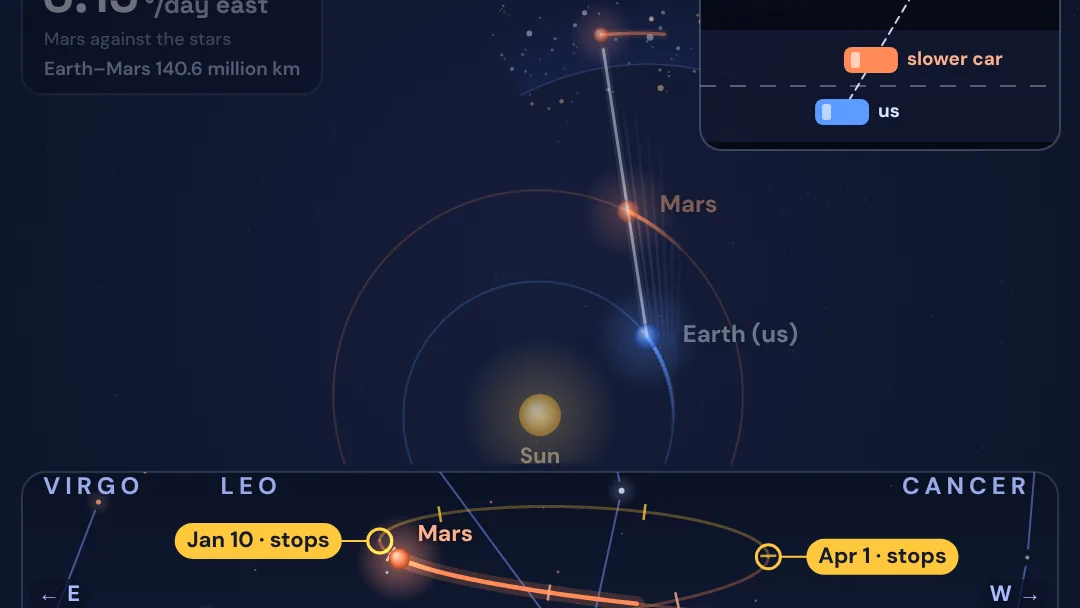
Why does Mars seem to move backward?
Mars loops backward because Earth overtakes it. Drag the date to February 19, 2027, watch the loop form among the stars of Leo, then act it out.
5 min read
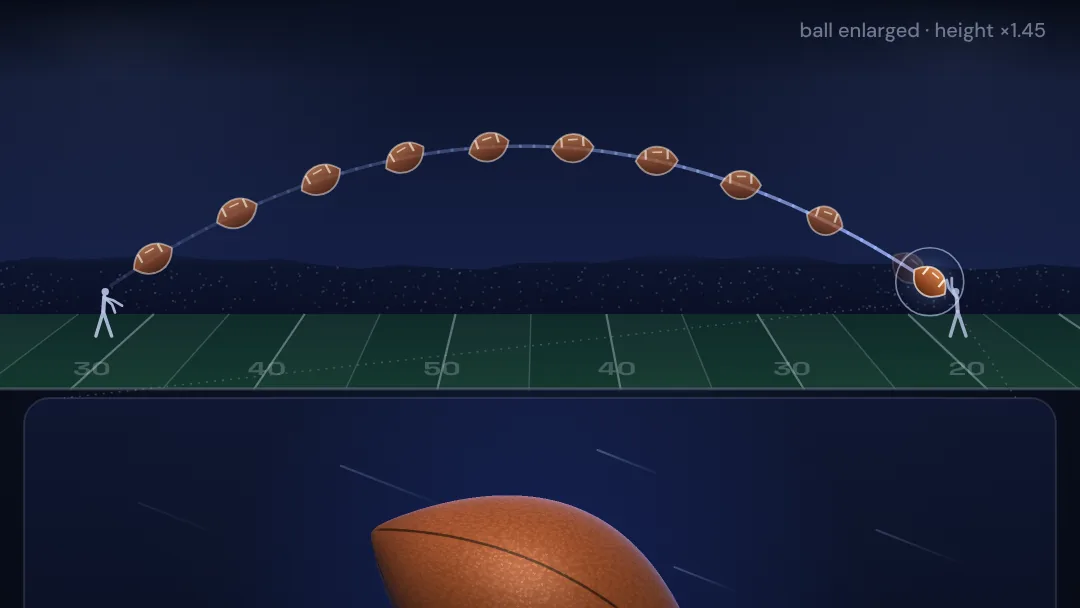
How do you throw a perfect spiral?
Spin is what steadies a football. Crank a pass from a wobbly duck to ten turns a second, and watch the air tip its nose down to follow the arc.
5 min read
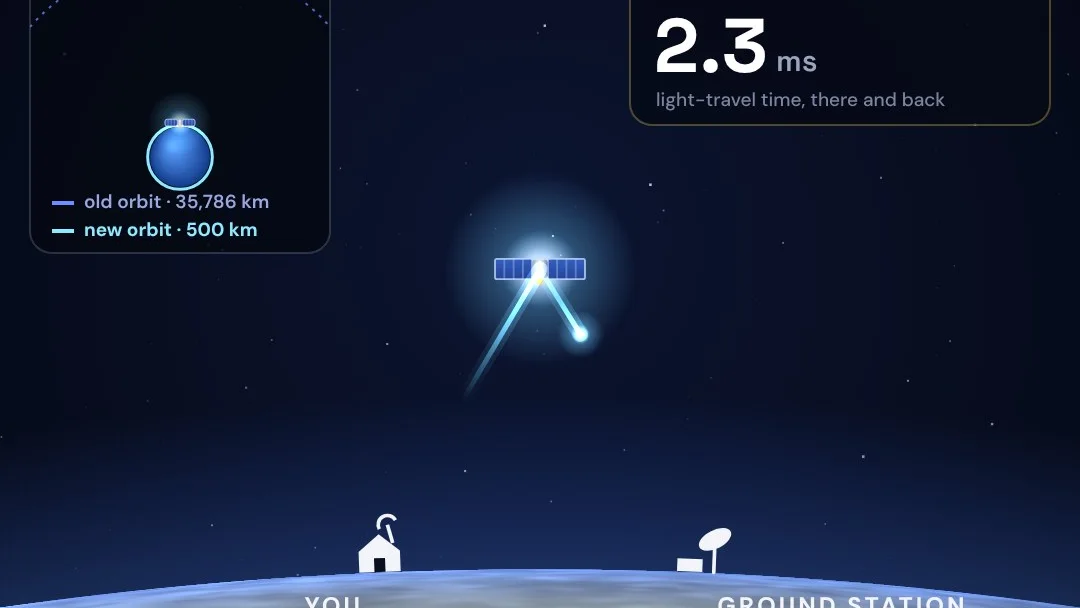
Why does Starlink feel so fast?
Light is fast, but space is big. Follow one click to a satellite and back, and see why a lower orbit cuts the wait to under ten milliseconds.
5 min read
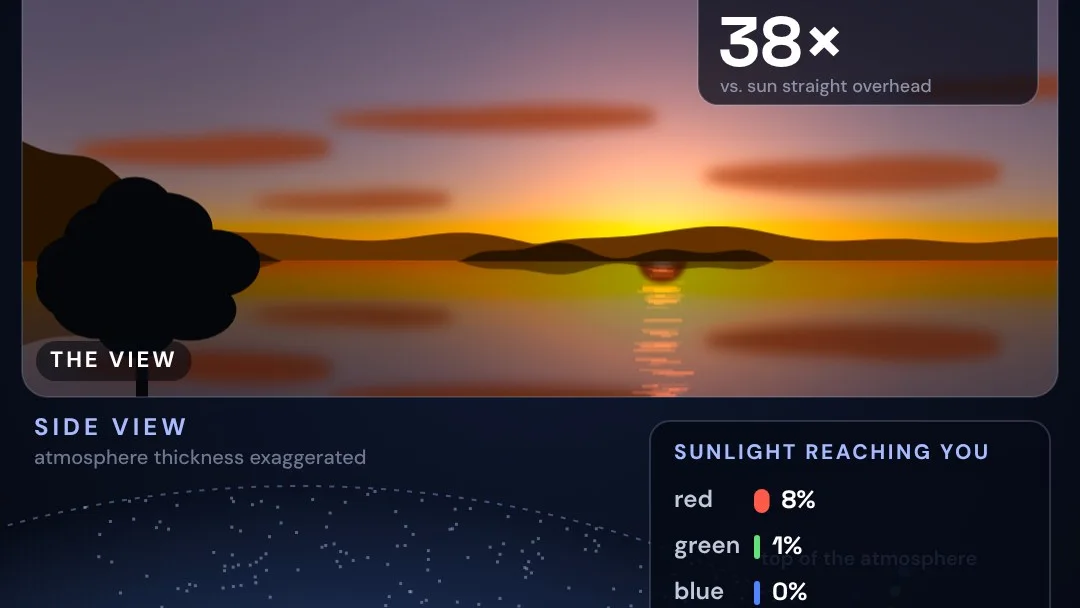
Why is the sky blue but sunsets red?
Air scatters blue light nearly six times more than red. Drag the sun to the horizon, then make a small sunset with a flashlight and a glass of milky water.
4 min read
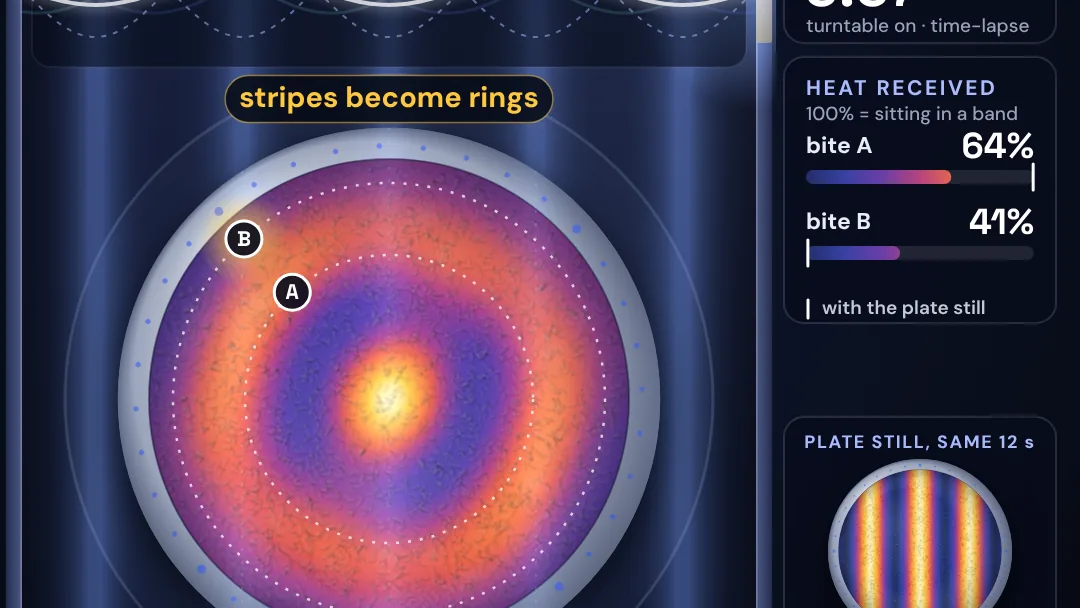
Why does microwave food heat unevenly?
Microwaves form fixed hot bands about 6 cm apart. Spin the turntable in the model, see stripes turn to rings, then map the bands with chocolate.
5 min read
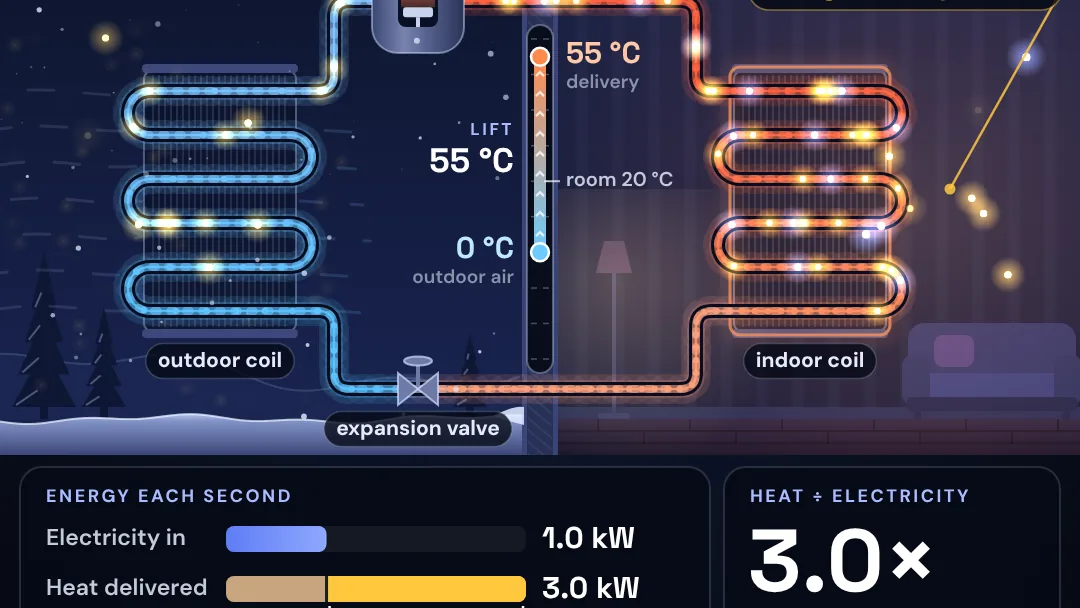
How can a heat pump give more heat than it uses?
A heat pump moves heat instead of making it. Drag the outdoor air from 0 °C to −15 °C and watch the ratio fall, then find the warm side of your fridge.
5 min read
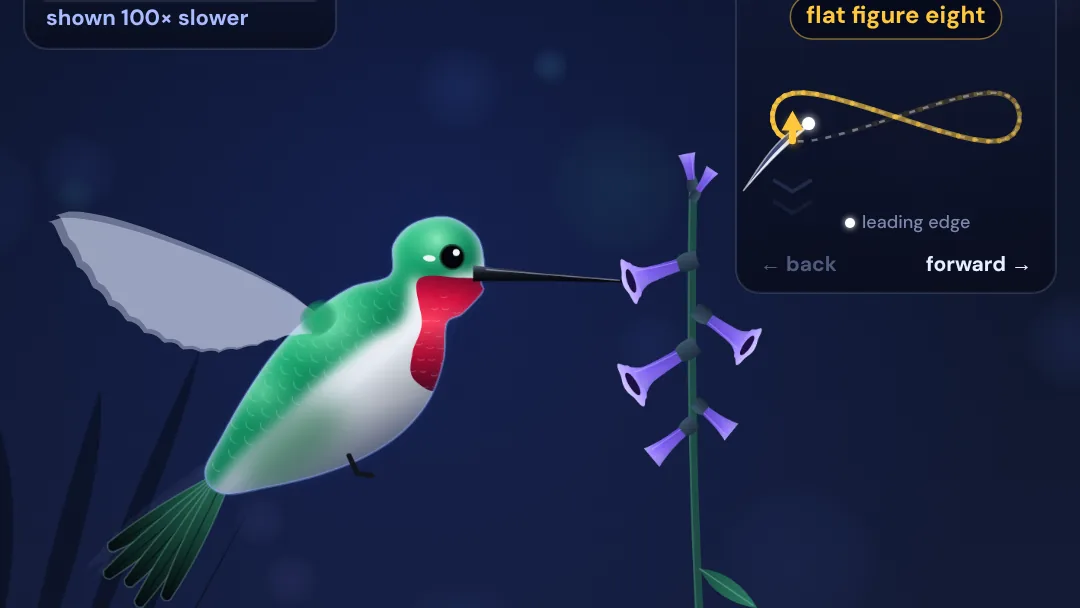
How does a hummingbird hover in midair?
A hovering hummingbird flips its wings over between strokes, so the back stroke pushes air down too. Stop the flip in a model, then feel it with a lid in water.
5 min read
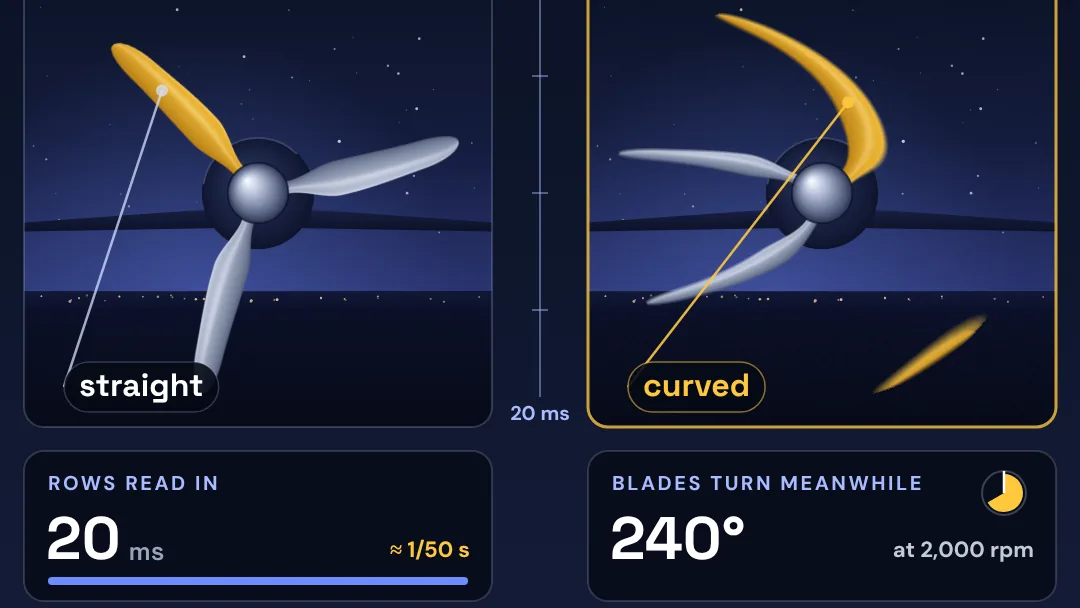
Why do propellers look bent in phone photos?
Most phone cameras read a picture one row at a time, so a spinning blade bends. Spin a model propeller, see why bend and blur differ, then test it on a fan.
5 min read
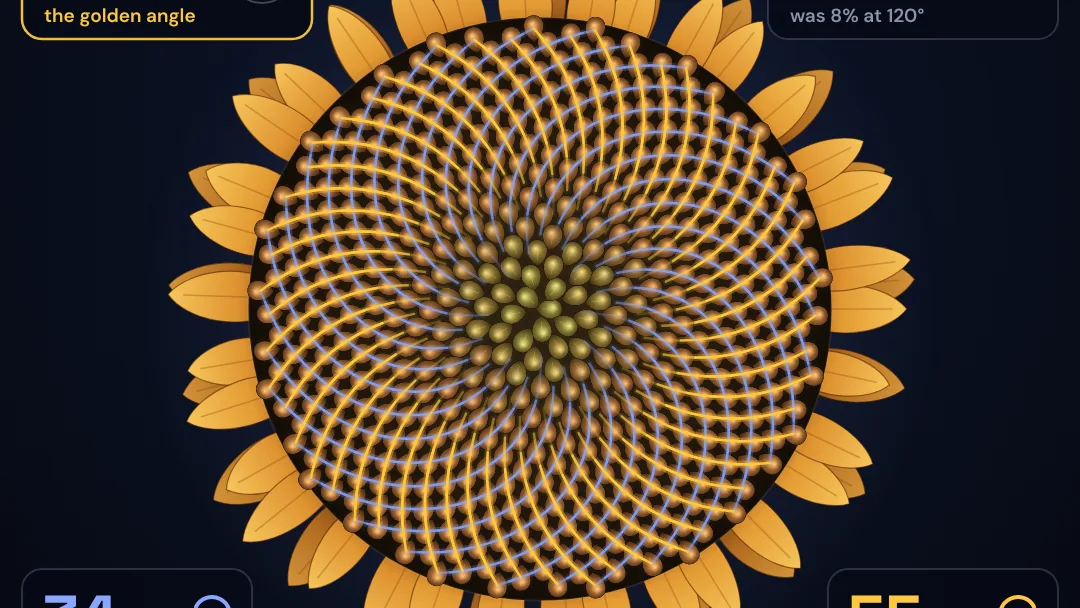
Why do sunflower seeds form spirals?
Turn each new seed by the same angle, and that one angle decides between straight arms and spirals. See why 137.5° packs a sunflower, then count a pinecone.
5 min read
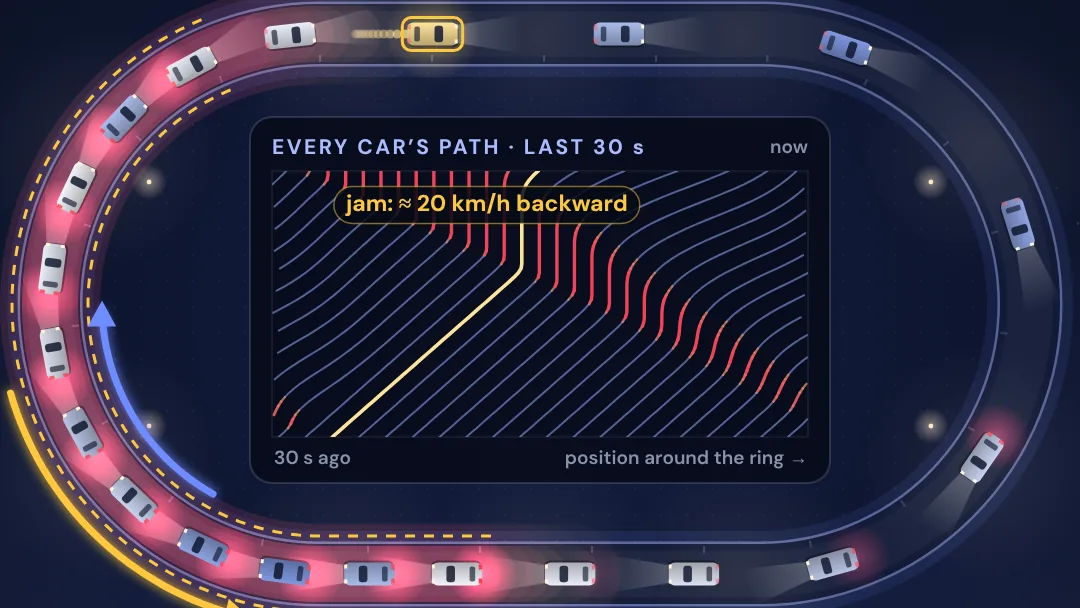
Why do traffic jams appear out of nowhere?
One brake tap in dense traffic can grow into a jam that drifts backward as every car drives forward. Add cars to a model ring road, then try it with walkers.
5 min read
Why interactive explanations can make hard ideas click
What visual learning and active-learning research can tell parents—and how to turn a moving picture into a thoughtful experiment.
4 min read
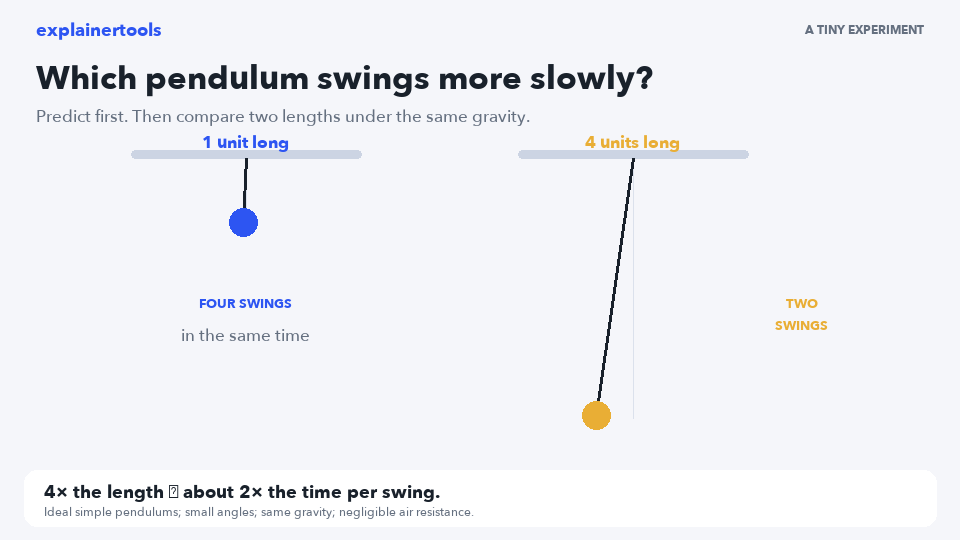
Turn “Why?” into a tiny experiment with your child
A practical guide to using interactive explainers with kids: choose one question, predict, test, and connect the idea to everyday life.
4 min read
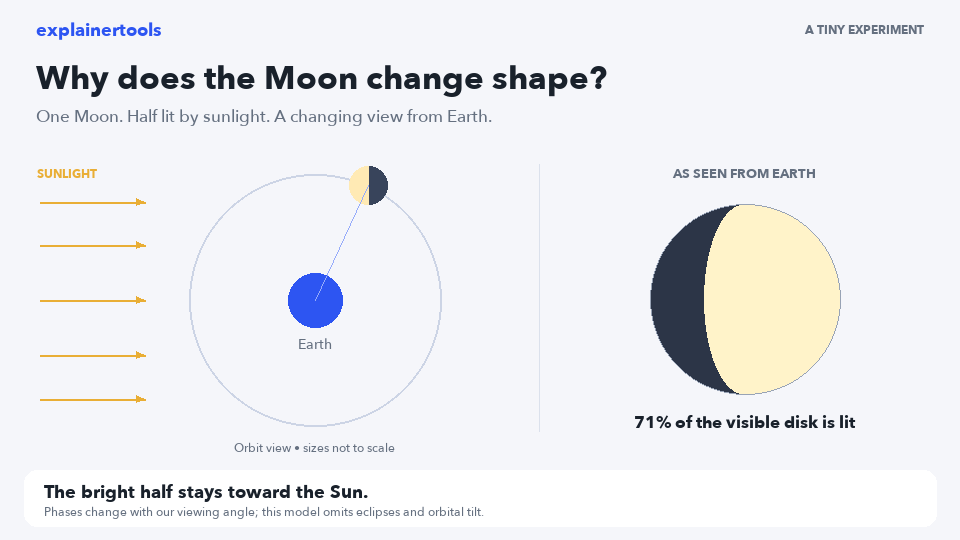
Why does the Moon change shape? Move it and see.
An animated Moon-phases explanation for families, with a slider experiment that connects sunlight, the Moon’s orbit, and the view from Earth.
4 min read
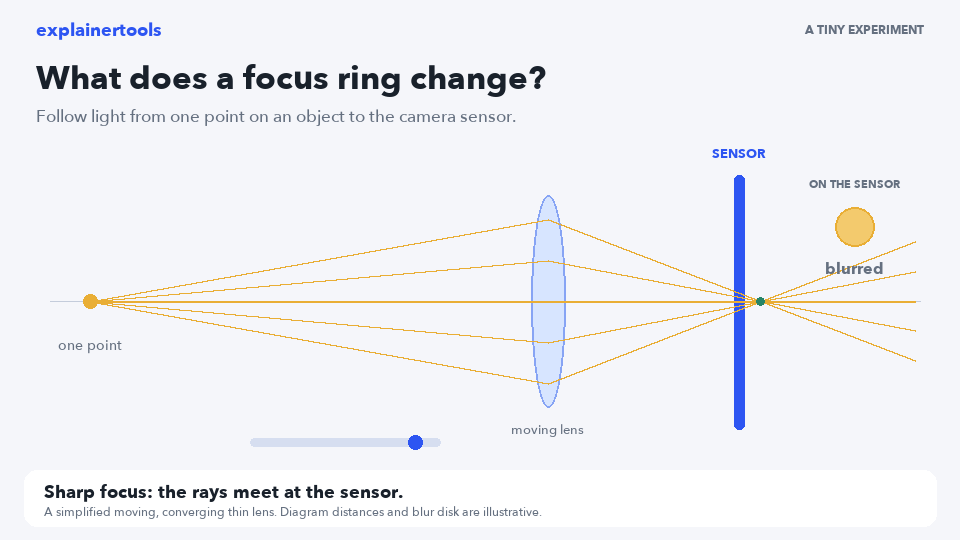
What does a camera do when it focuses?
Follow a few rays of light to understand sharp focus, blur, and aperture, then explore a camera lens together.
5 min read
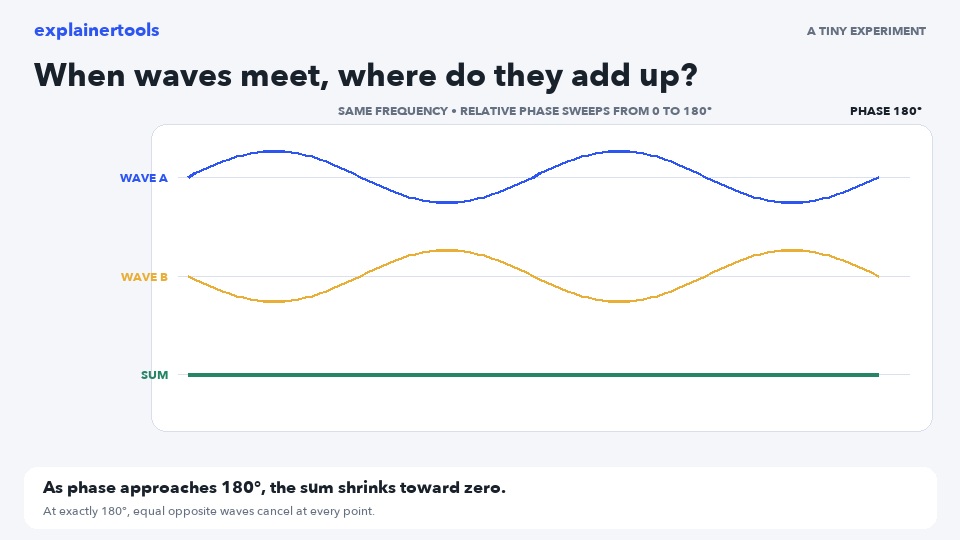
Three tiny experiments in waves, gears, and binary
Watch three original 24-second animations, make a prediction, and explore wave interference, gear ratios, and binary place values together.
4 min read
How do LLMs work? A visual path from tokens to attention
Follow a prompt through tokens, attention, prediction, and interpretation with six visual explainers you can explore in order.
5 min read
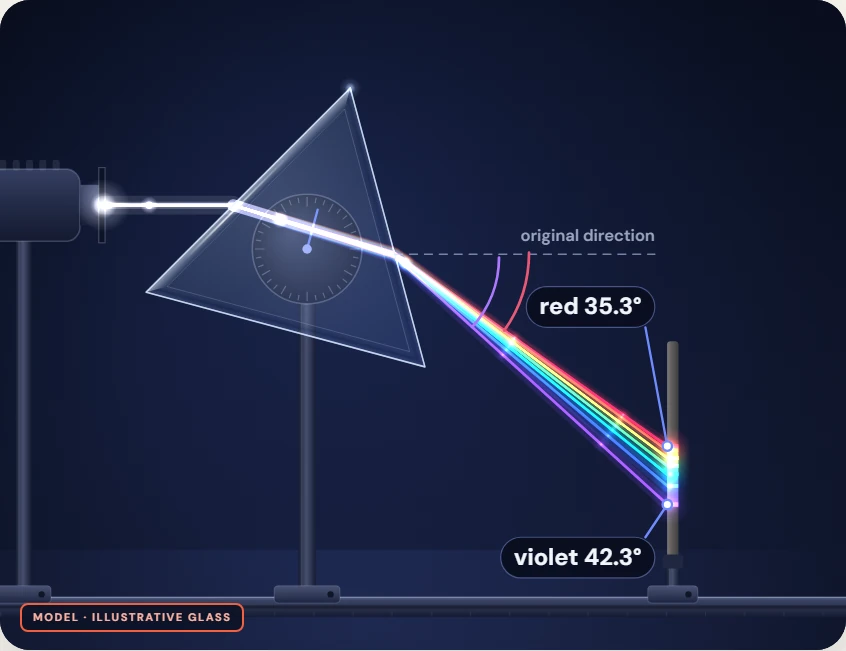
Why does a prism split white light into colors?
A prism does not make a rainbow. It refracts each wavelength by a slightly different amount, separating colors that were already in the white light.
4 min read
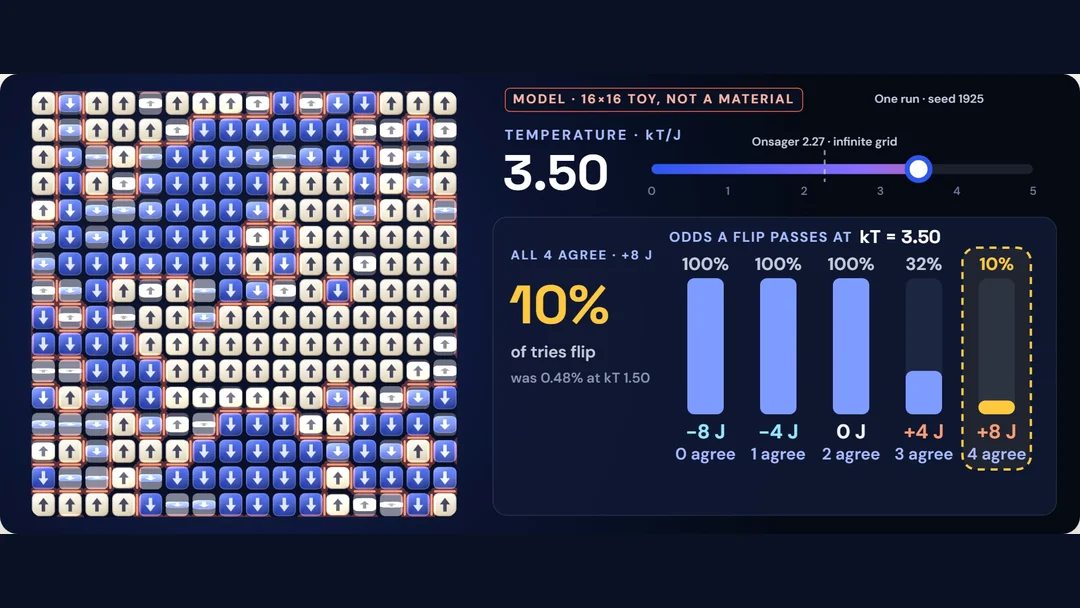
Why does heat break up a magnet’s order?
Turn the temperature from 1.5 to 3.5 in a 16×16 Ising model: one flip’s odds rise from 0.48% to 10%, and the ordered grid breaks into speckle.
4 min read
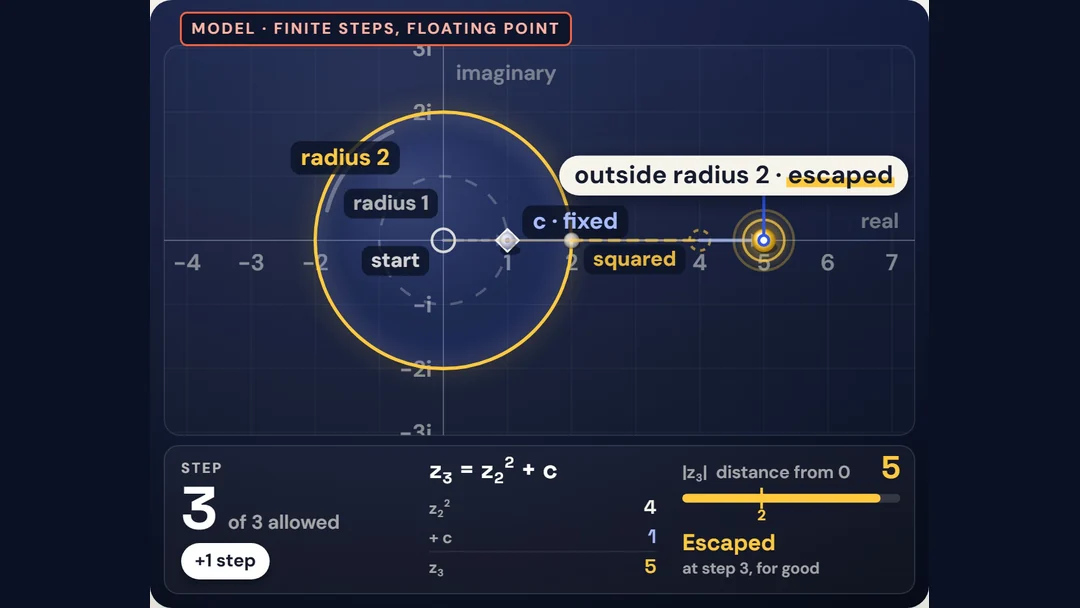
Why is 2 the point of no return for z² + c?
Hold c fixed, start at 0, and keep squaring and adding. Allow one more step and watch c = 1 cross radius 2, then see why staying inside proves nothing.
3 min read
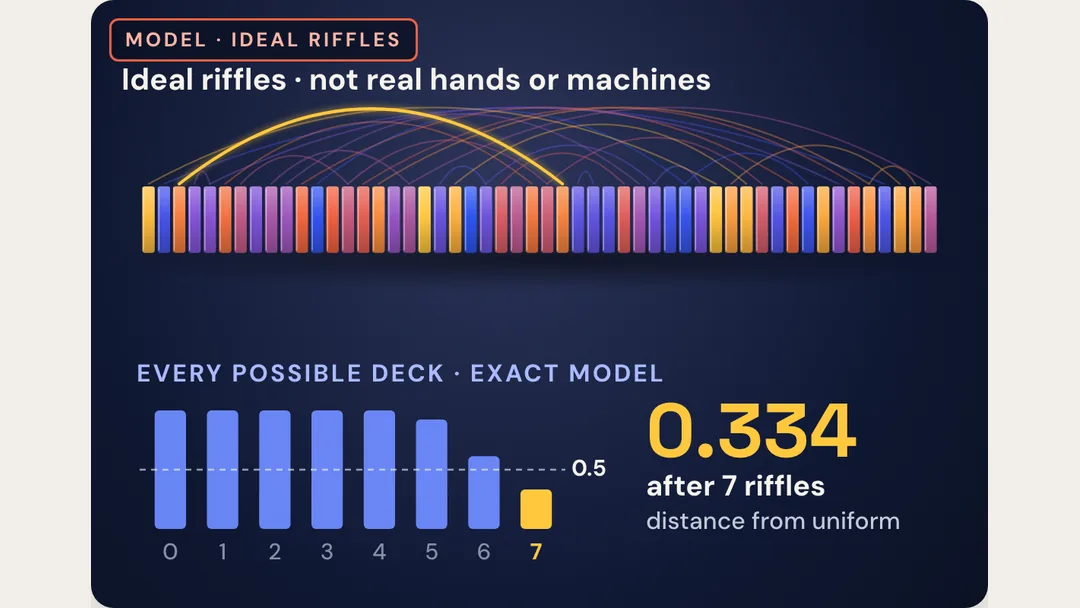
How many riffles mix a deck? Count the threads.
Riffle a 52-card deck and watch threads of the old order survive. Why six ideal riffles fall short and seven pass a halfway yardstick.
3 min read
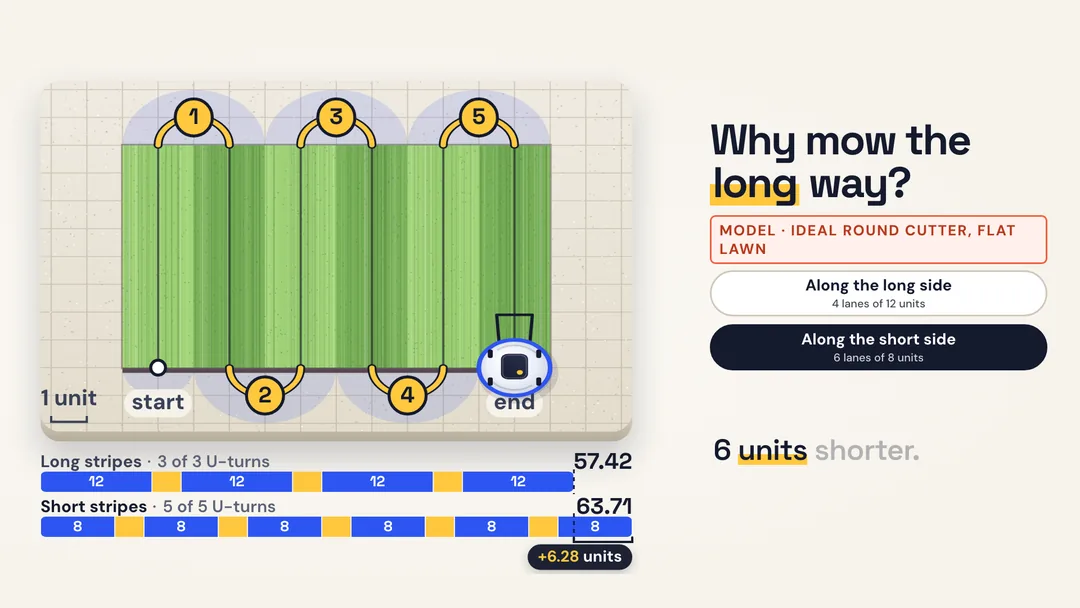
Why does mowing the long way need fewer U-turns?
Predict, then flip the stripes on a model lawn. Both routes cut all 96 square units with 48 units of lanes; the 6.28-unit gap is all U-turns.
3 min read