Original film · Sound
What makes a sonic boom? Mach cones, explained
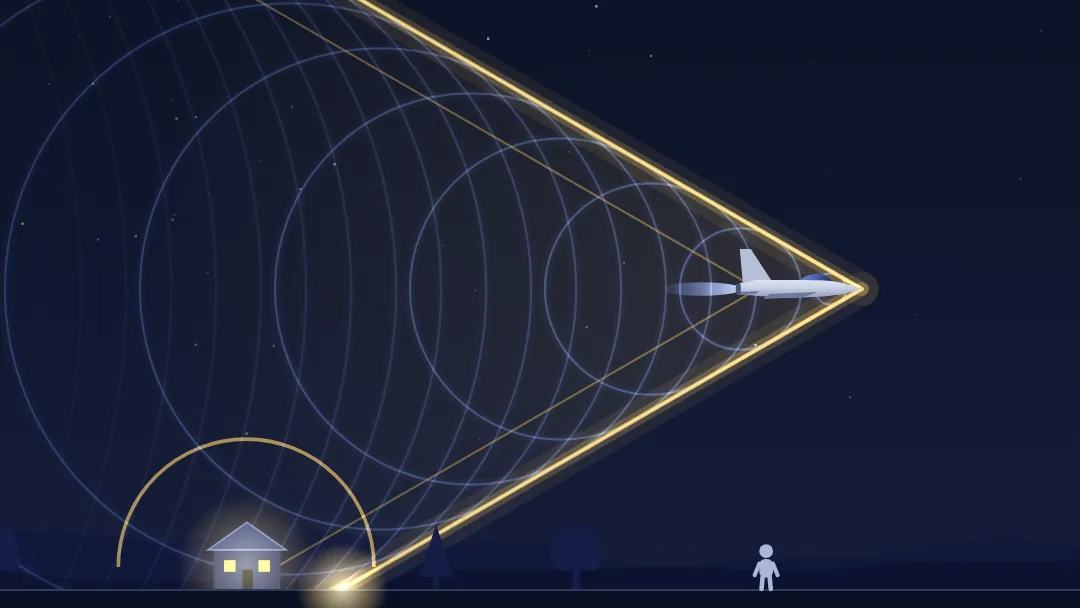
Below the speed of sound a plane stays inside its own sound rings. Past Mach 1 they pile up into a cone that sweeps the ground the whole time, heard as a sharp double bang.

Transcript
What makes a sonic boom? Start with sound itself. Every noise a plane makes spreads out in rings, at the speed of sound: about three hundred forty meters a second in warm air. An airliner cruises at about eighty-five percent of the speed of sound. It stays inside its own rings, and its sound reaches you ahead of it, as a gentle, rising roar. Now speed the plane up to Mach one. It keeps pace with its own sound, and the waves pile up at its nose into a wall of pressure. Push past Mach one, and the plane outruns its noise. The rings can't get ahead of it anymore, so they pile up along a cone, trailing behind. That cone is the boom: a sudden jump in pressure, then a second from the tail, heard as a sharp double bang. And it isn't a one-time event when the plane breaks the barrier. The cone sweeps across the ground for as long as the plane stays well above the speed of sound. The faster it goes, the narrower the cone. At Mach two, it's just thirty degrees from the flight path. Try it yourself at Explainer Tools dot com.