Short · Money
Why does a $5 latte earn ten cents?
A $5 latte in New York earns the café about ten cents. $1.25 is the cup itself; $3.75 goes to rent, staff and the lights, owed whether anyone walks in. At 300 cups a day the first 292 only pay the bills. Add 50 customers and profit jumps from 10¢ a latte to 62¢, because past break-even nearly every cup is profit.
Opens Latte Ledger. Change the same thing yourself.


Transcript
A five-dollar latte in New York. The café keeps ten cents. Where does the rest go? A dollar twenty-five is the cup itself: milk, beans, the paper cup, the straw. Three seventy-five goes to the bills: rent, staff, the lights, owed whether anyone walks in. Today, the first two hundred and ninety-two cups only pay those bills. Nothing is earned until twenty past six. Now add fifty customers: three hundred and fifty cups a day. The same bills are paid by half past three, and profit jumps from ten cents a latte to sixty-two. Change the rent yourself at Explainer Tools dot com.
Learn more
Learn more about café margins
The bills fill before the profit jar does. The guide explains what the $5 pays for, why 50 more customers change so much, and where this model stops.
- Topic guideWhy does a $5 latte earn only ten cents?Break-even, the clock, operating leverage and the New York inputs behind the model.
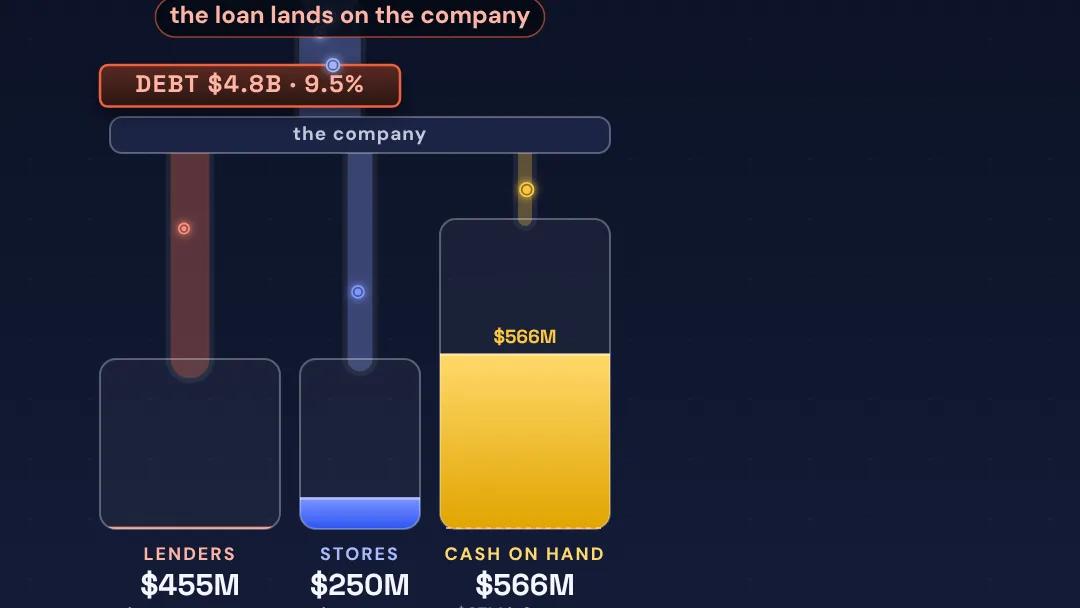 Interactive · Buyout LabHow did $5 billion of debt sink Toys “R” Us?The same lever with debt on top: a 10% sales dip halves Toys “R” Us profit, and the interest does not move.
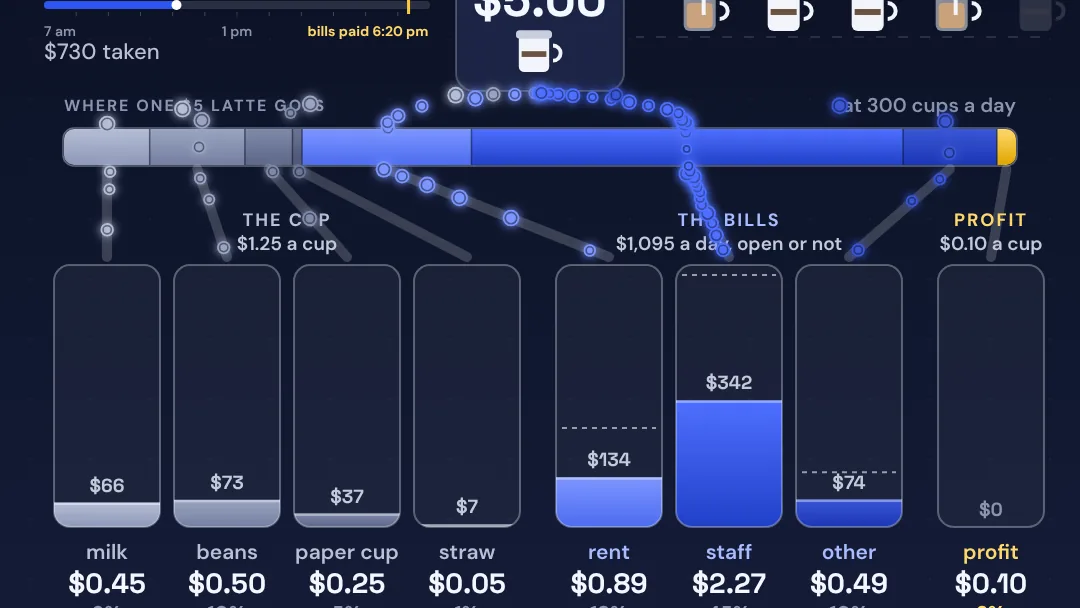 JournalWhy does a $5 latte earn ten cents?The cup itself costs $1.25. The rest goes to rent, staff and the lights, owed whether anyone walks in or not. At 300 cups a day the first 292 only pay the bills, so on a normal café day nothing is earned until 6:20 pm; that is why a busy café can earn a dime a latte, and why 50 more customers change everything.