Topic guides
Start with one question.
Each guide answers one question in plain words. It points you to a model you can change, and to the best explainers we know, with every creator credited.
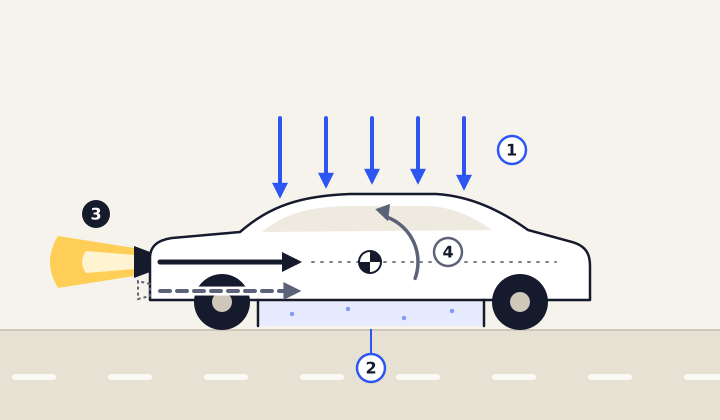
Tesla Roadster · Forces and motion
How could suction and thrusters help a car grip and launch?
Pressure that adds grip, thrust that needs no traction, and torque that turns. Generic physics, with Tesla’s claims labeled as claims.
- How can a fan hold a car down?
- What does a thruster push against?
- Could a thruster flip a car?
- Try it: three small experiments
- Where do these ideas stop working?
1 model · 3 creator explainers
Hunter’s Moon · Sky and light
Why can the Hunter’s Moon look orange as it rises?
Why a rising Moon can glow orange, why a full Moon rises at dusk, and what the name means. With a dated 2026 note.
- Why does a low Moon look warmer?
- Try it: drag the light to the horizon
- Why is a full Moon low at dusk?
- What makes it the Hunter’s Moon?
- Is an orange Moon an eclipse?
2 models · 2 Shorts · 1 creator explainer
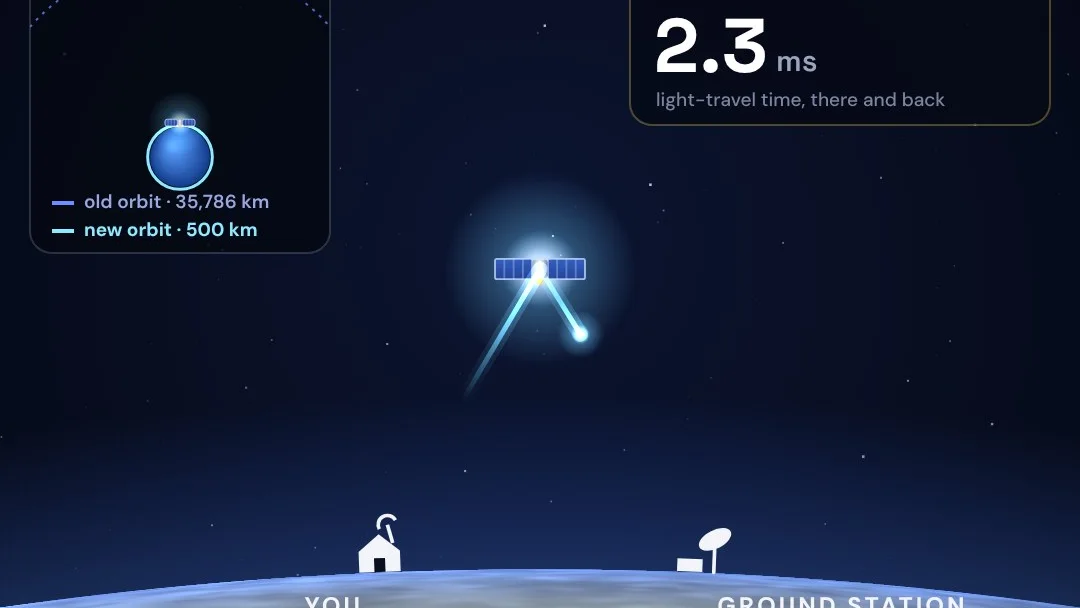
Starlink · Space and networks
Why does Starlink have less lag than older satellite internet?
Where satellite lag comes from, how much low orbit removes, and what it cannot. With a model and a 35-second Short.
- Where does the lag come from?
- Try it: how much does altitude matter?
- What is the catch with low orbit?
- Where does this explanation stop?
3 models · 1 Short · 2 creator explainers
How these guides are made
We start from a question people ask, then answer it from primary sources: space agencies, textbooks, manufacturers and the people who made the work. Each guide links those sources at the bottom.
Company statements stay labeled as company claims. Every model says what it leaves out. Independent explainers are credited by name and linked; listing them does not imply a partnership or endorsement.