Pick one question, make a prediction, then watch what changes. These three original, silent animations each take 24 seconds. Pause whenever you want more time to talk about what you see.
Can two waves add up to nothing?
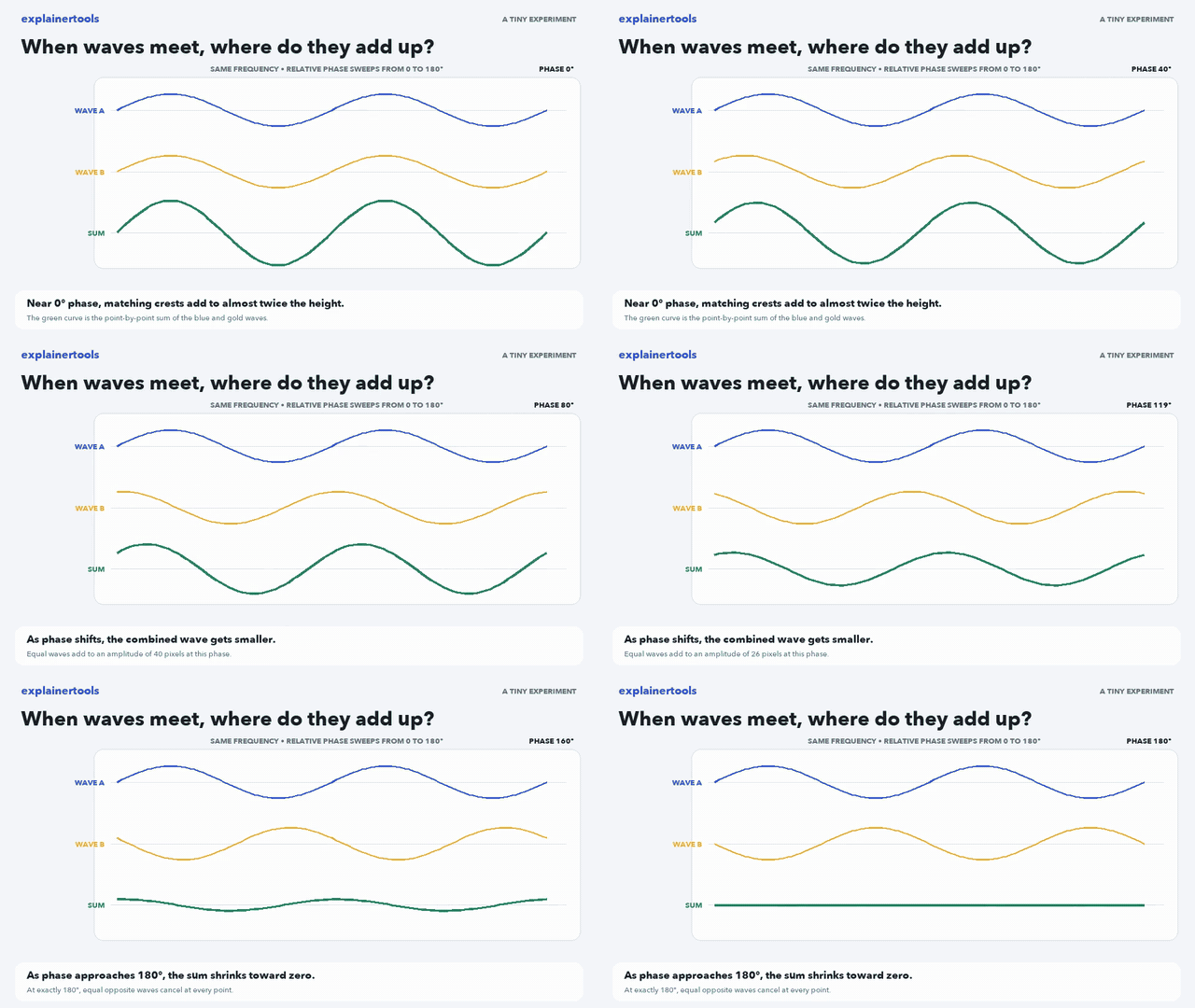
The blue and gold curves have the same amplitude and wavelength. The third curve adds their displacements at every position. When their crests line up, the sum is twice as tall. Shift one wave by half a cycle and each crest meets an equal trough: their displacements cancel.
Before the curves line up, ask: will the combined wave get taller or flatter? This is a computed one-dimensional superposition model, not a simulation of water or sound in a room. OpenStax explains the principle of wave superposition.
Open the playerView the GIFPortrait video
Which gear will finish two turns first?
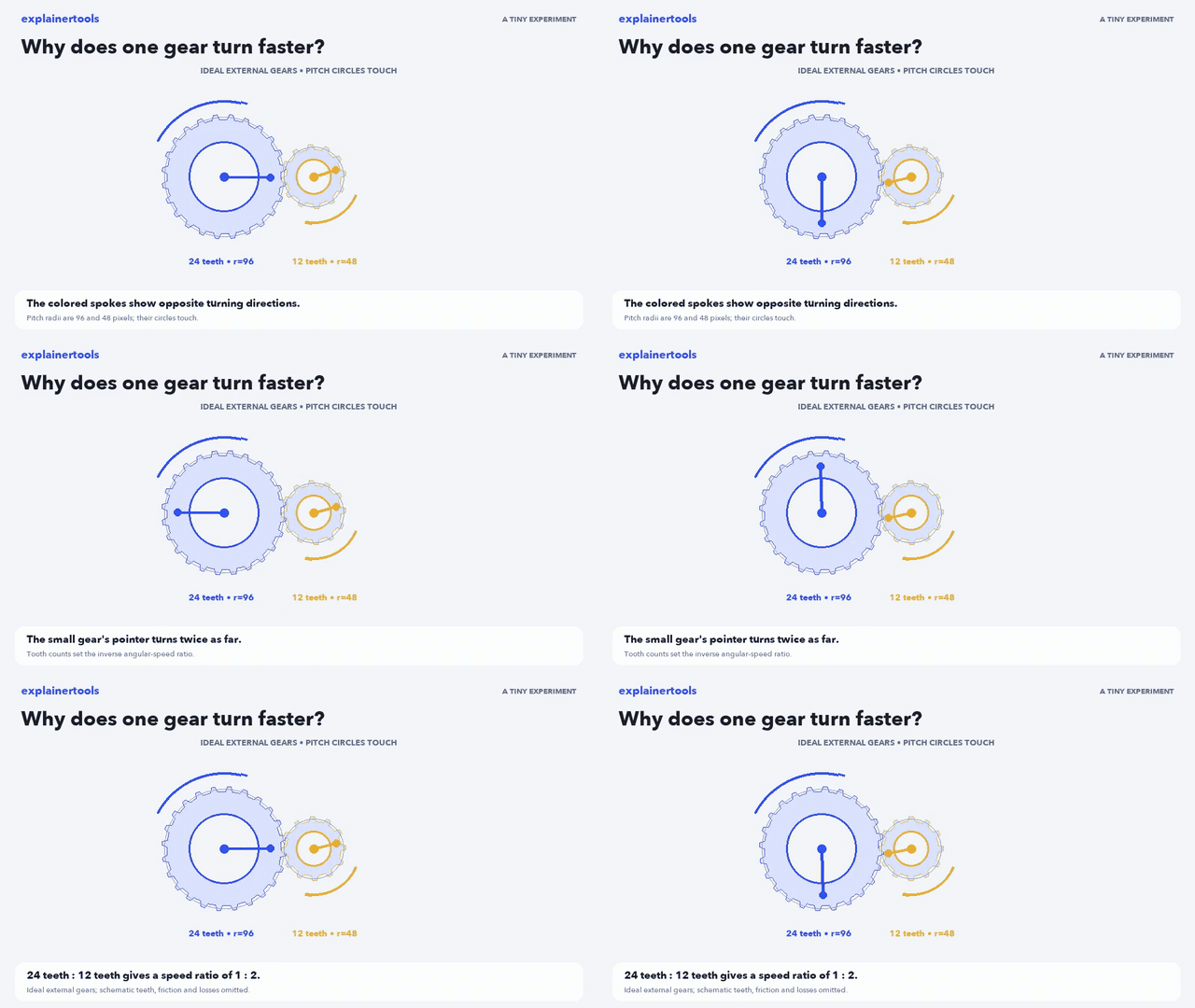
The larger gear has 24 teeth; its partner has 12. Each tooth that passes their contact moves the same number of teeth on the other gear. Twelve teeth make one whole turn of the small gear, but only half a turn of the large one. Follow the rotation markers: the smaller gear turns twice as fast, in the opposite direction.
Try predicting the result for two equally sized gears. This model assumes ideal external gears without slipping. It illustrates the speed relationship, not a manufacturing design or a calculation of friction and losses.
Open the playerView the GIFPortrait video
How can four switches show thirteen?
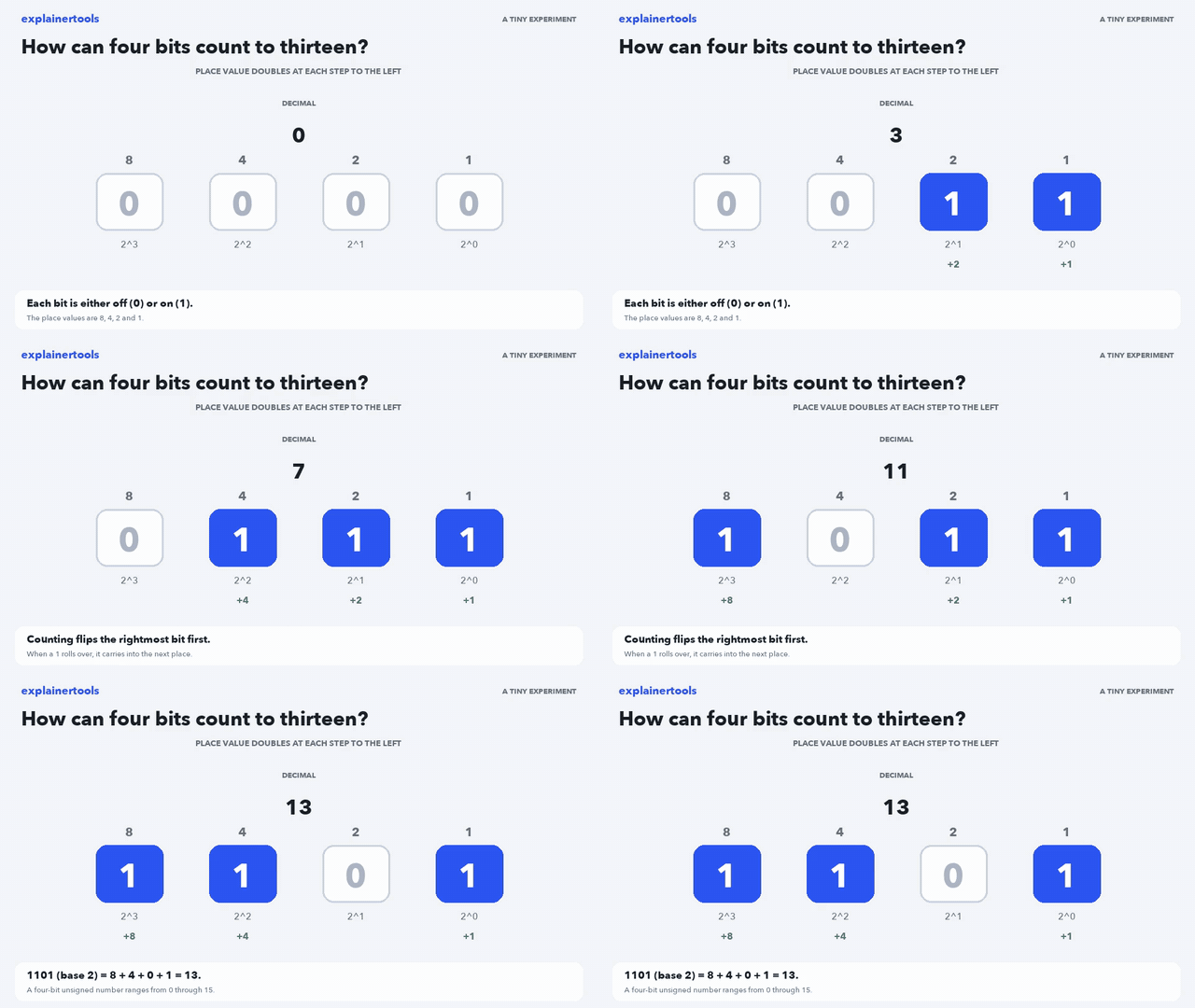
Give the four positions the values 8, 4, 2 and 1. A 1 includes that position; a 0 leaves it out. The animation counts upward, showing a carry when a bit rolls over. At 13, the bits read 1101: 8 + 4 + 0 + 1.
Pause on 0111 and predict the next pattern before playing again. For a hands-on version, put the place values on four cards and turn cards face down to represent zero. CS Unplugged offers more binary-number activities. Four unsigned bits represent 0 through 15; this animation shows selected counting and carry relationships, without depicting an electrical circuit.
Open the playerView the GIFPortrait video
Make the next question yours
Ask what stayed the same, what changed, and what the model leaves out. One good explanation is enough for a session. Follow the next question into the collection when you are ready.
Sources & further reading
Make the next question an experiment.
Browse independent creators who make big ideas visible.
Find an explainer