Topic guide · Parade balloons and wind
Why does wind ground the Macy’s parade balloons?
Because the wind’s push grows much faster than anything holding the balloon up. A giant balloon’s helium lift is set by its size and does not change with the wind. The wind’s sideways push is drag, which grows with the square of the wind speed: double the wind from 17 to 34 mph and the push is four times bigger. The tethers lean over by atan(push ÷ lift), and the balloon is pulled down and sideways, toward the lampposts and the crowd at the curb. So New York keeps the giant balloons on the ground when sustained winds exceed 23 mph or gusts exceed 34 mph, a rule that followed the 1997 parade, when a balloon hit a lamppost and injured four people. In Parade Balloon Wind Lab you can turn up the wind yourself.
- Grounded if sustained wind exceeds
- 23 mph
- Grounded if gusts exceed
- 34 mph
- Wind ×2 (17 → 34 mph)
- push ×4
- Last time the balloons were grounded
- 1971
Rule · CBS New York The decision is made on parade morning from the NWS forecast, an on-site meteorologist and wind readings along the route. The NWS High Wind Watch for November 26, 2026 is a forecast, not a measurement.
Interactive · ExplainerTools
Parade Balloon Wind Lab
Turn “Wind speed” and watch the push grow with speed squared while the lift stays put. Turn “Gusts” to see where a gust swings the balloon, or pick a preset from calm to the High Wind Watch.
Model · illustrative balloon, steady wind, straight tethers
What is the wind rule for the parade balloons?
New York City’s rules keep the giant balloons on the ground if sustained winds exceed 23 mph or gusts exceed 34 mph. The decision is made on parade morning, using the National Weather Service forecast, an on-site meteorologist and wind readings along the route. The balloons were last grounded in 1971. For the 100th parade on November 26, 2026, the NWS in New York issued a High Wind Watch from 10 a.m., with gusts forecast to about 70 mph in the watch area, so the balloons may be grounded again; the call is made that morning.
Why doesn’t the wind change the balloon’s lift?
A helium balloon is lifted by buoyancy: it pushes aside a big volume of air, and that air weighs more than the helium and the balloon’s skin together. The difference is its net lift, the pull the handlers feel. It depends on the balloon’s volume and on the air, not on the wind, so a breeze neither lightens nor weighs down the balloon. Buoyancy is Archimedes’ principle at work.
Why does doubling the wind quadruple the push?
The wind’s push is drag: F = ½ ρ v² Cd A, air density times the speed squared times a shape factor times the area facing the wind (NASA Glenn’s drag equation page). Because of the square:
- 17 mph
In the tool’s illustrative balloon, about 1.3 kN of push against 1.9 kN of lift: the tethers lean about 35°.
- 23 mph · the sustained limit
About 2.4 kN, already more than the lift: the tethers lean about 52°.
- 34 mph · double 17
Four times the 17 mph push, about 5.3 kN: the tethers lean about 70°.
A giant balloon is also a huge sail, so there is a lot of area for the wind to work on.
Why does a strong wind pull the balloon down?
The tethers must hold the balloon against the lift and the push at once, so in a steady wind they settle along the combination, leaning from vertical by the angle whose tangent is push ÷ lift. With no wind they hang straight; when the push equals the lift they lean at 45°; at four times the lift, about 76°. A leaning balloon is lower and further downwind, and downwind of a parade route are the lampposts at the curb and the crowd behind them. In 1997 the Cat in the Hat balloon struck a lamppost and injured four people; the wind rules followed that accident.
Try it: turn up the wind yourself
- 1 See
Open Parade Balloon Wind Lab: a generic giant balloon on tethers over a street, with no wind.
- 2 Change
Turn Wind speed to 17, then 34 mph, or press 23 mph limit, 34 mph gusts and High Wind Watch. Turn Gusts to see where a gust swings the balloon.
- 3 Understand
The green lift arrow never changes; the coral push arrow grows four times when the wind doubles, and the tethers lean toward the lamppost.
Where does this model stop?
Parade Balloon Wind Lab uses a generic balloon with illustrative numbers, not a real parade balloon’s: an ellipsoid 12 m long and 8 m tall, 1.9 kN of net lift, a drag coefficient of 0.5 and straight 20 m tethers. It treats the balloon as balanced in a steady wind and shows a gust as the place the balloon would settle if that wind held. Real handlers shorten the tethers and walk with the balloon, real balloons flex, spin and swing in gusts, and wind between tall buildings comes in eddies, so the tool shows the square law, not a safety limit.
Explore by question
Lift, drag and wind. Each card answers one part of the question.
Parade Balloon Wind Lab
Model · illustrative balloon, steady wind, straight tethers
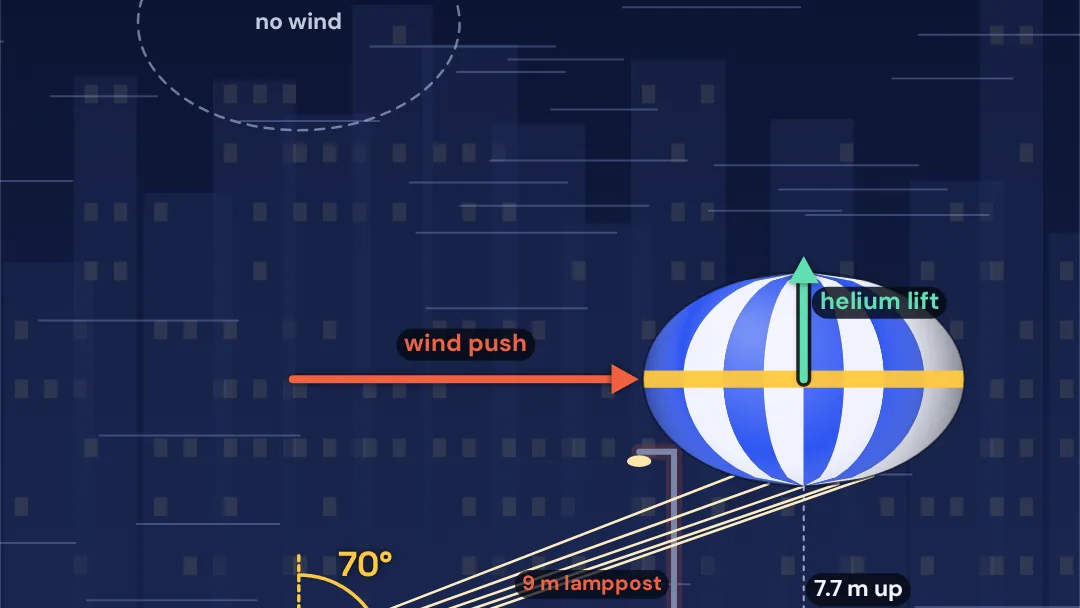 Interactive · Parade Balloon Wind LabWhy does wind ground the Macy’s parade balloons?Turn up the wind on a giant balloon and watch the push grow with speed squared while the lift stays put.
- Short · 50 secondsWhy does wind ground the Macy’s parade balloons?The 23/34 mph rule, the square law and the balloon shoved toward the lampposts. Narrated and captioned.
- JournalWhy does wind ground the Macy’s parade balloons?A balloon’s helium lift stays the same in any wind, but the wind’s push grows with speed squared. Why the parade grounds its giant balloons above 23 mph.
Why things float
Buoyancy lifts a balloon the same way it holds up a ship.
- Interactive articleNaval ArchitectureBartosz Ciechanowski’s interactive essay on buoyancy, stability and how ships float.by Bartosz Ciechanowski
Air pushing on things
The same air that lifts a wing pushes a balloon sideways.
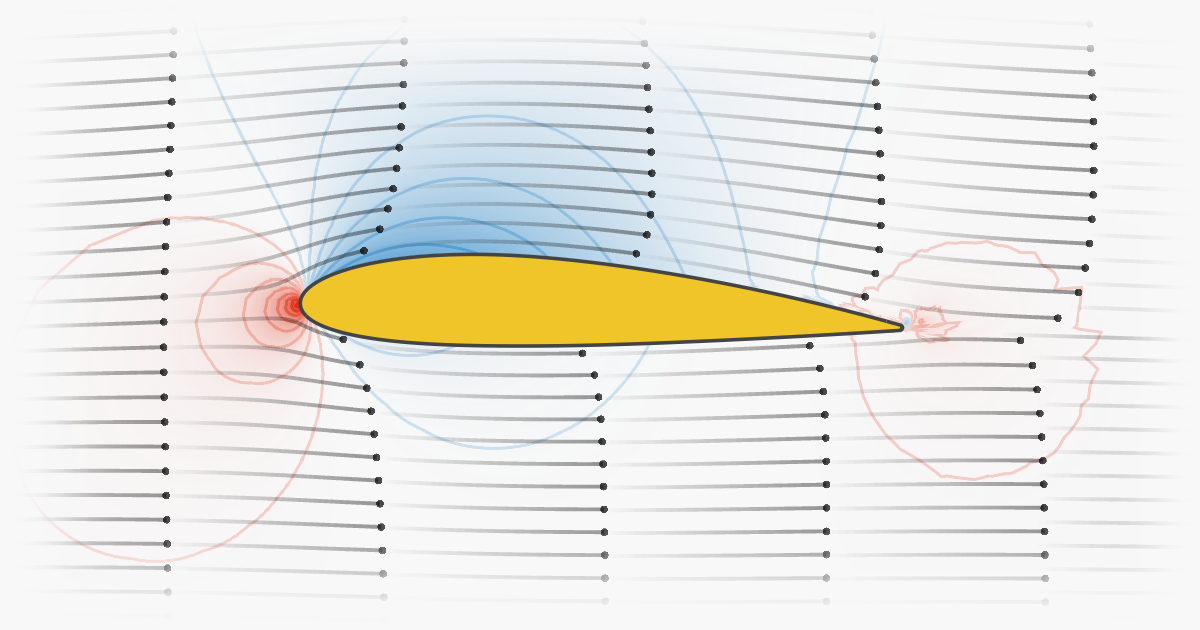 Interactive articleAirfoilAn interactive tour of how air flows around a wing, with lift and drag.by Bartosz Ciechanowski
Where strong wind comes from
Big storms bring the gusts that ground balloons.
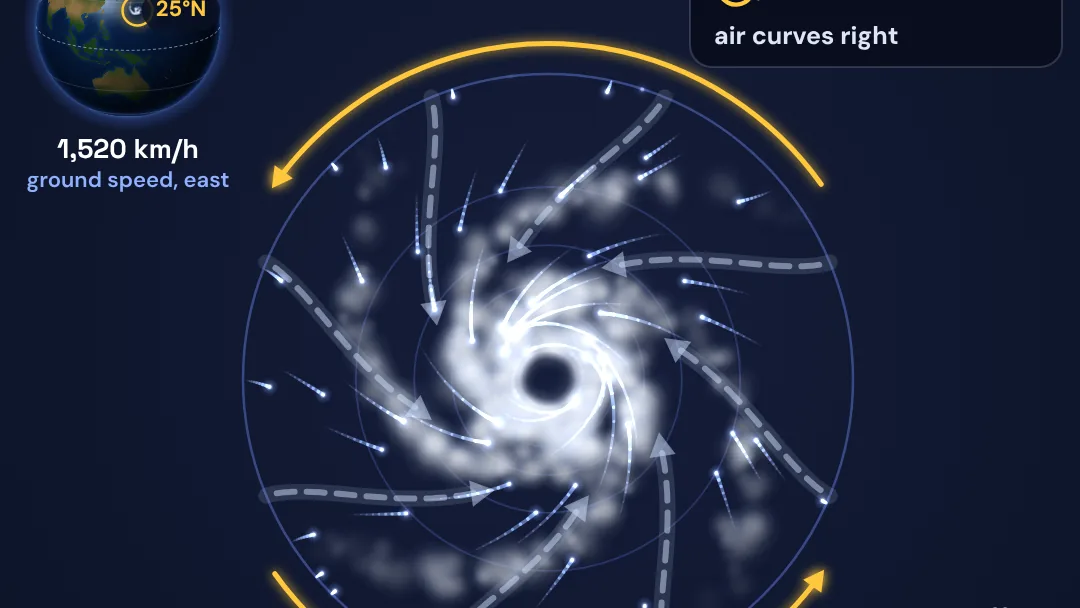 Interactive · Storm SpinWhy do hurricanes spin?Why do hurricanes spin? The Coriolis effect, in your hands.
Common questions
What wind speed grounds the Macy’s parade balloons?
New York City’s rules keep the giant balloons on the ground if sustained winds exceed 23 mph or gusts exceed 34 mph. The call is made on parade morning from the NWS forecast, an on-site meteorologist and wind readings along the route.
When were the parade balloons last grounded?
In 1971.
Why is the wind limit so low?
Because the wind’s push grows with the square of its speed while the balloon’s helium lift stays the same. Doubling the wind makes the push four times bigger, so the tethers lean over and the balloon is pulled down toward lampposts and crowds.
What happened in 1997?
Wind pushed the Cat in the Hat balloon into a lamppost, and four people were injured. The current wind rules followed that accident.
Does wind make a helium balloon lighter?
No. Buoyant lift depends on the balloon’s volume and the air, not the wind. The wind adds a sideways push, and the tethers lean by atan(push ÷ lift).
Concepts in this guide
Each one has a plain one-line definition in Concepts A–Z, with every model, film and post where it comes up.
Sources and credits
- CBS New York · report on the parade’s balloon wind rules (Nov 24, 2026) The 23 mph sustained / 34 mph gust rule, the parade-morning decision, 1971 and the 1997 accident.
- National Weather Service · New York, NY High Wind Watch from 10 a.m. Thursday, November 26, 2026, gusts to about 70 mph in the watch area (forecast).
- NASA Glenn Research Center · The Drag Equation F = ½ρv²CdA: why the push grows with speed squared.
- Wikipedia · Buoyancy Why helium lifts a balloon, independent of the wind.
- Parade Balloon Wind Lab · model notesThe illustrative balloon, the static tether model and what it leaves out.
Every creator named here made the work we link to. Listing it does not imply a partnership or endorsement.