Short · Physics
Why does wind ground the Macy’s parade balloons?
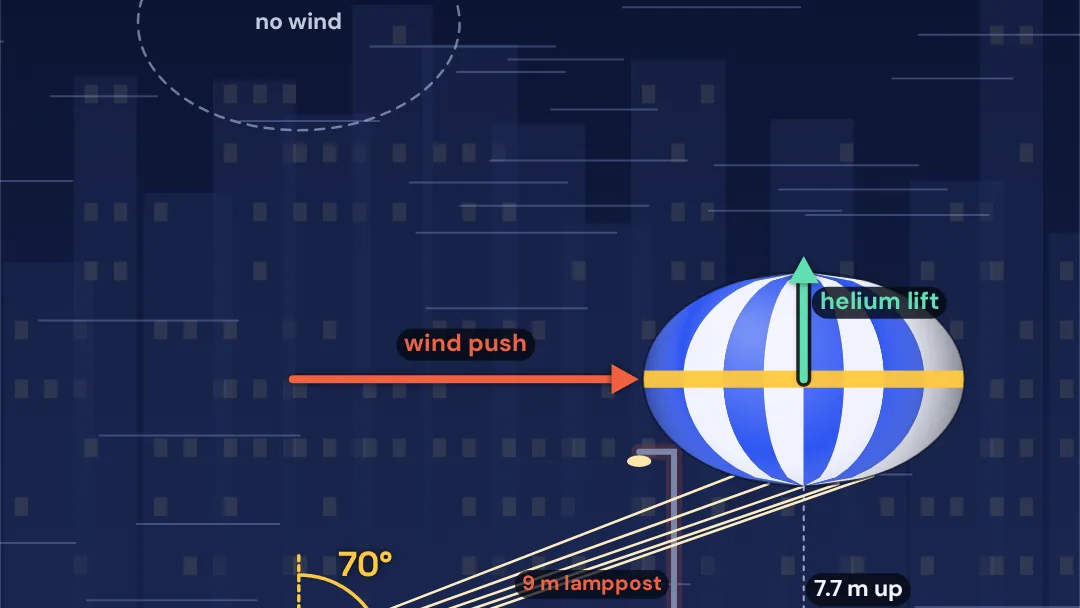
Macy’s postponed its 100th Thanksgiving parade to Saturday, November 28, the first weather postponement in its history (this film was made before the call). Forecast gusts were above the limit for the giant balloons. New York’s rule: no giant balloons if sustained winds top 23 mph or gusts top 34, decided on parade morning. Why so strict? A balloon’s helium lift stays the same, but the wind’s push grows with the square of its speed. Double the wind from 17 to 34 mph and the sideways push is four times bigger. The tethers lean over and the balloon is shoved down and sideways, toward lampposts and crowds. In 1997 a balloon hit a light pole and injured four people.
Opens Parade Balloon Wind Lab. Change the same thing yourself.


Transcript
The hundredth Macy's parade may have to ground its giant balloons, for the first time since 1971. The rule: no giant balloons if sustained winds top 23 miles an hour, or gusts top 34. Why so strict? A balloon's helium lift stays the same, but the wind's push grows with the square of its speed. Now turn up the wind. Double it, from 17 to 34, and the sideways push is four times bigger. The tethers lean over, and the balloon gets shoved down and sideways, toward lampposts and crowds. That's what happened in 1997, when the Cat in the Hat hit a light pole and injured four people. Follow for more explainers like this.
Learn more
Learn more about parade balloons and wind
This model shows the square law that makes wind dangerous for giant balloons. The guide adds the NYC rule, how the decision is made, what happened in 1997 and where the model stops.
- Topic guideWhy does wind ground the Macy’s parade balloons?The 23/34 mph rule, lift vs drag and the 1997 accident.
- Interactive articleNaval ArchitectureBuoyancy, interactively: why ships, and balloons, float.by Bartosz Ciechanowski
 JournalWhy does wind ground the Macy’s parade balloons?A balloon’s helium lift stays the same in any wind, but the wind’s push grows with speed squared. Why the parade grounds its giant balloons above 23 mph.