Short · Weather
Why does warm ground shrink a snow forecast?
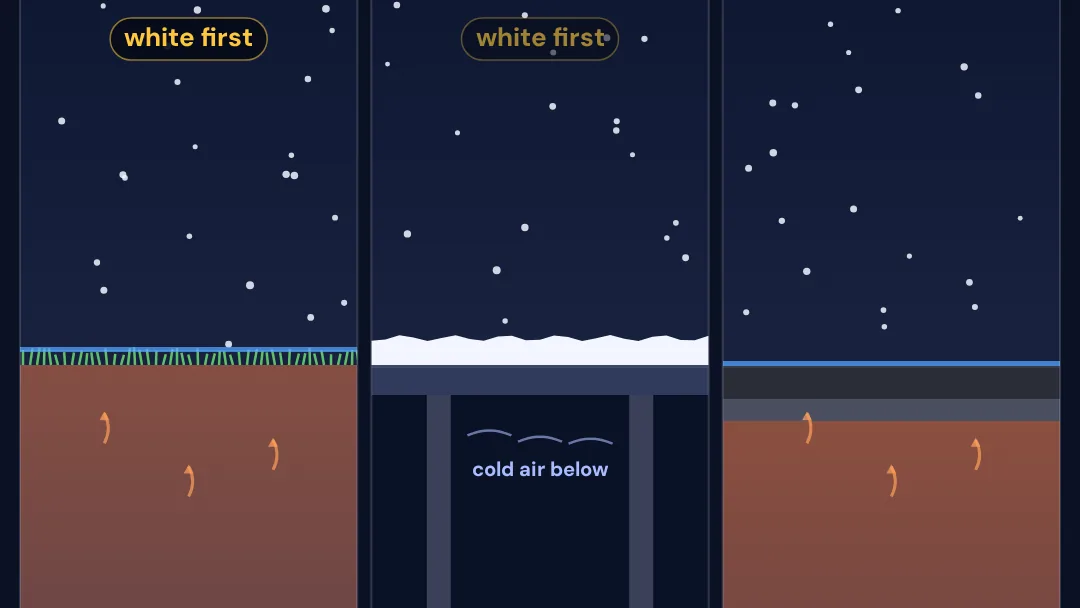
Some weather models showed one to two feet of snow along the Mississippi this Thanksgiving: model guidance, not a forecast. The Weather Service in St. Louis warned that warm ground would limit it. In late November the soil still holds heat from the fall, so the first flakes melt from below and snow only piles up once the surface cools to 32°F. Grass and bridges, with cold air above and below, turn white first; roads store more heat and stay wet longest. Then the snow ratio: one inch of melted water can be about ten inches of fluffy snow or six of wet, heavy snow. Same storm, a very different total on paper.
Opens Warm Ground Snow Lab. Change the same thing yourself.


Transcript
Some weather models showed one to two feet of snow along the Mississippi this Thanksgiving. The Weather Service warned that warm ground would limit it. Why? In late November, the soil still holds heat from the fall. The first flakes land on warm ground and melt from below, so snow only piles up once the surface cools. Grass and bridges turn white first. Roads, which store more heat, stay wet longest. Now turn the snow ratio. One inch of melted water can fall as ten inches of fluffy snow, or six inches of wet, heavy snow. Same storm, a very different total on paper. Follow for more explainers like this.
Learn more
Learn more about snow forecasts
This model shows ground heat and the snow ratio. The guide adds why a model map is not a forecast, why bridges freeze first and where the model stops.
- Topic guideWhy does warm ground shrink a snow forecast?Model runs vs forecasts, melting from below, bridges and roads, and snow ratios.
 Interactive · Dew Point LabWhy does a cold glass sweat?Water changing phase on a cold surface: why a cold glass sweats.
 Interactive · Heat Pump LabHow can a heat pump give more heat than it uses?Heat flows from warm to cold, and a heat pump runs it in reverse.
 JournalWhy does warm ground shrink a snow forecast?Late-November soil still holds autumn heat, so the first flakes melt from below. Why grass and bridges whiten first, and how the snow ratio changes the total.