Short · Space
How do you catch both halves of a rocket?
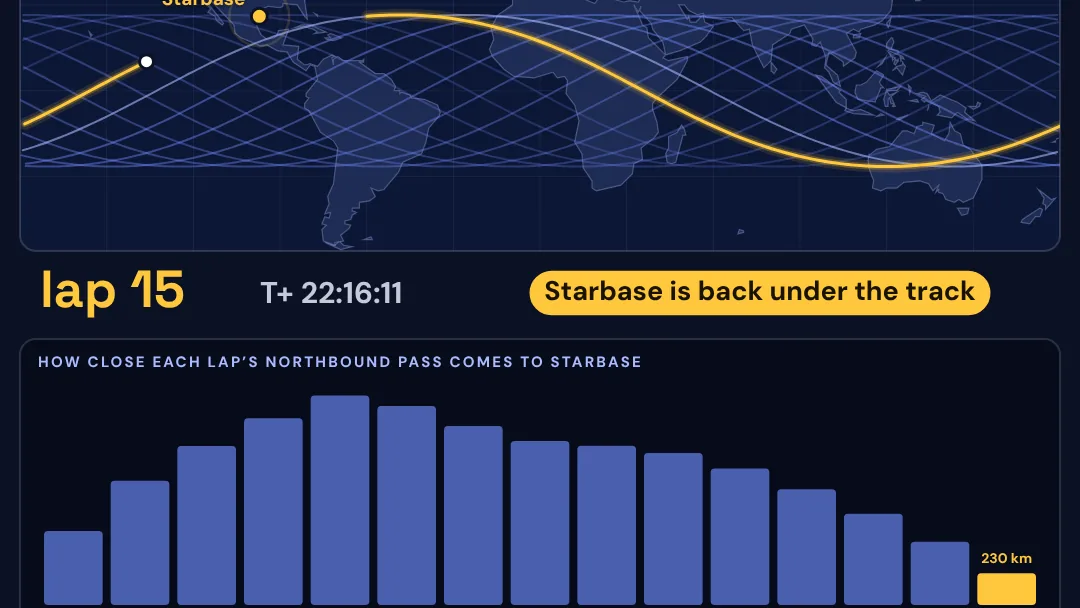
On its next flight, Starship Flight 15 (NET Fri Nov 13, 4:45 PM CT, pending regulatory approval), SpaceX plans to catch the Super Heavy booster with the tower’s arms about 6½ minutes after liftoff, then catch the ship too, about 22½ hours later. The booster has been caught three times before; no ship ever has. The ship reaches orbit at about 17,500 mph, drops off 26 Starlink V3 satellites, and waits: each 90-minute lap ends about 23° farther west as Earth turns underneath, so it takes about 14 laps before Starbase is back under its path. Then it reenters, banks over Mexico and Texas, falls belly first, flips upright on three engines and is caught by two fittings under its forward flaps.
Opens Double Catch. Change the same thing yourself.
Transcript
On its next flight, SpaceX will try to catch a rocket. Then, almost a day later, catch the other half. The first part, they've done three times. About six and a half minutes after liftoff, the booster flips, burns back toward the tower, and slows on its engines until the arms close around it. The ship is the hard part. It goes to orbit, at about seventeen thousand five hundred miles an hour, drops off twenty-six Starlinks, and then it waits. Each lap takes ninety minutes, and Earth turns about twenty-three degrees underneath. So after about fourteen laps, Starbase finally comes back under its path. Then it reenters behind its heat shield, banks over Mexico and Texas, falls belly first, flips upright on three engines, and the arms grab it by two fittings under its nose flaps. If both catches work, the whole rocket comes home. Follow for more explainers like this.
Learn more
Learn more about Starship Flight 15
This model runs SpaceX’s mission clock. The guide adds when to watch, how each catch works, why the ship waits about 14 laps and what can still change.
- Topic guideHow do you catch both halves of a rocket?When to watch, the two catches and the 22-hour wait.
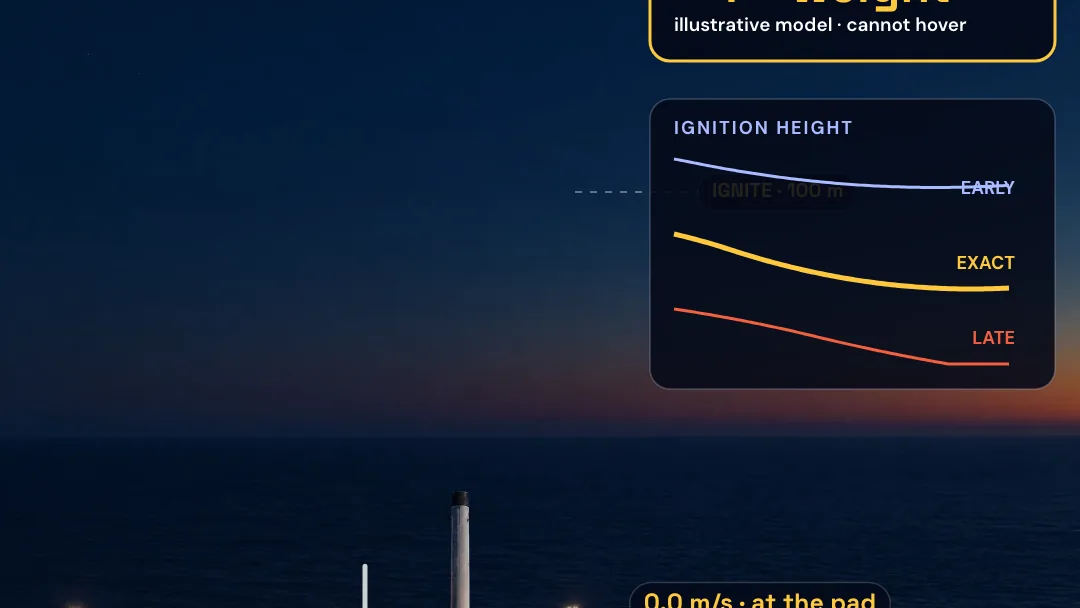 Interactive · Landing BurnWhen should a falling rocket light its engine?When should a falling rocket light its engine? Try the landing burn yourself.
 Interactive · Newton's CannonWhy don't satellites fall down?Why the ship stays up: Newton’s cannon, faster and faster.
 JournalHow do you catch both halves of a rocket?Starship Flight 15 is set to try two catches: the booster 6½ minutes after liftoff, the ship 22½ hours later, once Earth turns Starbase back under its path.