Topic guide · AI-agent cyberattacks
Why are AI-run cyberattacks so fast?
Because an intrusion is a chain of steps, and agents shorten the slow ones. A human crew gets in, looks around, gains access, steals data and encrypts, mostly one step at a time, with pauses. Software agents do not pause, and the search steps split across as many agents as the attacker runs. Defense is a clock as well: time to detect plus time to respond. If the attack finishes before the alarm, a fast response is too late. What still works at any speed is a control that needs no alarm, a step that cannot happen. The 14-minute figure comes from one researcher’s account on CNN and has not been independently verified. In Attack Clock Lab you can run the race yourself.
- Claimed: login to ransomware
- 14 minutes
- Claimed: time to notice
- ≈ 4½ hours
- Model: human crew, five steps
- ≈ 21 hours
- Model: 30 agents
- ≈ 14 minutes
Account · D. Kennedy on CNN, Nov 20, 2026 The first two figures are David Kennedy’s account of one unnamed client and are not independently verified. The model’s times are illustrative, tuned to match that account rather than measured.
Interactive · ExplainerTools
Attack Clock Lab
Turn “Attackers” up from a human crew to 30 agents and watch the attack bar shrink. Then shorten “Time to detect”, or block a step outright.
Model · every time is illustrative
What was claimed, and is it verified?
On November 20, 2026, David Kennedy, founder of the security firm TrustedSec, told CNN’s Erin Burnett OutFront that he had responded to a breach in which “over 30 different types of agents” used valid credentials, bypassed two-factor authentication, stole data and encrypted a client’s file system in 14 minutes, and that the company took about four and a half hours to notice (OutFront’s post). He did not name the company or the attackers. The account has not been independently verified. This guide explains the mechanism, which does not depend on that one report.
What are the steps of a break-in?
Security teams describe intrusions as a chain; MITRE ATT&CK catalogues the techniques at each stage. A simplified version has five links:
- Get in
Usually with a stolen or guessed login. One login is one login, however many agents there are.
- Look around and gain access
Searching machines, accounts and file shares. This is where a human crew spends most of its time, and it divides cleanly across agents.
- Steal and encrypt
Copy the data out, then lock what is left. Partly limited by the network, so it speeds up less.
Each step depends on the one before it. Break any link and nothing after it happens.
Why would agents be so much faster than people?
Two reasons. Agents do not sleep, hand off or wait for each other, so the gaps between actions disappear. And the search steps are parallel work: thirty agents can try thirty doors at the same moment. In the tool, a human crew needs about 21 hours and thirty agents about 14 minutes. Those times are illustrative. The shape is the point: the steps that shrink most are the ones that used to give defenders their warning time.
Why doesn’t a fast response help?
Defenders have two numbers: time to detect and time to respond. Their sum is the moment the intruder is cut off. Against a 21-hour attack, detection after four and a half hours wins comfortably. Against a 14-minute attack the same alarm arrives hours after the damage, and shaving the response from thirty minutes to thirty seconds changes nothing. To win on speed, detection and response together have to fit inside the attack, which means minutes, and in practice automation.
What stops a fast attack?
A control that does not wait for an alarm. If a stolen password is useless without a hardware key, or an account cannot reach the file servers, or bulk encryption is refused, the chain stops at that link whatever the attacker’s speed. In the tool, blocking “Gain access” halts a 30-agent swarm at step three every time. Prevention of this kind was always good practice; fast attackers make it the part that matters most.
Try it: run the race yourself
- 1 See
Open Attack Clock Lab with a human crew: the defense arrives while the crew is still looking around.
- 2 Change
Press 30-agent swarm, then Fast response, then Block a step.
- 3 Understand
Speed beats a slow alarm. A blocked step beats speed.
Where does this model stop?
Every time in Attack Clock Lab is illustrative. Step times for n agents are base ÷ (6.5 × np), with p chosen per step so that 30 agents take about 14 minutes; none of it is measured from a real incident. Real intrusions branch, fail and retry, and real defenses are layered. The tool shows why the race changes, not how any particular network would fare.
Explore by question
Attackers, agents and what protects an account. Each card answers one part of the question.
Attack Clock Lab
Model · every time is illustrative
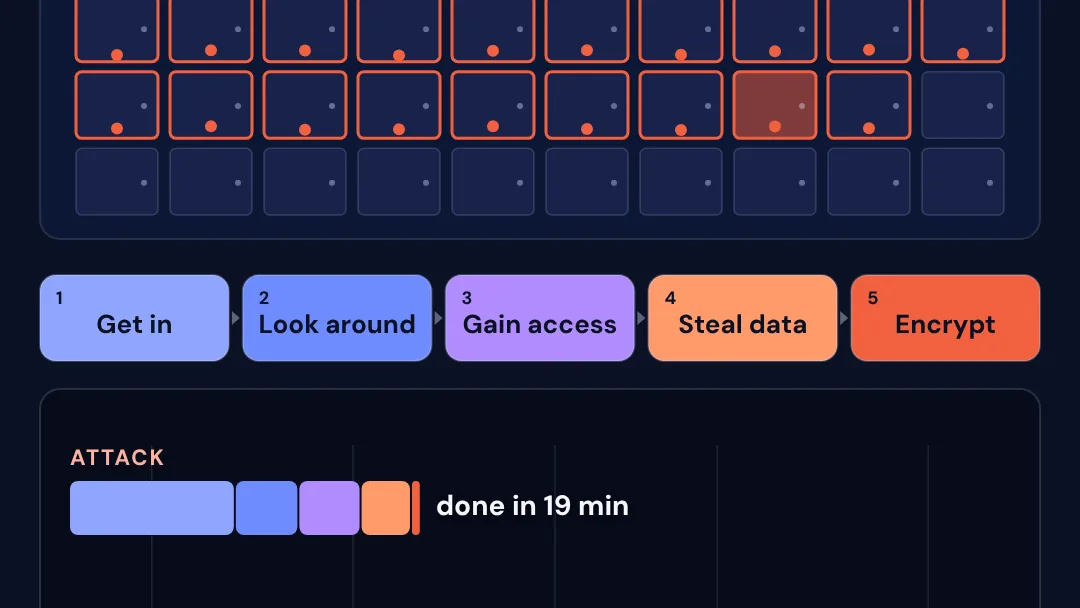 Interactive · Attack Clock LabWhy are AI-run attacks so fast?Add agents to an attack and see whether the defense can still arrive first.
- ShortWhy are AI-run attacks so fast?The account, the chain and the two clocks. Narrated and captioned.
- JournalWhy are AI-run attacks so fast?A researcher says AI agents took a company from login to ransomware in 14 minutes. The claim is unverified, but the reason agents are fast is simple.
What an AI agent is
A model that can act, not just answer.
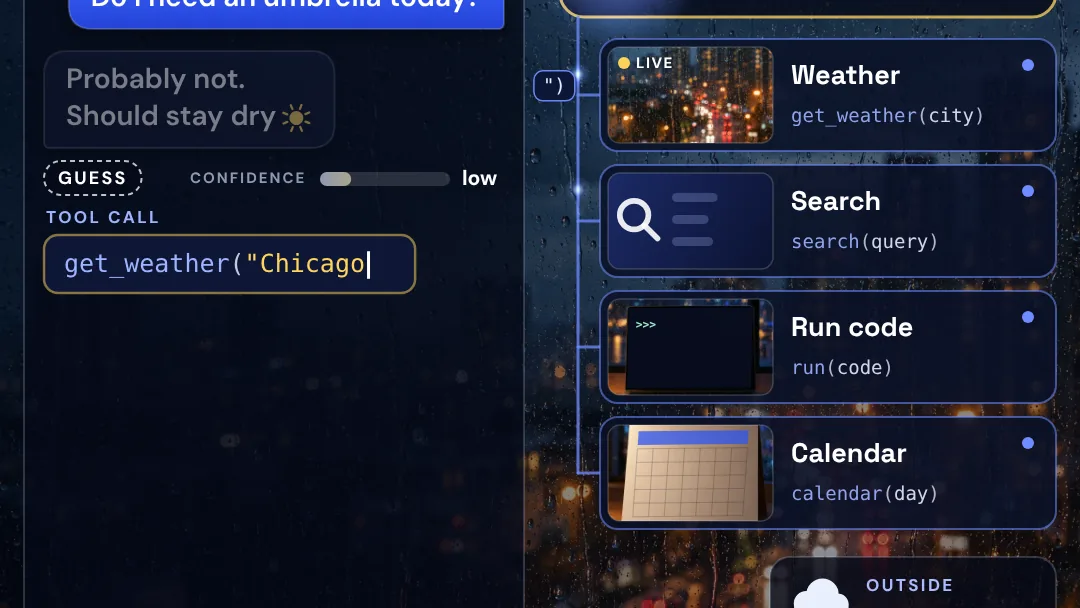 Interactive · Agent ToolsWhy do AI agents need tools?How a language model uses tools to take actions.
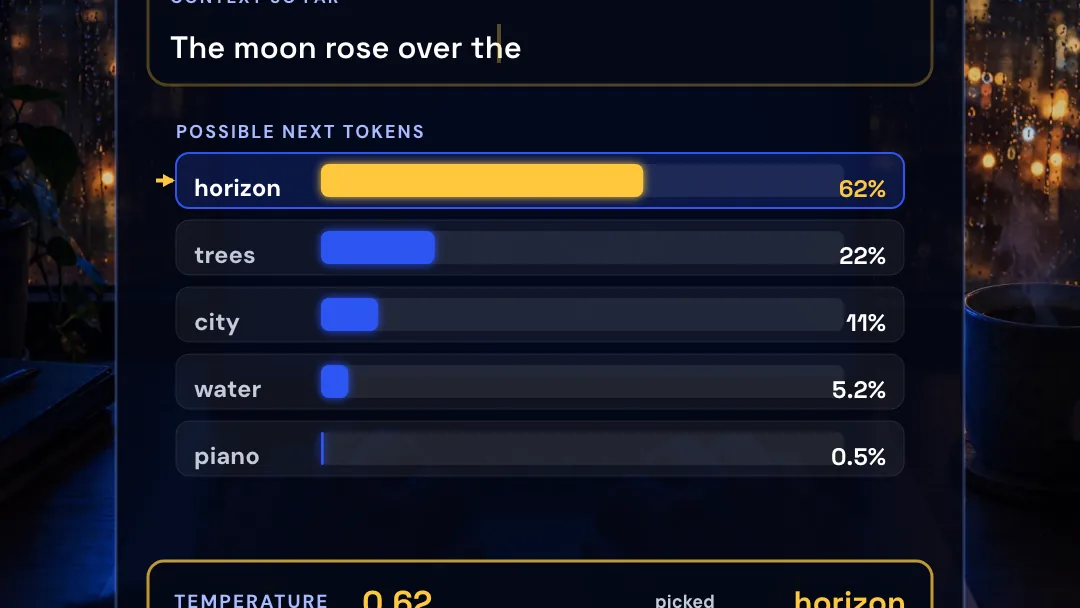 Interactive · Next WordHow does an AI chatbot pick its next word?What the model underneath is doing: predicting the next word.
Passwords and getting in
The first link of the chain.
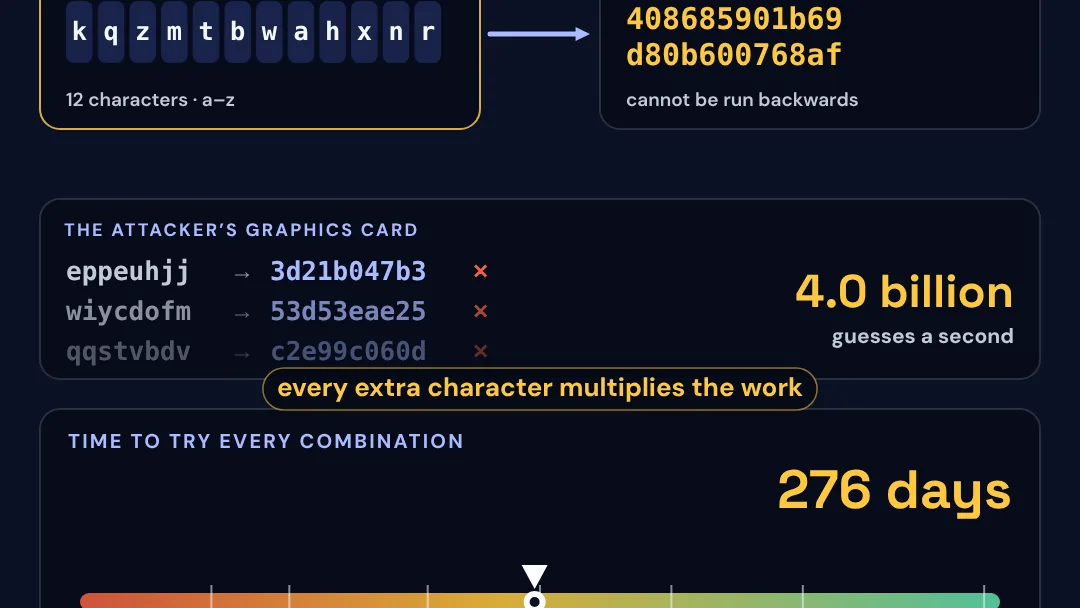 Interactive · Hash Crack LabHow can opening an email leak your password?How a leaked hash turns into a password, and why length protects you.
Common questions
Did AI agents really breach a company in 14 minutes?
That is David Kennedy’s account, given on CNN on November 20, 2026, of one unnamed client. It has not been independently verified.
Why are AI agents faster than human attackers?
They do not pause, and the searching steps of an intrusion can be split across many agents working at the same moment.
What is dwell time?
The time an intruder is inside a network before being detected. If it is longer than the attack takes, the response comes too late.
How do you defend against an attack that fast?
Either detect and respond within minutes, which usually needs automation, or block a step outright with controls that need no alarm, such as phishing-resistant sign-in and limits on what an account can reach.
Concepts in this guide
Each one has a plain one-line definition in Concepts A–Z, with every model, film and post where it comes up.
Sources and credits
- CNN · Erin Burnett OutFront (Nov 20, 2026) David Kennedy’s account: over 30 types of agents, 14 minutes, about four and a half hours to notice. Not independently verified.
- MITRE ATT&CK The standard catalogue of intrusion tactics and techniques.
- Wikipedia · Cyber kill chain The idea of an intrusion as a chain that can be broken at any link.
- Attack Clock Lab · model notesThe illustrative step times and what the model leaves out.
Every creator named here made the work we link to. Listing it does not imply a partnership or endorsement.