Topic guide · Airplane boarding methods
What’s the fastest way to board a plane?
The Steffen method, in the one published test with real people: window seats first, in every other row, from the back, then the skipped rows, then middles and aisles the same way. It took 3 minutes 36 seconds to board 72 volunteers, against 6:11 for strict back to front. The reason is the aisle. A passenger stowing a bag blocks everyone behind, so boarding is fast when many people can stow at once in different places and nobody has to stand up to let a neighbour in. Rear-first zones do the opposite: they send a crowd to the same few rows. In Boarding Lab you can board the same plane four ways.
- Steffen method
- 3:36
- Window, middle, aisle
- 4:13
- Random
- 4:44
- Back to front · blocks from the back
- 6:11 · 6:54
Test · Steffen & Hotchkiss, 2012 Times from the 2011 experiment with 72 volunteers and luggage in a mock Boeing 757 cabin. The simulator’s 120-seat cabin gives longer, illustrative times in the same order.
Interactive · ExplainerTools
Boarding Lab
Pick a boarding method and watch where the queue forms. Then turn “Carry-on bags” up and see which method suffers most.
Model · 120 passengers, one aisle, illustrative times
Why is boarding slow at all?
A single-aisle cabin is a one-lane road. Walking is quick; stopping is slow. A passenger who reaches their row and lifts a bag into the bin blocks the aisle for those seconds, and everyone behind waits. Researchers call that aisle interference. A second kind, seat interference, happens when someone already seated has to stand up to let a neighbour past. Boarding time is mostly the time the aisle spends blocked.
Why is back-to-front boarding one of the slowest?
Calling the rear rows sends thirty people to the same short stretch of aisle. Two or three stow bags; the rest queue behind them; most of the aisle is empty and idle. In Steffen and Hotchkiss’s test, boarding in blocks from the back took 6 minutes 54 seconds and strict back to front 6:11, the two slowest of five methods.
Why are random and window-first boarding faster?
Each fixes one kind of blocking:
- Random · 4:44
People’s rows are scattered along the cabin, so several stow bags at the same moment in different places.
- Window, middle, aisle · 4:13
Often called WilMA. Window passengers sit first, so nobody ever stands up to let a neighbour in.
- Both together
Spread people out and seat windows first: that is the idea behind Steffen’s order.
How does the Steffen method work?
Physicist Jason Steffen found it by simulation in 2008. Window passengers board first, to every other row, starting from the back on one side of the plane; then the same on the other side; then the rows that were skipped; then the whole pattern again for middle seats and for aisle seats. Neighbours in the queue end up two rows apart, so each has room to stow a bag at the same time. In the 2011 test, filmed by producer Jon Hotchkiss, it took 3:36.
If it is faster, why don’t airlines use it?
It needs passengers queued in an exact order, and it separates people travelling together. Real boarding also has families, late arrivals, priority groups that airlines sell and bins that fill up before the last rows board. Some airlines have used window-middle-aisle, which keeps much of the gain with far less choreography.
Try it: board the plane four ways
- 1 See
Open Boarding Lab on Back to front and watch the queue form behind one zone.
- 2 Change
Press Random, Windows first and Steffen method, then turn Carry-on bags up.
- 3 Understand
The fastest orders are the ones with the most people stowing bags at once.
Where does this simulation stop?
Boarding Lab is a teaching simulation with illustrative times: 120 passengers, 20 rows of six, a step every 1.5 seconds, 3 to 12 seconds to stow a bag and 6 seconds for each neighbour who has to stand. Its ranking matches the 2011 experiment; its times do not, because that cabin held 72 people. It has no families, no late arrivals, no full bins and nobody in the wrong seat.
Explore by question
Queues, aisles and jams. Each card answers one part of the question.
Boarding Lab
Model · 120 passengers, one aisle, illustrative times
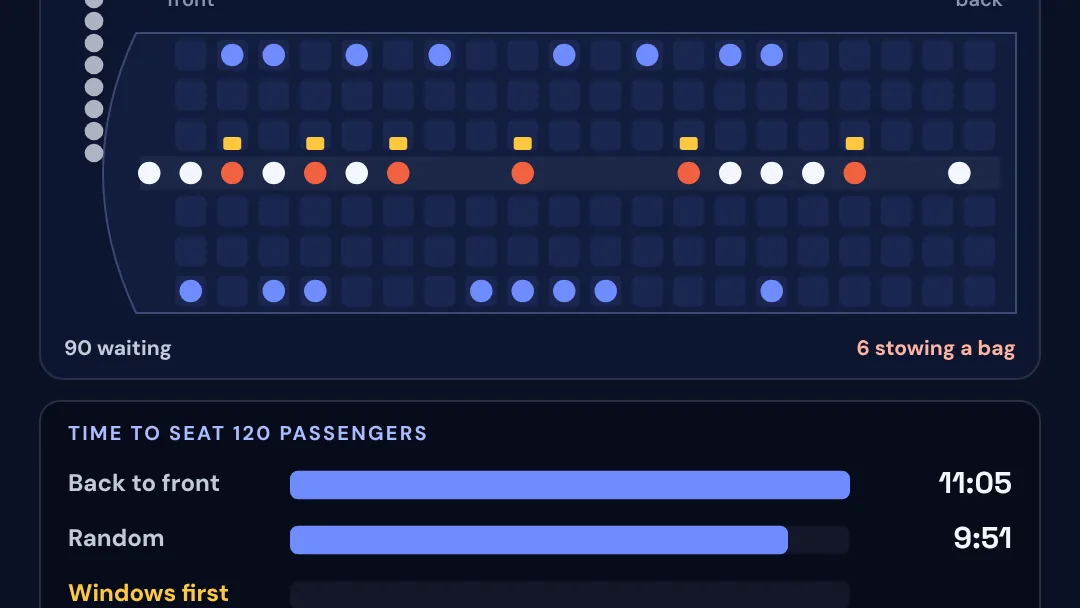 Interactive · Boarding LabWhat’s the fastest way to board a plane?Board a 120-seat plane four ways and time each one.
- ShortWhat’s the fastest way to board a plane?The aisle, the zones and three faster orders. Narrated and captioned.
- JournalWhat’s the fastest way to board a plane?Back-to-front boarding feels orderly and tests among the slowest. The aisle is the bottleneck, and the fastest orders let many people stow bags at once.
Other queues that jam
One blocked lane, many people waiting.
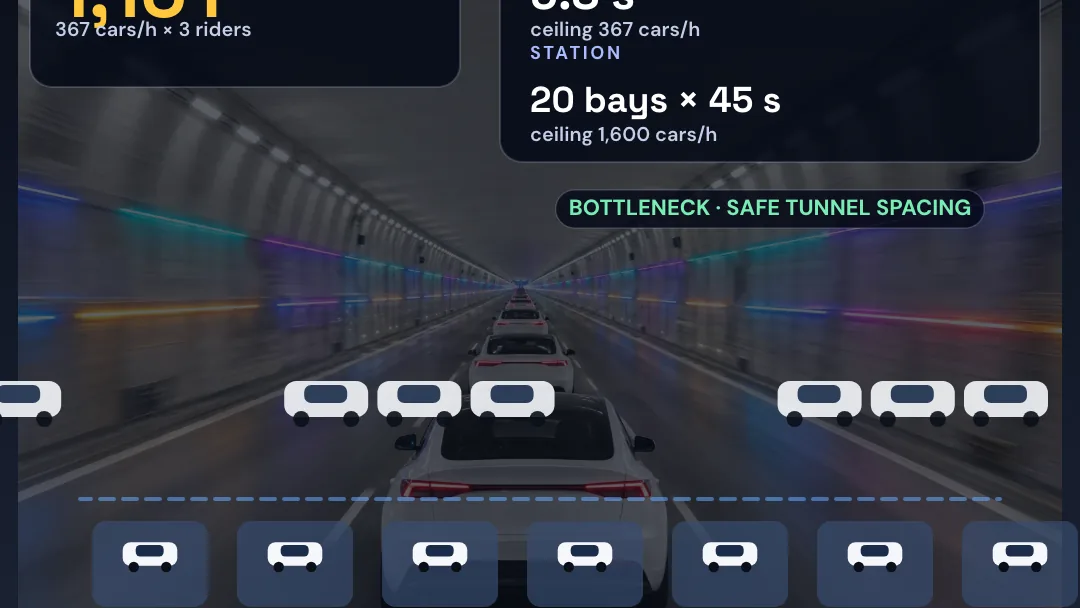 Interactive · Loop LabHow can two-rider cars move tens of thousands of people an hour?Cars or buses: what moves more people through one tunnel.
Once you are on board
More aviation, explained.
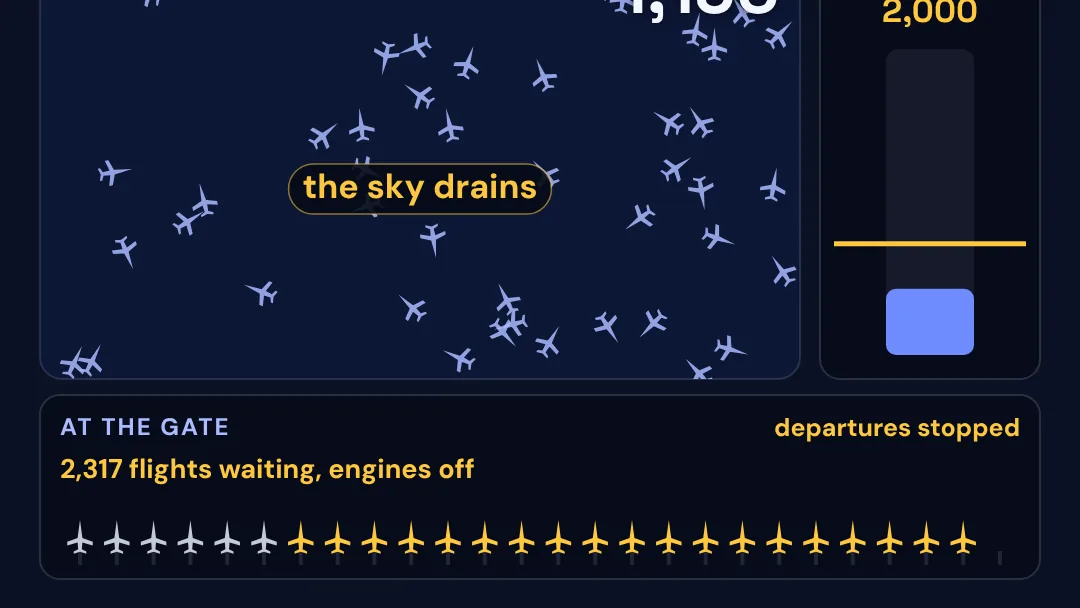 Interactive · Ground Stop LabWhy ground planes that are working fine?Why air traffic control grounds planes that are working fine.
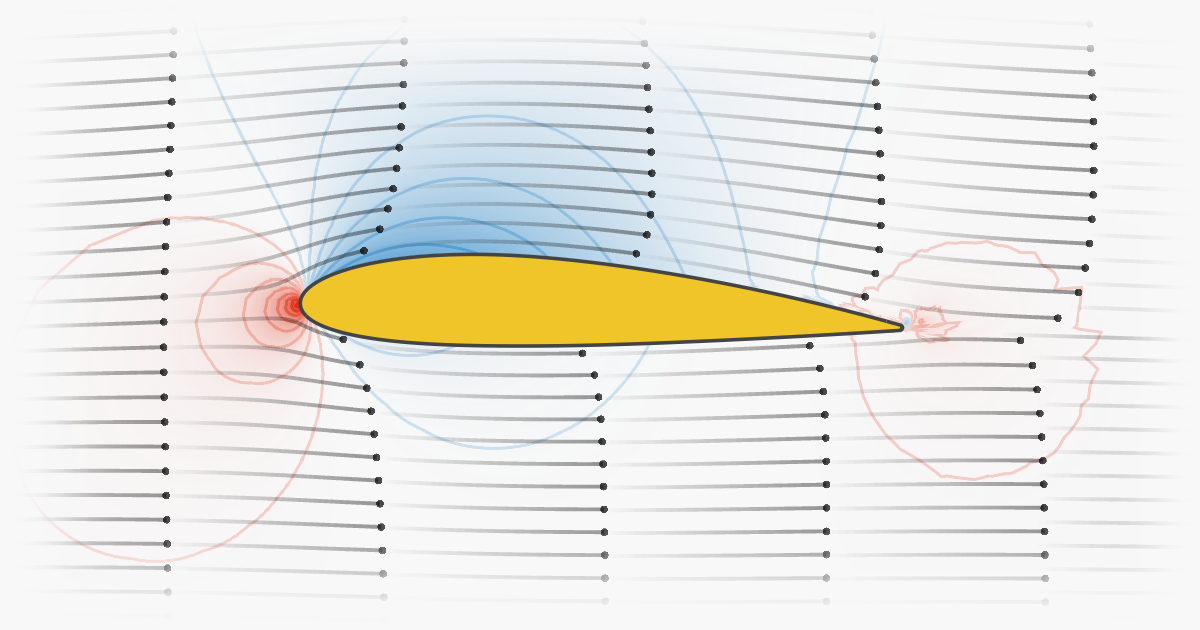 Interactive articleAirfoilBartosz Ciechanowski’s interactive essay on how a wing makes lift.by Bartosz Ciechanowski
Common questions
What is the fastest way to board a plane?
In the one published test with real people, the Steffen method: window seats in every other row from the back, then the skipped rows, then middles and aisles. It took 3:36 against 6:11 for back to front.
Is back-to-front boarding really slow?
Yes. It sends a whole zone to the same few rows, so only a few people can stow bags at once. In the 2011 test it was slower than random boarding.
What is WilMA boarding?
Window, middle, aisle: all window seats board first, then middles, then aisles, so nobody has to stand up to let a neighbour in.
Why is random boarding faster than zones?
Random order scatters passengers along the cabin, so several stow bags at the same moment instead of queuing in one place.
Why don’t airlines use the Steffen method?
It needs passengers lined up in an exact order and splits up groups travelling together, and real boarding has late arrivals, priority groups and full bins.
Concepts in this guide
Each one has a plain one-line definition in Concepts A–Z, with every model, film and post where it comes up.
Sources and credits
- J. H. Steffen · Optimal boarding method for airline passengers (2008) The simulation that found the alternating-row, window-first order.
- J. H. Steffen and J. Hotchkiss · Experimental test of airplane boarding methods (2012) 72 volunteers in a mock Boeing 757: Steffen 3:36, WilMA 4:13, random 4:44, back to front 6:11, blocks 6:54.
- Jon Hotchkiss · This vs That (YouTube) Video of the 2011 test.
- Wikipedia · Airplane boarding Boarding methods used by airlines.
- Boarding Lab · model notesThe simulation’s rules and what it leaves out.
Every creator named here made the work we link to. Listing it does not imply a partnership or endorsement.