Topic guide · The FAA ground stop of November 13, 2026
How did one router ground every US flight?
Two mechanisms, one after the other. First, the FAA says its telecommunications network was flooded with about 1,000 connection attempts every 4 to 5 seconds, which the Transportation Secretary attributed to a newly installed router. Older equipment tried to answer every request, so radar and voice data waited in the same queue and got crowded out; 17 of 22 en route centres were reported affected. Second, with unreliable screens and radios each controller can safely handle fewer aircraft, and the only fast way to shrink the number in the air is to stop adding to it. So the FAA held every departure, about 3,500 aircraft already flying landed safely, and the stop was lifted more than four hours later. Packet Storm Lab shows the first mechanism and Ground Stop Lab the second.
- Ground stop issued
- 20:54 UTC, Nov 13
- Flood on the FAA network
- ≈ 1,000 attempts / 4–5 s
- En route centres affected
- 17 of 22
- Aircraft in the air that landed safely
- ≈ 3,500
FAA Q&A · Nov 15, 2026 Figures are from the FAA’s Q&A, Secretary Duffy, Flightradar24 and Al Jazeera. The FAA said it saw no evidence of anything nefarious; the root cause was still under investigation when this was written.
Interactive · ExplainerTools
Packet Storm Lab
Turn “Connection attempts” up and watch centres tip one by one. Switch “Rate limit” on, or add “Equipment headroom”, and see what protects the real traffic.
Model · illustrative capacities, not the FAA’s network
What happened on November 13, 2026?
At 20:54 UTC (3:54 p.m. Eastern) the FAA’s command centre ordered a nationwide ground stop: no departures anywhere in the United States (Flightradar24). Transportation Secretary Sean Duffy said more than 3,500 aircraft were in the air at the time, that fewer than 400 remained by 8 p.m. Eastern, and that the stop was lifted at 8:15 p.m. (his post). News reports called it the longest nationwide ground stop in 25 years. A ground stop holds flights at their departure airports; aircraft already flying continue and land.
What did the FAA say caused it?
In its “Nationwide Ground Stop: Questions and Answers” of November 15, the FAA said legacy equipment became unstable when data began flooding its FTI telecommunications network at about 1,000 connection attempts every 4 to 5 seconds, disrupting aircraft communications and radar feeds, and that approximately 3,500 aircraft landed safely. Secretary Duffy said a newly installed router sent the flood and that routers and switches were overloaded. Al Jazeera reported that 17 of the FAA’s 22 en route centres were affected and that the FAA saw no evidence of anything nefarious. Duffy also said controllers did not lose all radar or telecommunications. The investigation was continuing.
How can connection attempts crowd out radar?
Every router and switch answers requests from a queue, and can answer only so many a second. If the queue has no priorities, a packet of radar data waits in the same line as a pointless connection attempt. A flood does not need to break anything; it only needs to fill the line (network congestion).
- A normal day
A link that can answer 150 requests a second carries 40 of real traffic. Everything gets through.
- 100 attempts a second
140 requests for 150 answers: still fine on this link, but centres with less headroom start dropping traffic.
- 220 attempts a second
260 requests for 150 answers. A little over half of everything is answered, real traffic included. In the tool, 17 of 22 centres fall below 80%.
The capacities are illustrative. The real ones are not public.
Why is a rate limit better than more capacity?
More capacity raises the threshold, and a bigger flood can still cross it. A rate limit works differently: the device refuses most new connection attempts before they join the queue, so the flood never competes with real traffic. Priority queues, which let critical data go first, and the ability to isolate a misbehaving device quickly are the other standard protections. The stop ended when the router was found and cut off. In Packet Storm Lab, a limit of 20 attempts a second restores all 22 centres with no extra capacity.
Why ground planes that were working fine?
A plane at a gate can wait without burning fuel and without a controller. A plane in the air needs both. With unstable radar and radio, each controller can safely handle fewer aircraft, so the number the system can watch falls below the number already flying. The quickest way to shrink the count in the air is to stop adding to it: every landing then makes the job smaller.
- Keep departing
New flights replace the ones that land. In Ground Stop Lab the sky never gets under the safe line.
- Halve departures
The count falls slowly: about 80 minutes to get under the line.
- Stop departures
The count falls by about 39 a minute and fits under the line in about 39 minutes. The waiting moves to the gates.
Try it: flood the network, then drain the sky
- 1 See
Open Packet Storm Lab: 22 centres, every link with room to spare.
- 2 Change
Press November 13, then Add a rate limit. In Ground Stop Lab, press Keep departing, then Ground stop.
- 3 Understand
A flood wins by filling a queue, and a ground stop wins by closing the door: both are about what joins the line.
The second Short, on why the planes on the ground were the ones that got stopped, is on its own watch page.
Where do these models stop?
Both tools are teaching models with illustrative numbers. Packet Storm Lab does not know the FAA’s topology, capacities or which centres failed, and it leaves out retries, timeouts and routing protocols. Ground Stop Lab gives every flight the same 90-minute length and uses an illustrative safe capacity of 2,000 aircraft; real controllers also hold, reroute and space aircraft, and international arrivals were handled case by case. Neither is FAA data.
Explore by question
Queues, networks and the sky. Each card answers one part of the question.
The two tools
Models · illustrative numbers, not FAA data
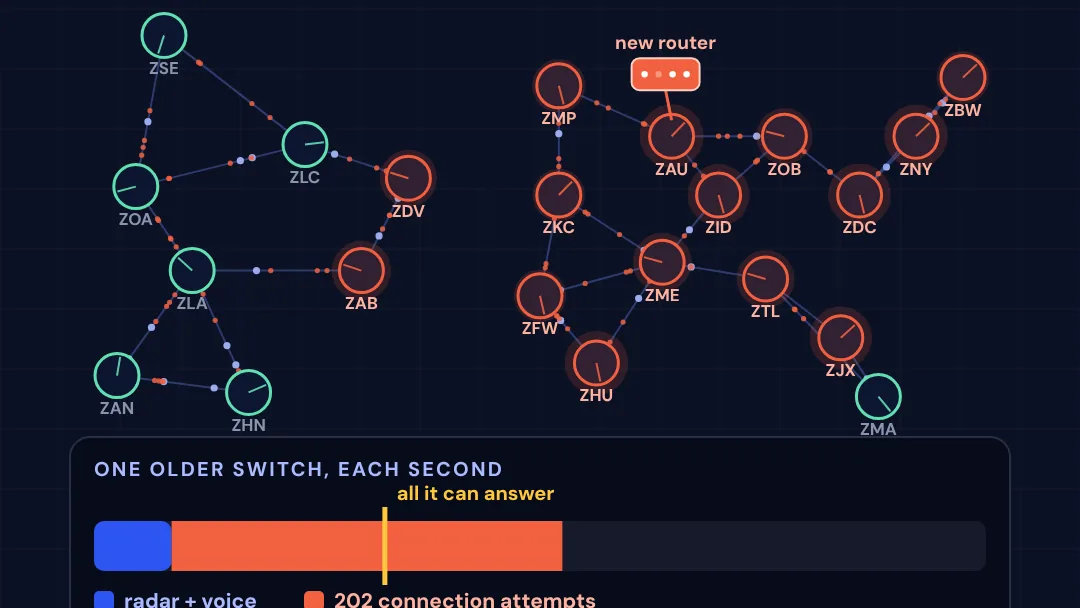 Interactive · Packet Storm LabHow did one router ground every flight in America?Turn up the flood from one router and watch radar and voice get crowded out.
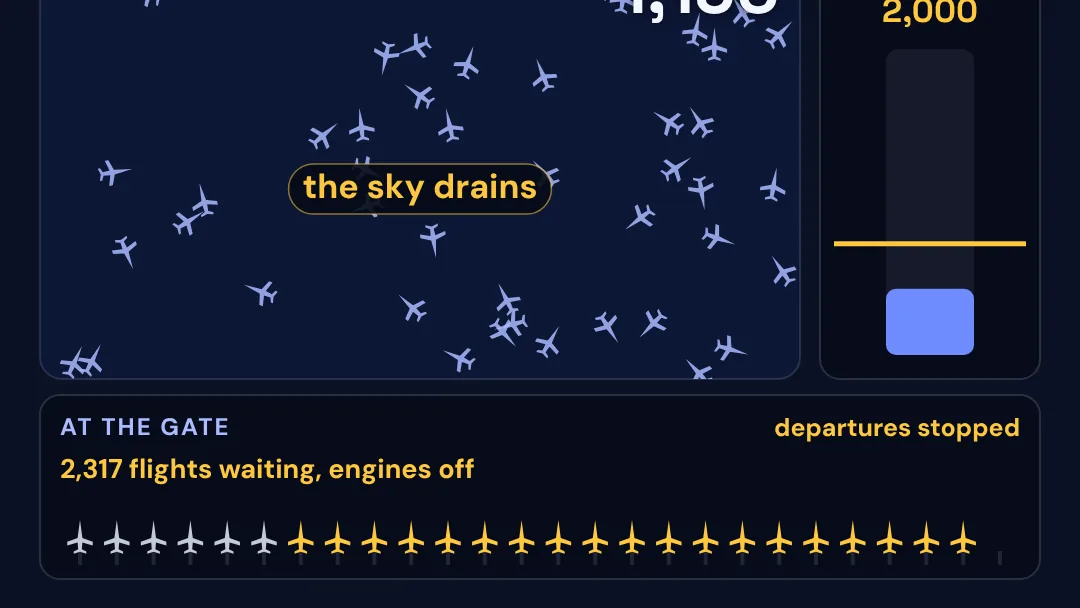 Interactive · Ground Stop LabWhy ground planes that are working fine?Stop the departures, or keep them going, and watch the number in the air.
- ShortHow did one router ground every flight in America?The router, the flood and the 17 centres. Narrated and captioned.
- ShortWhy ground planes that are working fine?Why the planes on the ground were the ones that got stopped.
Queues that jam
The same arithmetic in a tunnel.
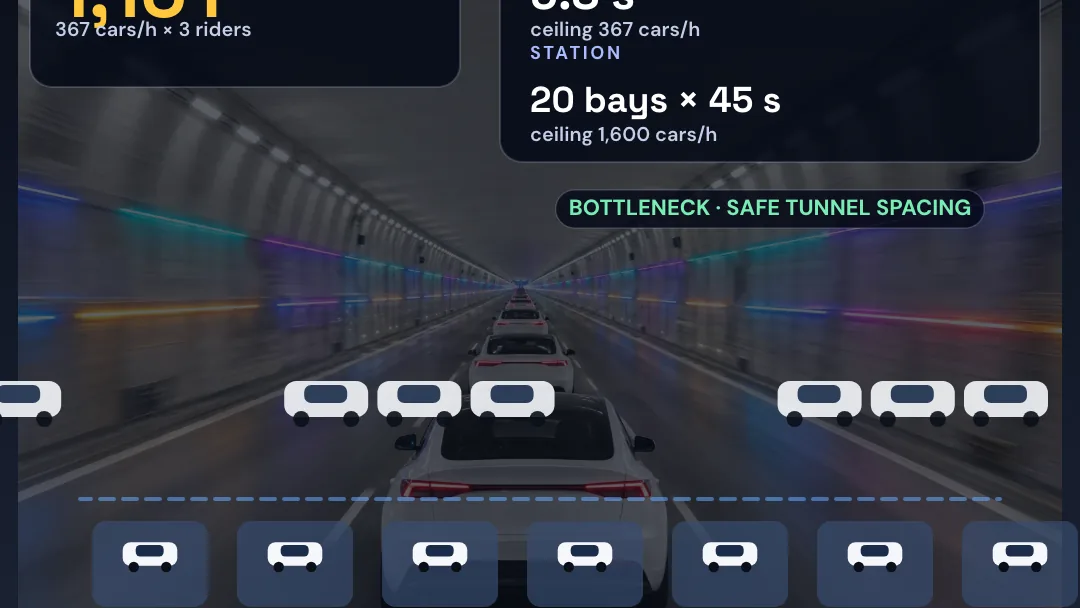 Interactive · Loop LabHow can two-rider cars move tens of thousands of people an hour?Cars or buses: what one lane can carry before it backs up.
Signals in the air
What aircraft and controllers depend on.
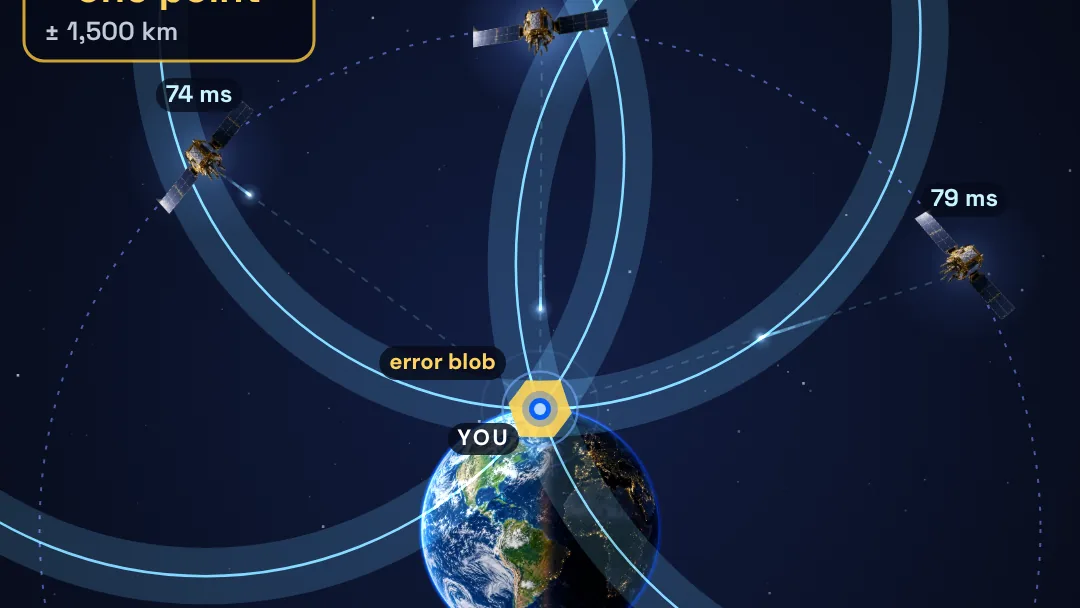 Interactive · GPS LabHow does GPS know where you are?How a receiver finds itself from satellite signals.
- Interactive articleGPSBartosz Ciechanowski’s interactive essay on how GPS works.by Bartosz Ciechanowski
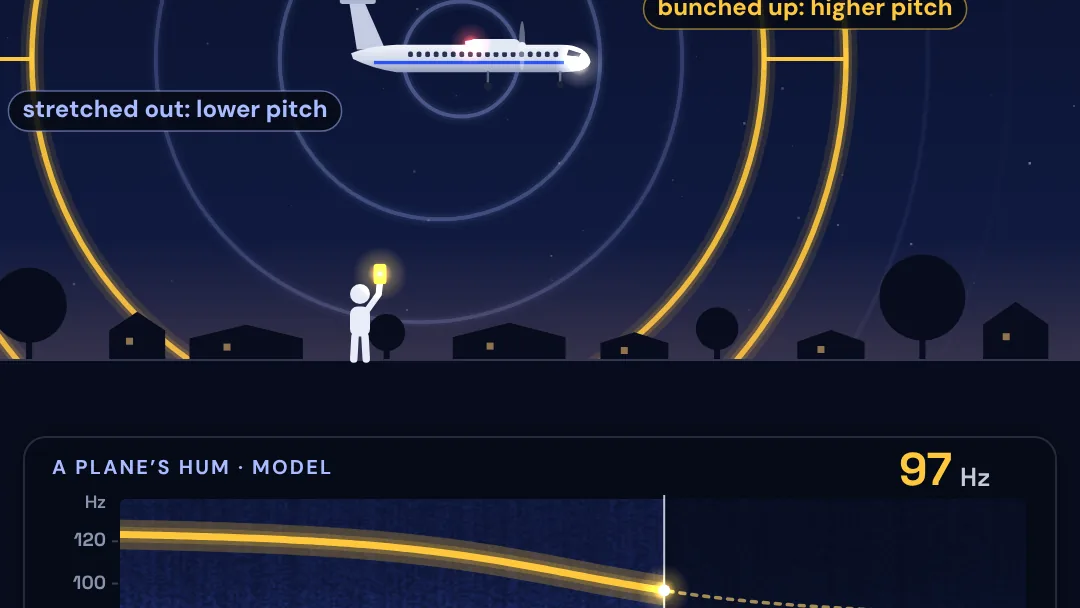 Interactive · Flyover Doppler LabCan a plane's sound give away where a video was filmed?What a passing plane’s sound gives away.
Common questions
Was the November 13, 2026 ground stop a cyberattack?
The FAA said it saw no evidence of anything nefarious. It said its network was flooded with connection attempts, and the Transportation Secretary said a newly installed router sent them. The root cause was still under investigation.
How long did the ground stop last?
It was issued at 20:54 UTC (3:54 p.m. Eastern) and Secretary Duffy said it was lifted at 8:15 p.m. Eastern, more than four hours later. Reports called it the longest nationwide ground stop in 25 years.
What is a ground stop?
An air traffic order that holds flights at their departure airports. Aircraft already in the air continue to their destinations and land.
Why not let some flights keep departing?
Because every departure adds to the number controllers must watch. With departures stopped, each landing shrinks the job; with departures flowing, new flights replace the ones that land.
How does a rate limit stop a flood?
It caps how many new connection attempts a device accepts each second and drops the rest before they join the queue, so they never compete with real traffic.
Concepts in this guide
Each one has a plain one-line definition in Concepts A–Z, with every model, film and post where it comes up.
Sources and credits
- FAA Newsroom · Nationwide Ground Stop: Questions and Answers (Nov 15, 2026) About 1,000 connection attempts every 4 to 5 seconds on the FTI network; about 3,500 aircraft landed safely.
- Flightradar24 · ground stop issued at 20:54 UTC The time of the order and a replay of US air traffic.
- Secretary Sean Duffy · timeline of the stop More than 3,500 aircraft airborne; lifted at 8:15 p.m. Eastern; controllers did not lose all radar or telecommunications.
- Al Jazeera · reports of November 14 and 15, 2026 17 of 22 en route centres affected; longest nationwide ground stop in 25 years.
- Wikipedia · Network congestion Queues, congestive collapse and why throughput falls under overload.
- Packet Storm Lab and Ground Stop Lab · model notesThe illustrative capacities and traffic model, and what they leave out.
Every creator named here made the work we link to. Listing it does not imply a partnership or endorsement.