Short · Space
How does NASA talk to Voyager 1, a light-day away?
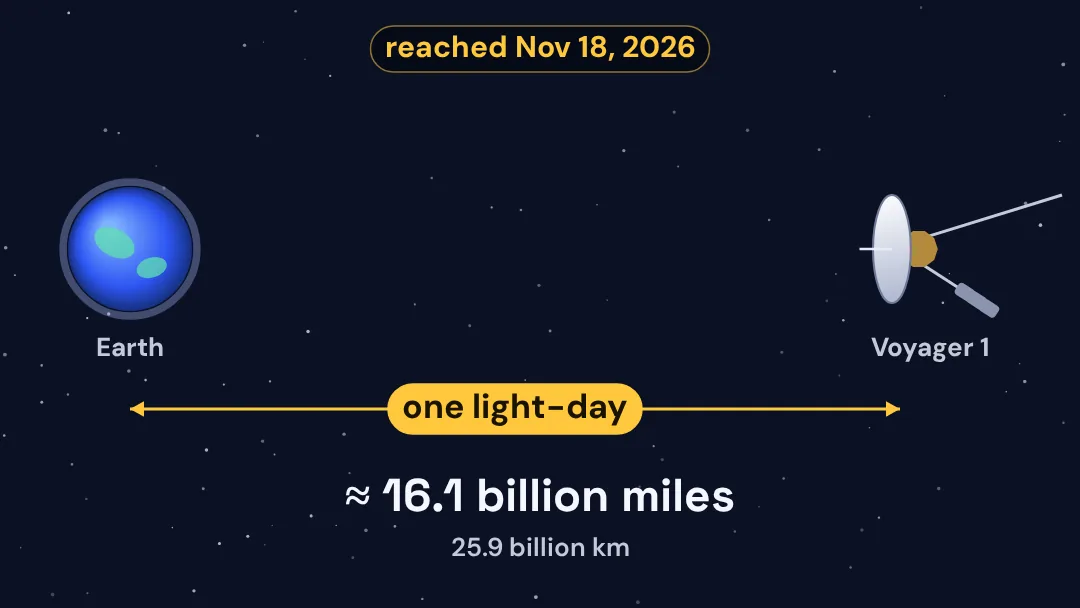
Voyager 1 is now so far away that its radio signal takes a full day to reach us. On November 18, 2026 it passed one light-day from Earth: about 16.1 billion miles. Light reaches the Moon in about 1.3 seconds and Neptune in about four hours; Voyager takes twenty-four. So every command is a two-day round trip. Voyager’s transmitter is about 22 watts, like a fridge bulb, and its signal spreads out with the square of the distance, so NASA listens with dishes 70 meters wide.
Opens Light-Day Lab. Change the same thing yourself.

Transcript
Voyager 1 is now so far away that its radio signal takes a full day to reach us. It passed one light-day from Earth on November 18th: about sixteen billion miles. Light reaches the Moon in about a second, and Neptune in four hours. Voyager takes twenty-four. So every command is a two-day round trip: a day for it to arrive, and another day for the reply. And the signal? Voyager's transmitter is about twenty-two watts, like a fridge bulb. Now grow the distance. The signal spreads out with the square of the distance, so NASA listens with dishes seventy meters wide. Follow for more explainers like this.
Learn more
Learn more about talking to Voyager 1
This model grows the distance from the Moon to Voyager 1. The guide adds the two-day round trip, the 22-watt transmitter and why NASA’s dishes are 70 m wide.
- Topic guideHow does NASA talk to Voyager 1, a light-day away?Light time, the round trip, the inverse-square law and the dishes.
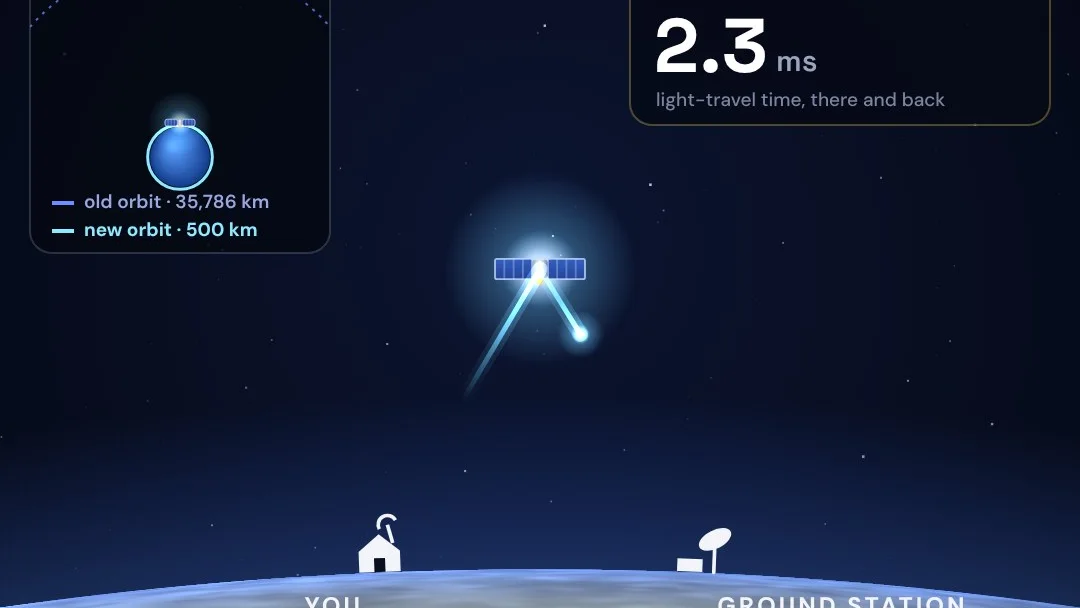 Interactive demoWhy does Starlink feel so fast?Distance becomes delay: why low-orbit satellite internet feels fast.by ExplainerTools
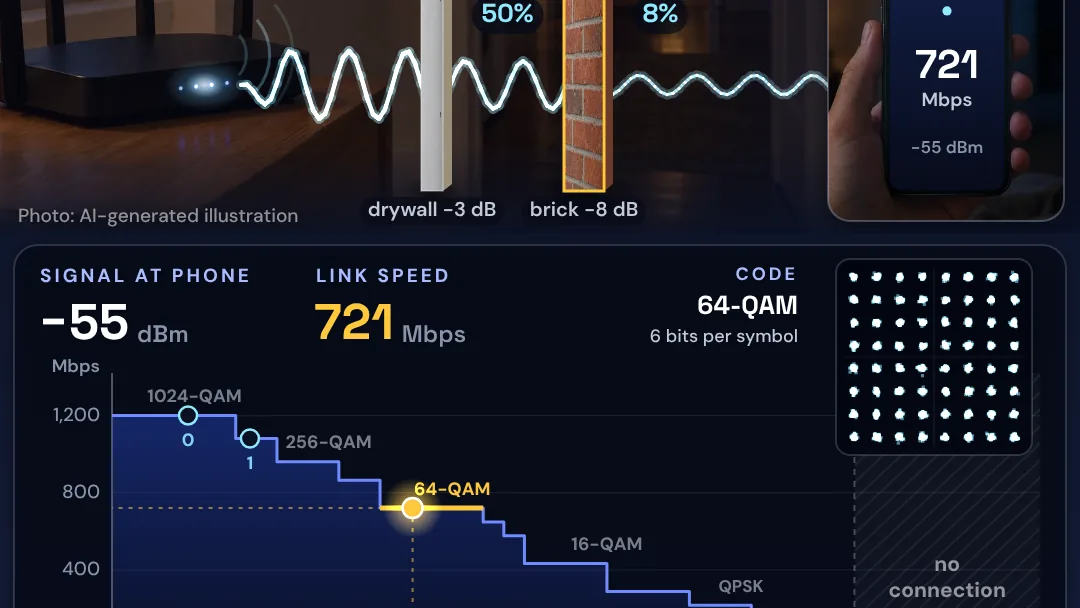 Interactive demoWhy does Wi-Fi slow down through walls?How a radio signal weakens on its way to you.by ExplainerTools
 JournalHow does NASA talk to Voyager 1, a light-day away?Voyager 1’s radio signal now takes a full day to reach us. Here is what a two-day round trip means, why a 22-watt signal arrives so faint, and why NASA’s dishes are 70 m wide.