Short · Space
If space is so cold, why is cooling a spacecraft so hard?
Deep space is about −270 °C, yet a spacecraft overheats without big radiators. With no air, heat can’t be carried away; it can only leave as infrared light. Double a radiator’s temperature above absolute zero and it sheds 16 times the heat: a square metre of white panel sheds about 840 W at 27 °C and 13,400 W at 327 °C. But electronics would cook, so radiators run cool, and big: the space station has six, each as long as a tennis court. A 1 GW data center in orbit would need over a square kilometer.
Opens Space Radiator Lab. Change the same thing yourself.



Transcript
Deep space is about minus two hundred seventy degrees. So why is cooling a spacecraft so hard? On Earth, air molecules bump hot electronics and carry heat away. In space, there's no air. A vacuum is an insulator; it's how a thermos keeps coffee hot. Heat has to leave as light: infrared, glowing off a radiator. Now heat the radiator. Double its temperature above absolute zero, and it sheds sixteen times the heat. But electronics would cook, so radiators run cool, and big. The space station has six, each as long as a tennis court. A gigawatt data center would need over a square kilometer. Follow for more explainers like this.
Learn more
Learn more about cooling in space
This model shows why a radiator sheds 16 times more when its temperature doubles. The guide adds why a vacuum traps heat, how the space station keeps cool, what data centers in orbit would need and where the model stops.
- Topic guideIf space is so cold, why is cooling a spacecraft so hard?No air to carry heat, the fourth-power glow, the station’s tennis-court radiators and gigawatts in orbit.
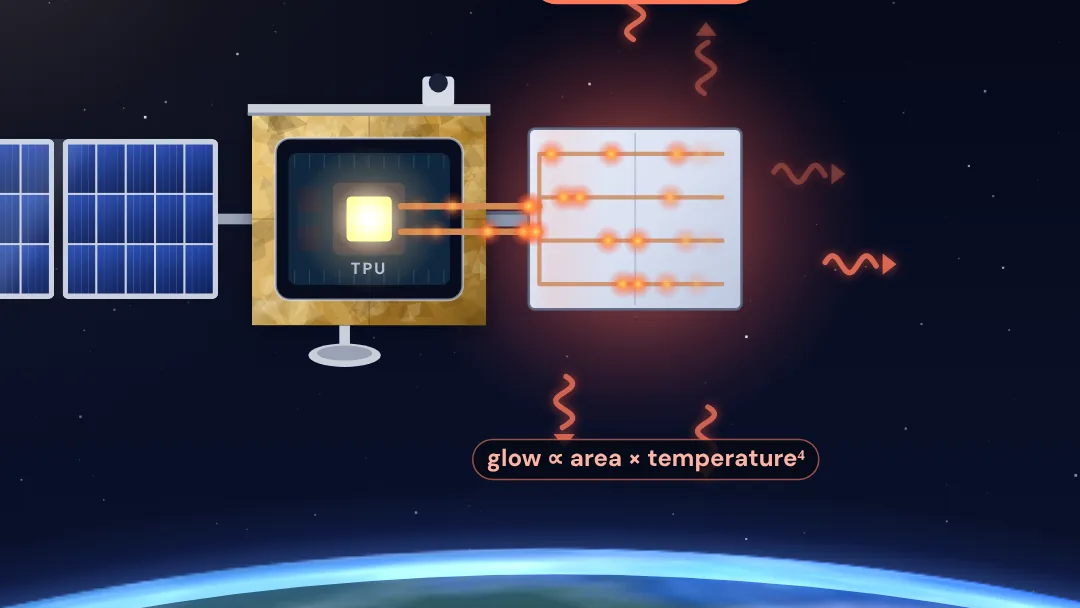 Interactive · Orbit Chip LabWhy can Google's AI chip in orbit only run in bursts?When the radiator is too small: an orbiting chip that can only run in bursts.
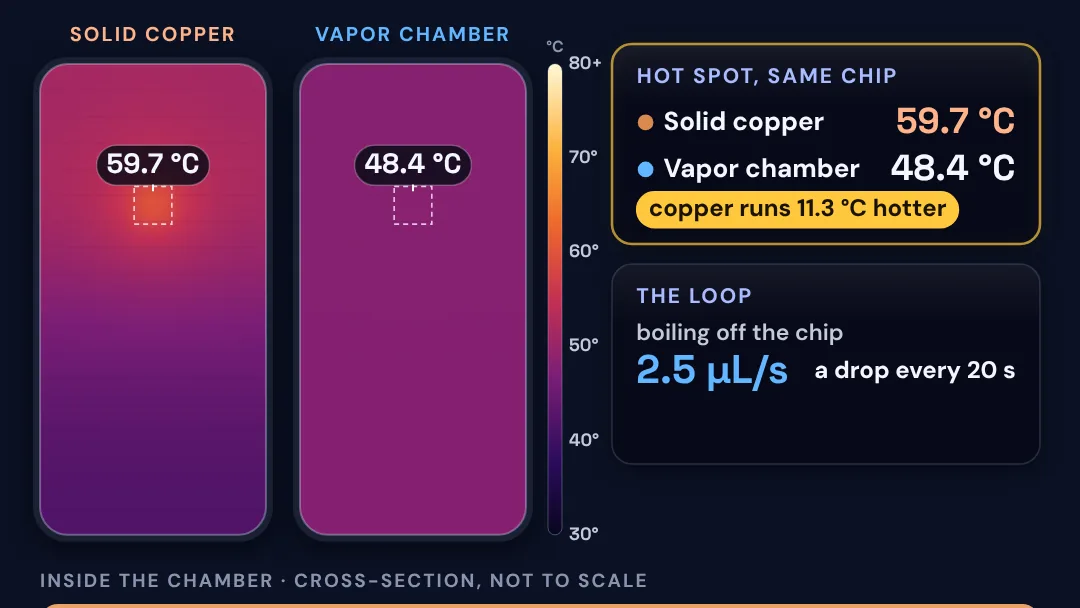 Interactive · Vapor Chamber LabHow can a few drops of liquid cool a phone?How heat moves inside a phone on Earth, with a few drops of boiling water.
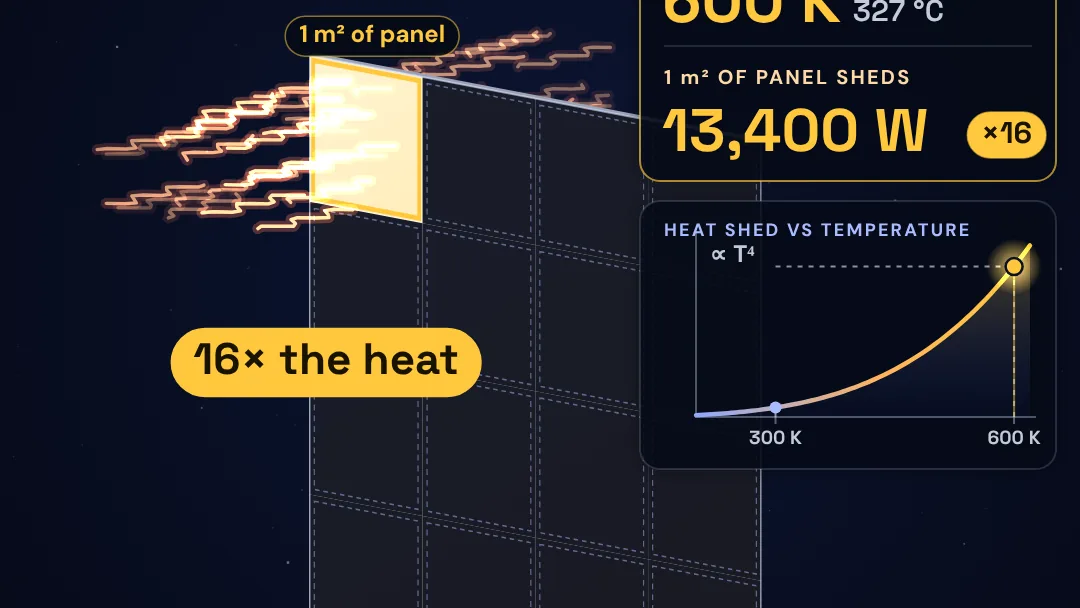 JournalIf space is so cold, why is cooling a spacecraft so hard?Deep space is about −270 °C, yet the space station needs radiators as long as tennis courts. With no air to carry heat away, it can only leave as infrared light.