Short · Space
Why can Google's AI chip in orbit only run in bursts?
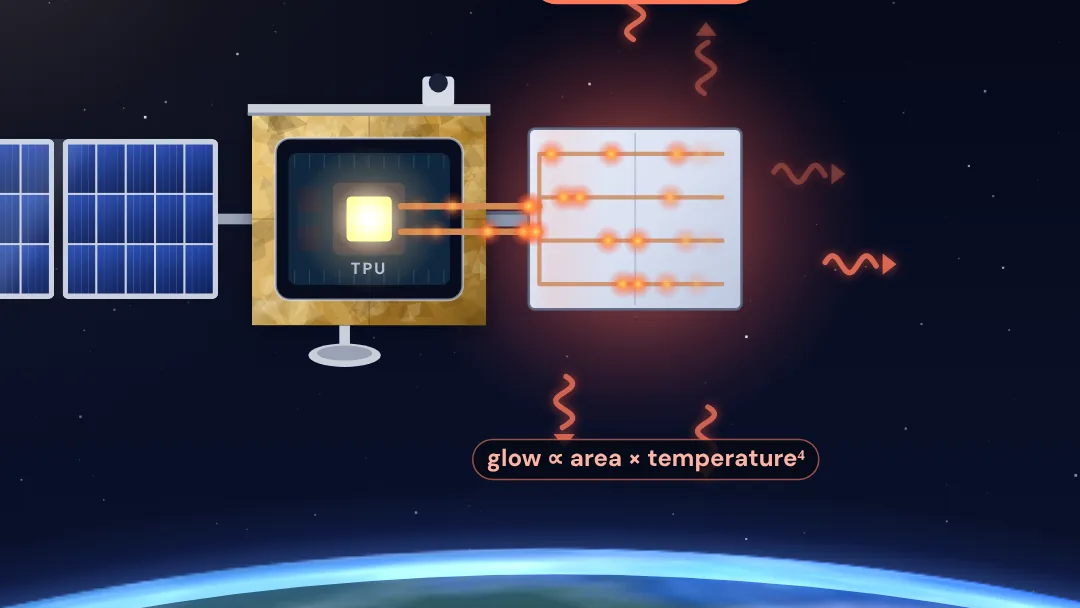
Google ran Gemma 4 on a TPU in orbit, and it wrote a haiku. But its chips reportedly run only about 15 minutes at a time, and one reason is heat. Space is cold but empty: there’s no air for a fan to push, so heat can only leave as an infrared glow from a radiator. When a small radiator can’t keep up, the extra heat soaks into the metal until the chip hits its limit and must stop and cool. In this model, twice the power shrinks each burst from 15 to about 4 minutes; a radiator four times bigger lets it run nonstop, but radiators are heavy.
Opens Orbit Chip Lab. Change the same thing yourself.
Transcript
Google just ran its AI chip in orbit, and it wrote a haiku. But reportedly, it runs only about fifteen minutes at a time. One reason is heat. Space is cold but empty: no air for a fan to push. Heat can only leave as an infrared glow from a radiator. A small radiator can't keep up. The extra heat soaks into the metal, and the temperature climbs. At the limit, the chip must stop and cool. Now turn up the chip's power. Twice the power, and each burst shrinks to about four minutes. Bigger radiators buy time, but they're heavy. Follow for more explainers like this.
Learn more
Learn more about cooling in orbit
This model shows why a small radiator turns computing into bursts. The guide adds how much a radiator can glow away, what Google’s satellite reported, and where the model stops.
- Topic guideWhy can Google’s AI chip in orbit only run in bursts?Why a vacuum traps heat, the radiator’s glow, Google’s Suncatcher prototype, and the power limit too.
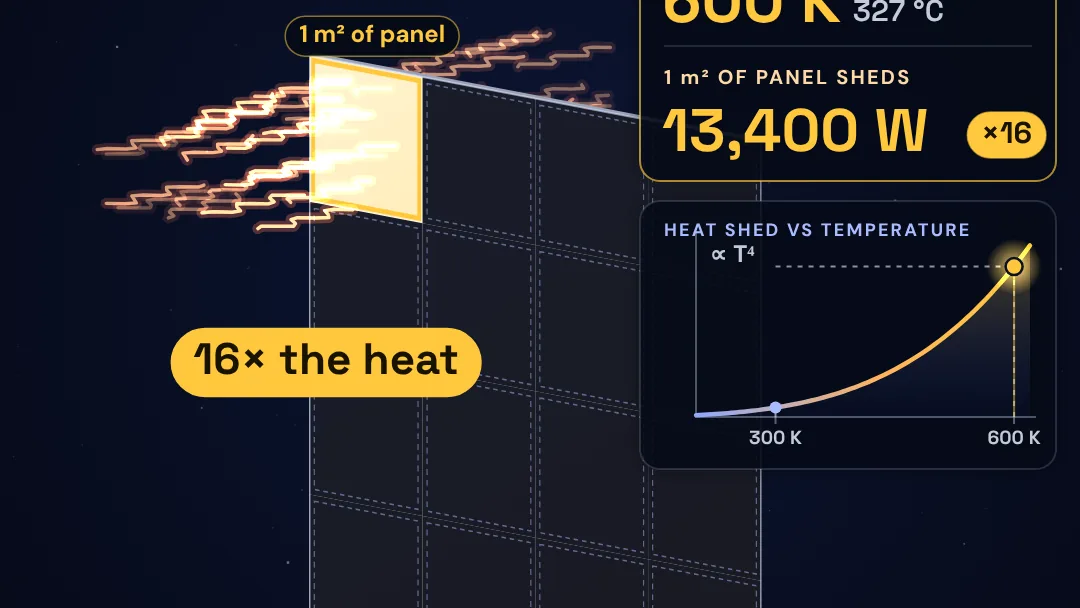 Interactive · Space Radiator LabIf space is so cold, why is cooling a spacecraft so hard?The deeper heat question: why cooling a spacecraft is hard, and why its radiators have to be so big.
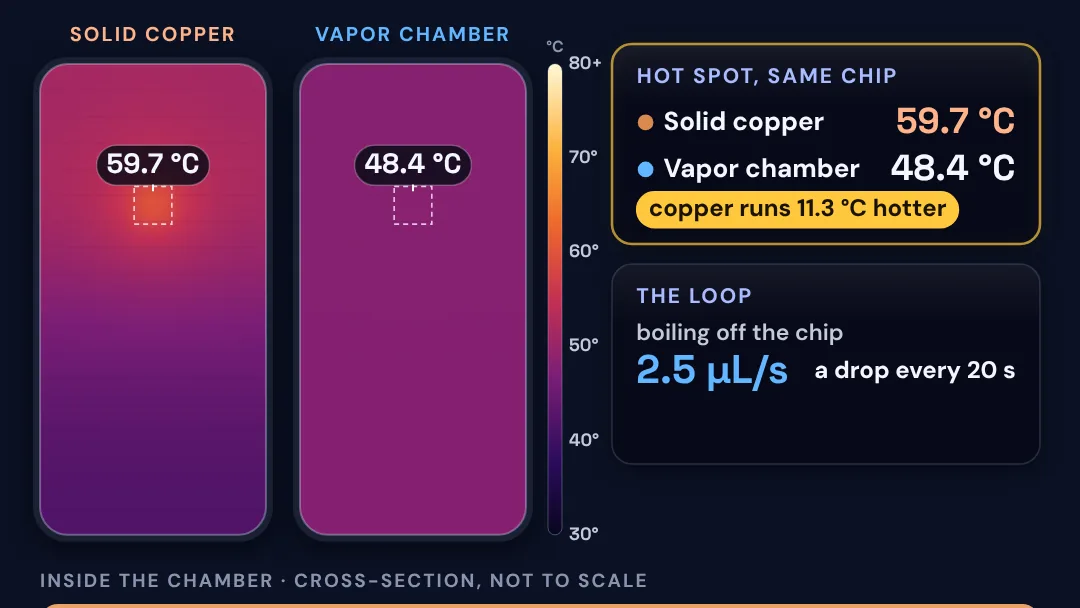 Interactive · Vapor Chamber LabHow can a few drops of liquid cool a phone?How heat gets from a chip to where it can leave: the boil-and-condense loop inside a phone.
 JournalWhy can Google's AI chip in orbit only run in bursts?Google’s AI chip in orbit wrote a haiku, but reportedly runs only about 15 minutes at a time. In a vacuum heat leaves only as infrared glow, and a small radiator can’t keep up.