Short · Vision
How could a brain implant let a blind person see?
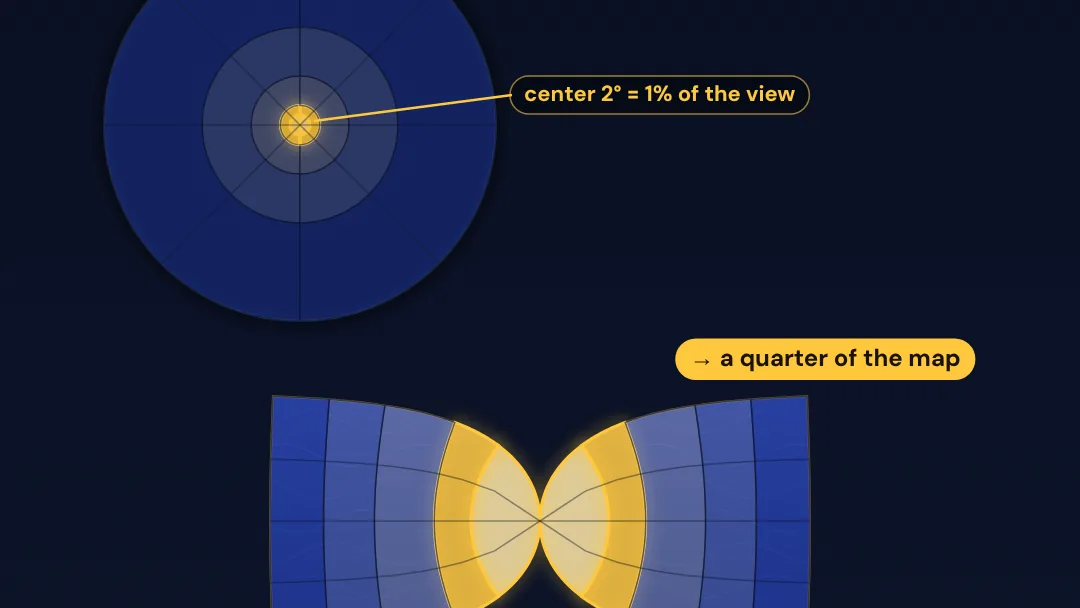
Elon Musk says Neuralink’s Blindsight implant is ready and just waiting on regulators. Sight happens in the brain, not the eye: stimulate one spot of the visual cortex and a person sees a dot of light, a phosphene, always at the same place in view. The cortex is a map of the view with the center stretched big, so a camera turns each frame into dots, one per electrode. In this model, 60 dots read as a scatter of stars and about 1,000 start to draw a doorway; Musk says the first images will look like Atari graphics.
Opens Phosphene Lab. Change the same thing yourself.
Transcript
Elon Musk says Neuralink's Blindsight is ready, just waiting on regulators. How could a brain implant let a blind person see? Sight happens in the brain, not the eye. Zap one spot at the back of the brain, and a person sees a dot of light, always in the same spot. That area is a map of your view, with the center stretched big. So a camera turns each frame into dots, one per electrode. Now add more electrodes. Sixty make a scatter of stars. About a thousand start to draw a doorway. At first, Musk says, it'll look like Atari graphics. Follow for more explainers like this.
Learn more
Learn more about seeing with a brain implant
This model shows one dot per electrode on the brain’s stretched map. The guide adds what a phosphene is, which implants have been tested, what Neuralink has and hasn’t shown, and where the model stops.
- Topic guideHow could Neuralink’s Blindsight let a blind person see?Phosphenes, the brain’s map of the view, Orion to N1, and what Blindsight has shown so far.
- Interactive articleCameras and LensesThe implant’s eye is a camera. Build one up from a pinhole to a lens and a sensor.by Bartosz Ciechanowski
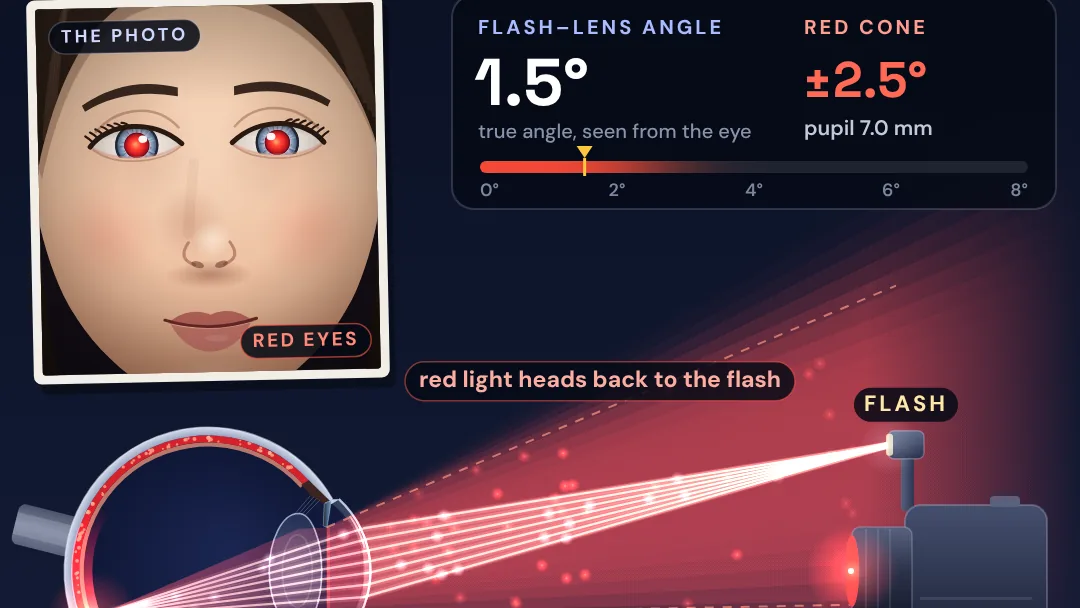 Interactive · Red-Eye LabWhy do eyes glow red in flash photos?What reaches the back of the eye: slide a flash away from the lens and watch the red bounce off the retina miss.
 JournalHow could a brain implant let a blind person see?Elon Musk says Neuralink’s Blindsight is ready, waiting on regulators. Zap one spot of the visual cortex and a person sees a dot of light; enough dots draw a picture.