Short · Flight
How do you fly faster than sound without a sonic boom?
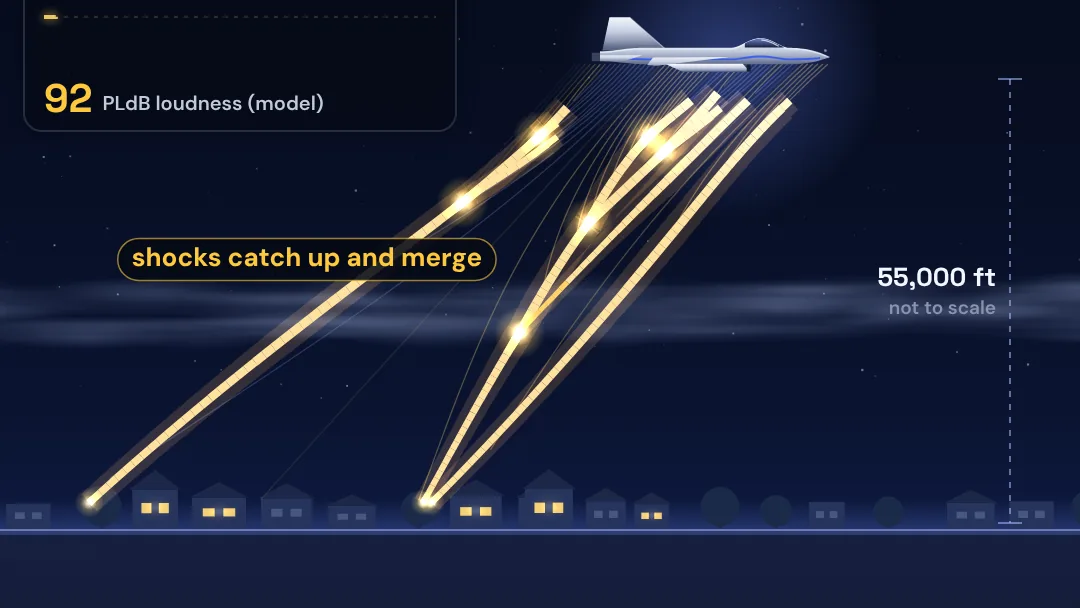
Every supersonic jet makes shock waves, one from each bump: the nose, the canopy, the wings, the tail. On an ordinary jet they catch up on the long way down and merge into two big ones, the N-wave you hear as a sharp double boom. NASA’s X-59 has a very long nose and its engine on top, so its small shocks stay apart and arrive one by one: a soft thump. NASA aims for about 75 perceived decibels on the ground; Concorde’s boom was about 105. Supersonic airliners have been banned over US land since 1973, and next NASA will fly the X-59 over towns and ask people what they hear.
Opens Quiet Boom Lab. Change the same thing yourself.
Transcript
Meet NASA's X-59. It flies faster than sound but is built not to boom. Every supersonic jet makes shock waves: from its nose, canopy, wings and tail. On ordinary jets, they catch up on the way down and merge into two big ones. Boom, boom. Now stretch the nose. The shocks stay apart and arrive one by one: a soft thump. NASA aims for about seventy-five perceived decibels. Concorde's boom: about a hundred and five. Booms got supersonic airliners banned over U.S. land in nineteen seventy-three. Next, NASA will fly it over towns and ask people what they hear. Follow for more explainers like this.
Learn more
Learn more about quiet supersonic flight
The X-59 still makes shock waves; its shape keeps them apart. The guide explains what PLdB and psf mean, how the nose and engine help, where the X-59 has flown, and where this model stops.
- Topic guideHow can NASA’s X-59 fly faster than sound without a boom?The N-wave, the X-59’s shape, the 75 and 105 PLdB figures, the 1973 ban and NASA’s next tests.
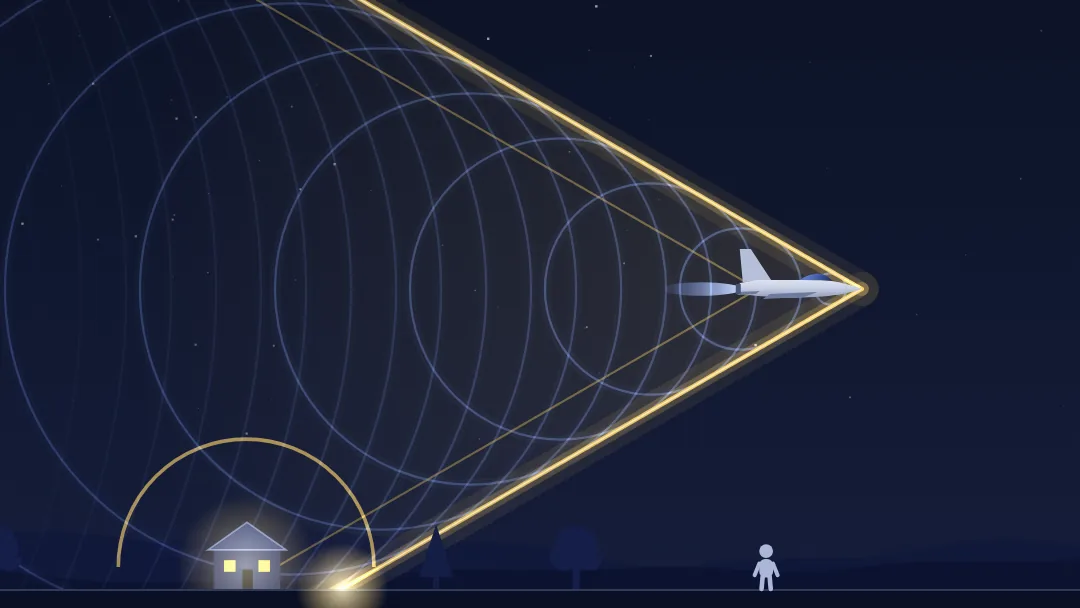 Interactive · Sonic Boom LabWhat makes a sonic boom?Before shocks can merge, a jet has to outrun its own sound. Watch the rings pile into a cone that sweeps the ground.
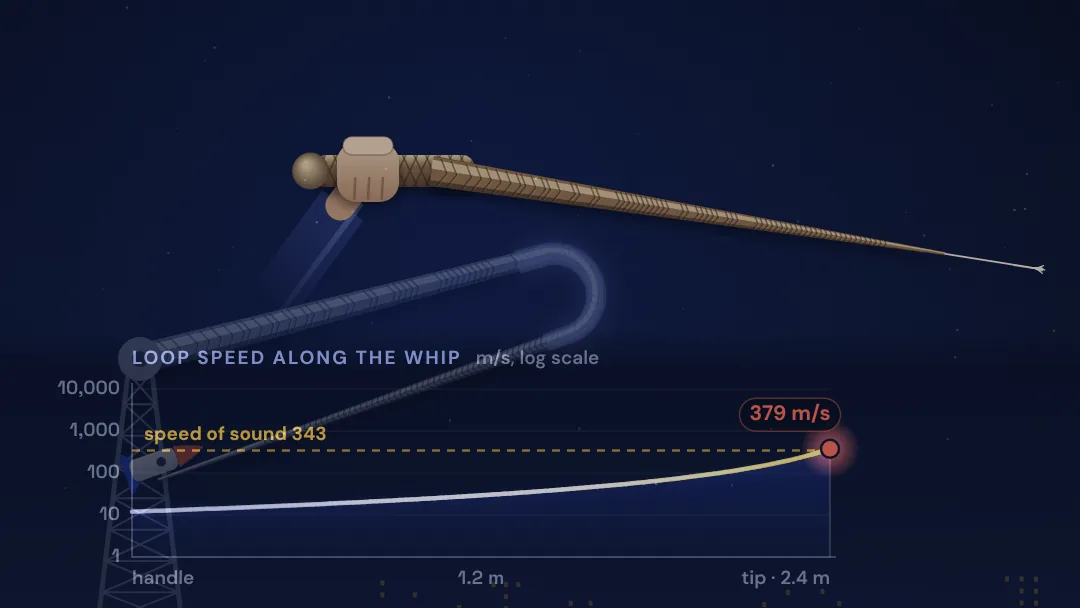 Interactive · Whip Crack LabWhy does a whip crack?A whip crack is a tiny sonic boom: thin the tip until its end outruns sound.
 JournalHow do you fly faster than sound without a sonic boom?Every supersonic jet makes shock waves. On an ordinary jet they merge on the way down into a double boom; NASA’s X-59 is shaped so they stay apart and arrive as a soft thump.