Short · Sound
How does one buzz become every vowel?
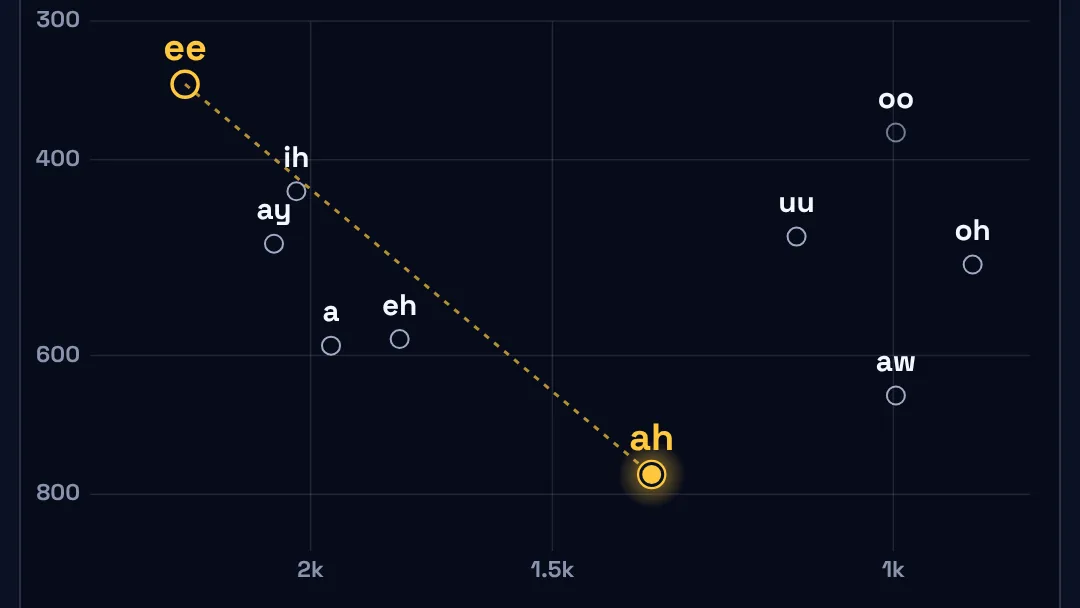
Your vocal folds make the same buzz for every vowel: about a hundred puffs of air a second, a row of harmonics at 110, 220, 330 Hz and up. The throat and mouth above them are a tube that rings at its own resonances, the formants. Tongue high and forward, it rings at about 340 and 2,300 Hz: “ee”. Jaw down and tongue back, about 770 and 1,330 Hz: “ah”. The first two formants are enough to tell most vowels apart. Featuring CHIMERA, Jameson Hodge’s free browser synth that simulates the airway itself: its vowel shapes land within about 2% of measured voices, though speech recognition still gets about 37% of its words wrong.
Opens Vowel Lab. Change the same thing yourself.

Transcript
That voice was never recorded. It's CHIMERA, a free browser synth by Jameson Hodge, and this week people made it sing everything from barbershop to Queen. It simulates your airway. Air from your lungs makes your vocal folds buzz, about a hundred times a second. That buzz is the same for every vowel. What changes is the tube above it. Tongue high and forward, and the tube rings at about three hundred forty and twenty-three hundred hertz. That's ee. Drop your jaw, pull your tongue back, and the peaks slide to about seven seventy and thirteen hundred. That's ah. Those peaks are called formants, and the first two are enough to tell vowels apart. CHIMERA's vowel shapes land within about two percent of measured human voices. But speech recognition still gets more than a third of its words wrong. Follow for more explainers like this.
Learn more
Learn more about your voice
This model shows how one buzz becomes every vowel. The guide adds how the vocal folds make the buzz, what changes when you sing, and how close a simulated airway like CHIMERA gets.
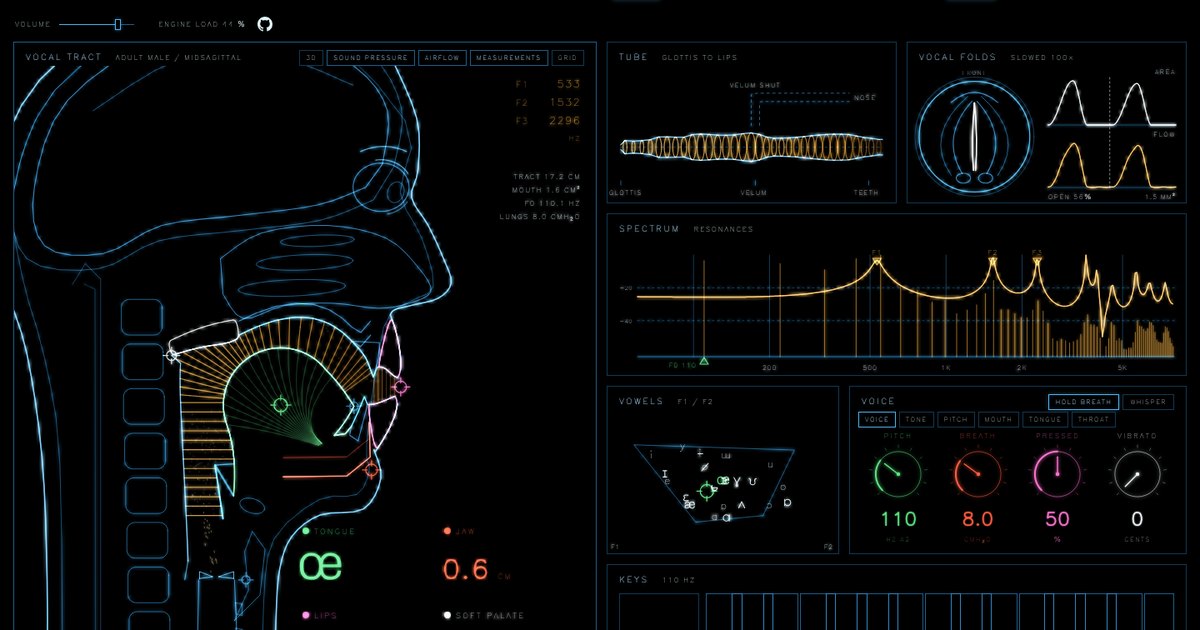 Interactive demoCHIMERA vocal synthCHIMERA by Jameson Hodge: a voice simulated from the lungs to the lips, free in your browser.by Jameson Hodge
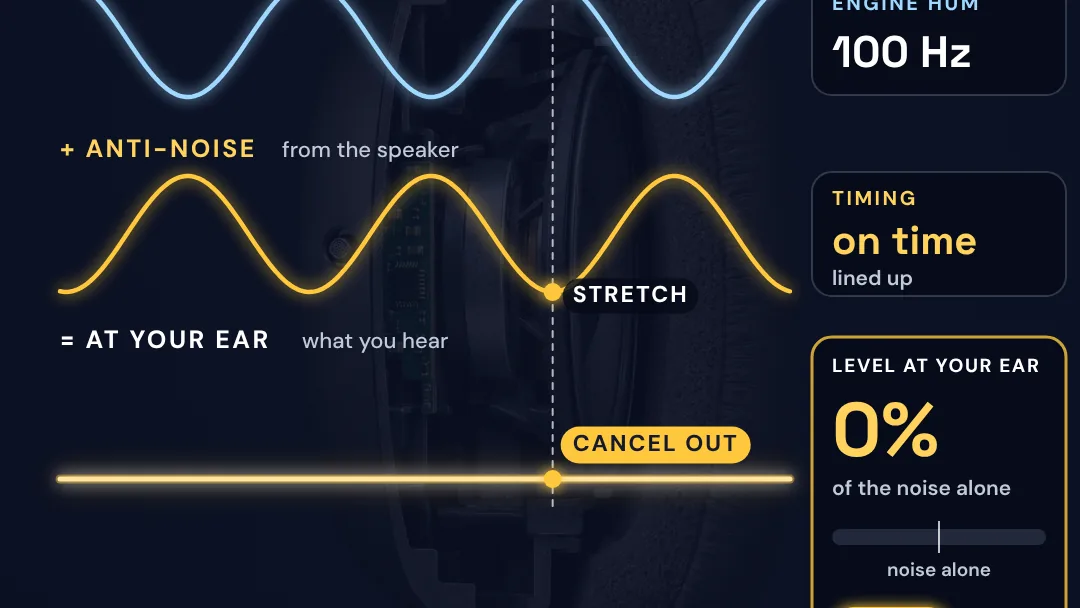 Interactive · Noise Cancelling LabHow do noise-cancelling headphones work?Sound waves add and cancel: play anti-noise against a hum.
 JournalHow does one buzz become every vowel?Your vocal folds make the same buzz for every vowel. The throat and mouth are a tube, and its resonances, the formants, decide whether you hear “ee” or “ah”.