Short · Space
Why does reusing a rocket make orbit so much cheaper?
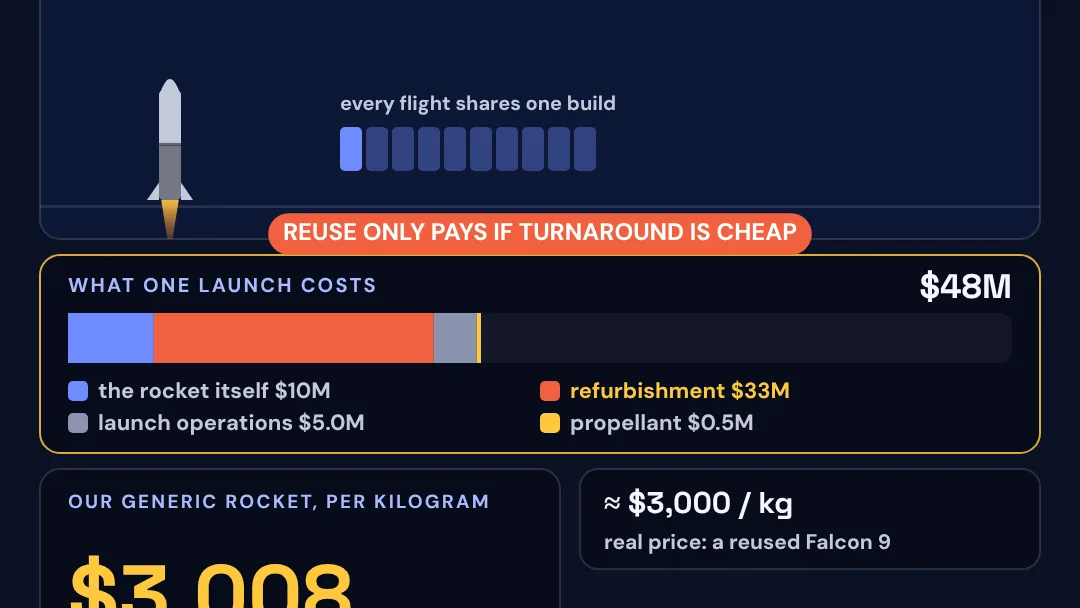
A rocket is an expensive machine wrapped around cheap fuel. The propellant is less than one percent of the cost. Throw the rocket away, and every launch buys a whole new machine. Land the booster, and its price is shared across every flight. That’s how a reused Falcon 9 got to about $3,000 a kilogram. But reuse only pays if turnaround is cheap: the Space Shuttle was reusable, and rebuilding it between flights pushed it past $50,000 a kilogram. In November, SpaceX caught a Starship upper stage for the first time. Reuse both stages, quickly, and the goal, not yet the price, is under $100 a kilogram.
Opens Reuse Ledger. Change the same thing yourself.

Transcript
A rocket is an expensive machine wrapped around cheap fuel. The propellant is less than one percent of the cost. Throw the rocket away, and every launch buys a whole new machine. Now fly it again. Land the booster, and its price is shared across every flight. That's how a reused Falcon 9 got to about three thousand dollars a kilogram. But reuse only pays if turnaround is cheap. The Space Shuttle was reusable, and rebuilding it between flights pushed it past fifty thousand dollars a kilogram. In November, SpaceX caught a Starship upper stage for the first time. Reuse both stages, quickly, and the goal, not yet the price, is under a hundred dollars a kilogram. Follow for more explainers like this.
Learn more
Learn more about rocket reuse
This model keeps the ledger for one generic rocket. The guide adds the real prices, why the Space Shuttle never got cheap, what landing costs and what Starship’s first upper-stage catch does and does not show.
- Topic guideWhy does reusing a rocket make orbit cheaper?Where the money goes, spreading the cost, the Shuttle and Starship.
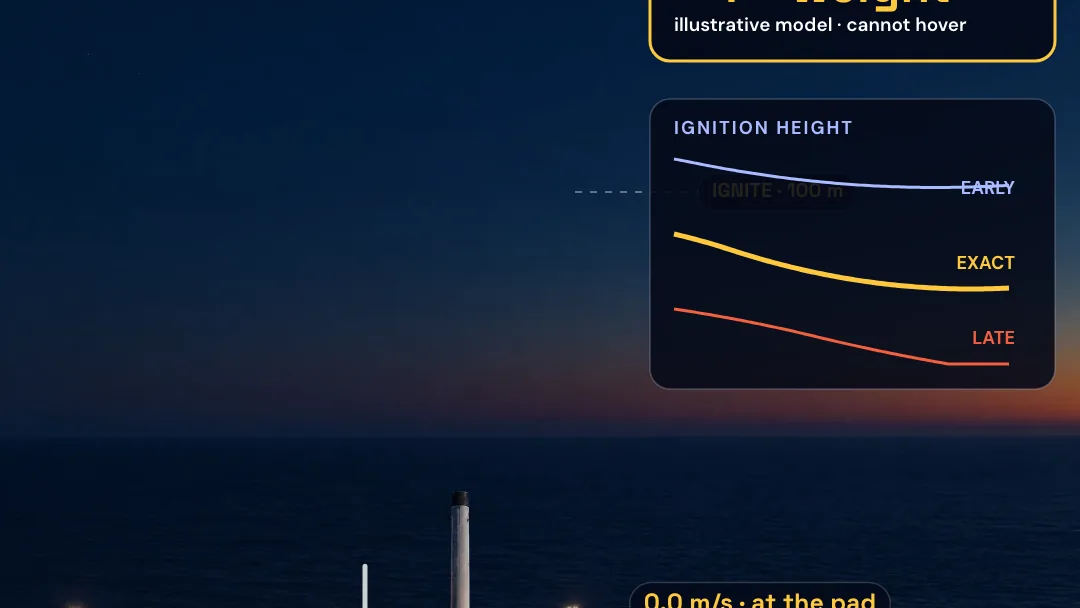 Interactive · Landing BurnWhen should a falling rocket light its engine?How a booster gets back: the landing burn.
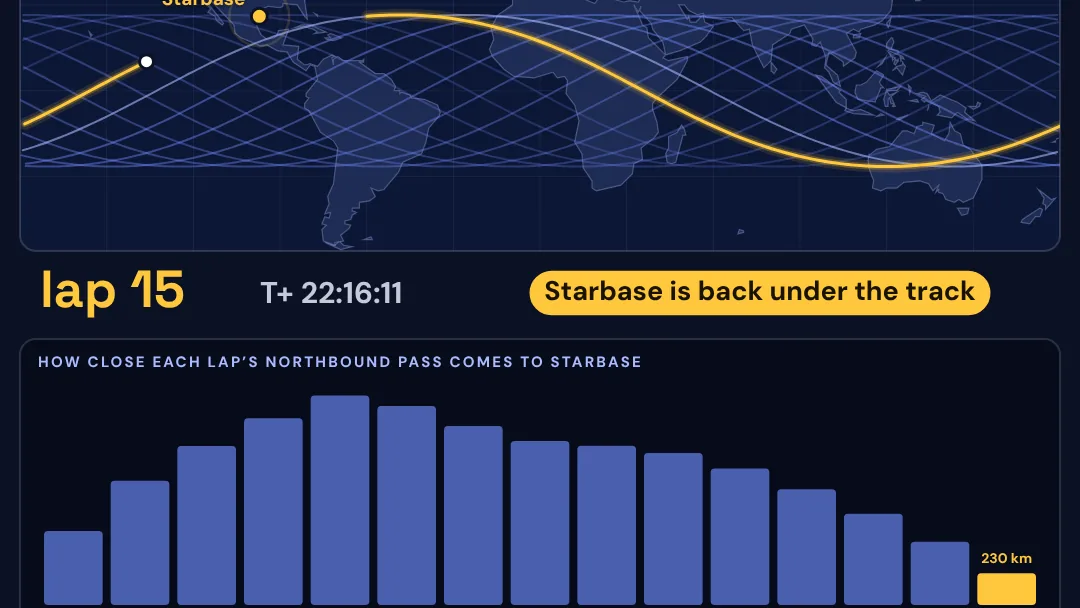 Interactive · Double CatchHow do you catch both halves of a rocket?How a tower catches both halves of Starship.
 JournalWhy does reusing a rocket make orbit so much cheaper?Propellant is under one percent of a launch. The rest is the machine, which is why landing it changes the price of orbit, and why the Shuttle never did.