Before Blue Origin built rockets, it studied the alternatives. Neal Stephenson was there from its start in 1999 until the end of 2006, when, he says, the work was “studies on different alternative launch technologies,” not yet engineering. On Core Memory episode 94, Ashlee Vance asked him about the radical launch ideas still around today, and he ran through the ones they had looked at: guns, slings, giant steel whips and a very tall tower. We built an interactive tool and a short film for each.
Try it yourself, starting with the tower, or watch the tower film first. The other three are below, and the Ways to space guide compares all four.
The tall tower
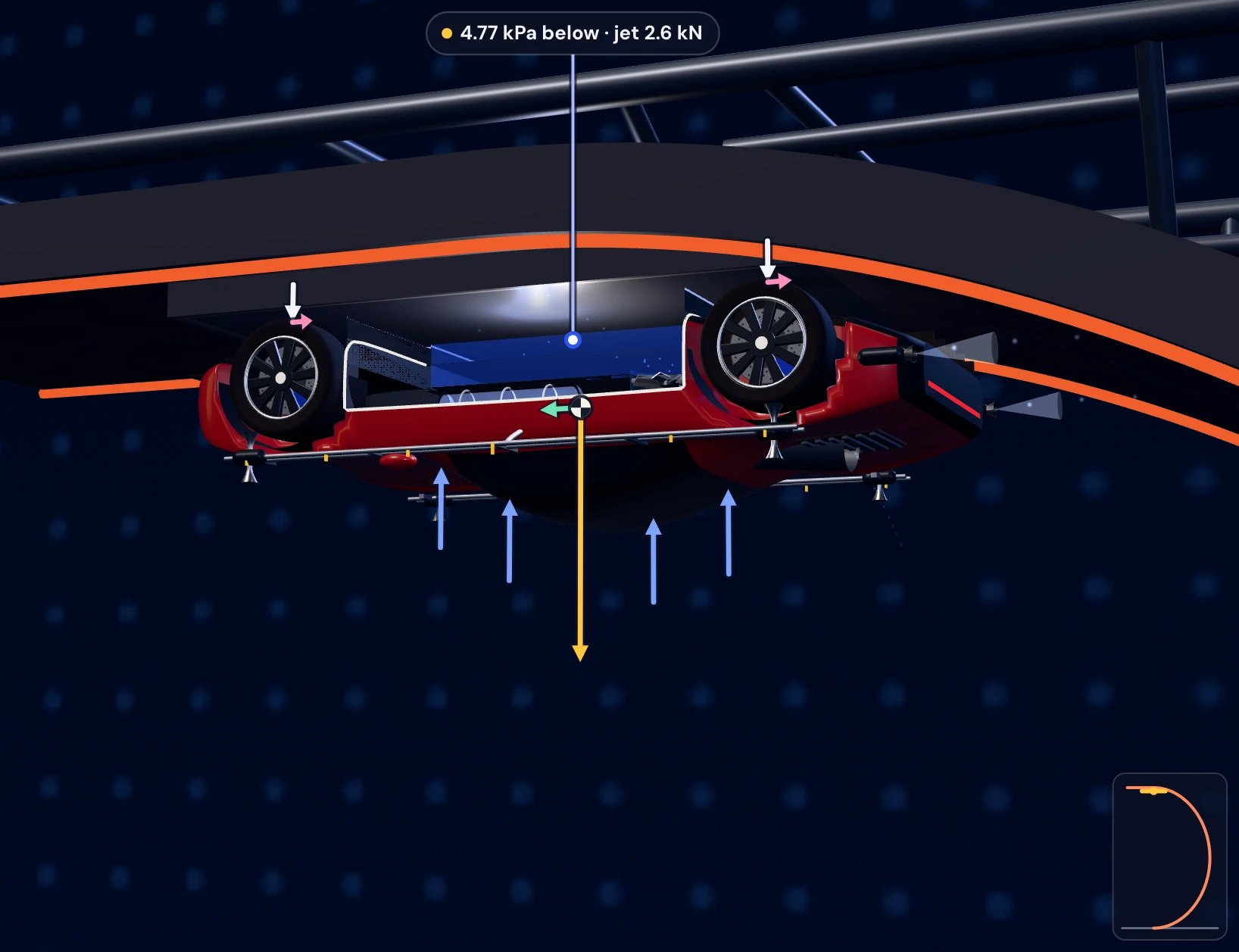
“The one that I still think somebody ought to build is the tall tower.” Stephenson credits a paper by Geoffrey Landis that listed every advantage of launching from the top of a tower, some of them far from obvious: a vacuum-style engine bell that is more efficient, a rocket that no longer has to survive its own noise, and a lower peak air load, so less weight goes into structure. Add them up, he said, and “you could get twice as much mass into LEO.” Raise the tower yourself, or read Why launch rockets from a 20 km tower?
The sling
SpinLaunch throws its projectiles: an arm spins them up in a vacuum chamber and lets go at up to 4,700 mph. Stephenson knew the idea under an older name, the Slingatron, a spiral track on a gyrating table. “It’s a big gun, basically.” The catch is that the force grows with the square of the speed, about 10,000 g at full speed. Spin the arm yourself, or read How does SpinLaunch throw rockets into space?
The space gun
Vance described Longshot, in Oakland, which wants to build “a 10 kilometer long space gun,” and Stephenson compared it with “a ramjet accelerator that was developed at the University of Washington”. His warning covers every gun and sling: “all big gun systems have got problems … around what happens when you meet the atmosphere.” A long barrel brings the g-load down to what rugged satellites can take; the air at the muzzle is still a wall. Stretch the barrel yourself, or read Why build a 10 km space gun?
The whip
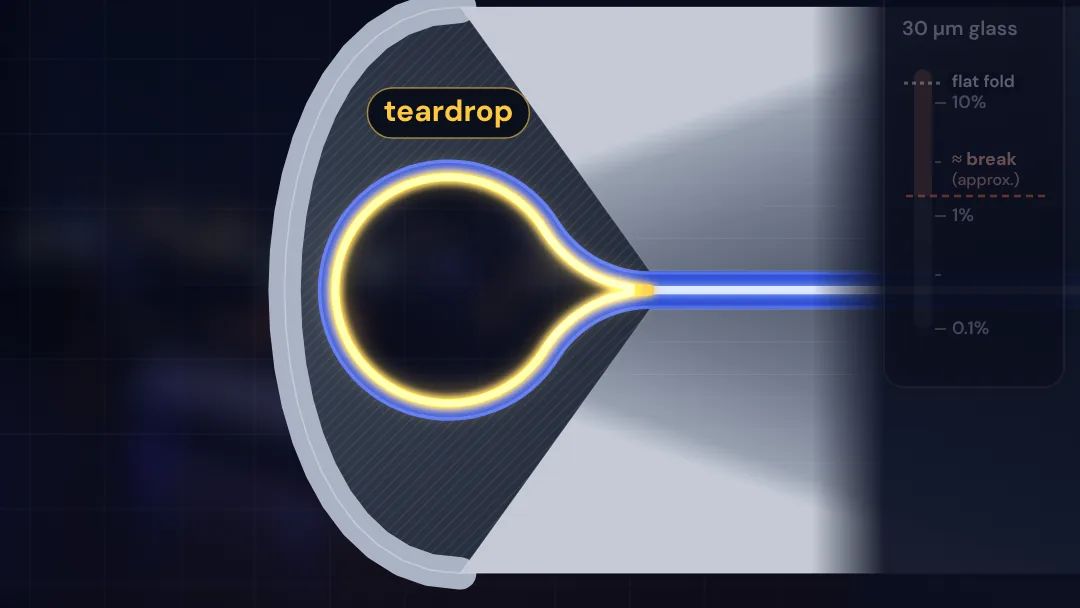
“As a kind of almost tongue in cheek thing, I looked at gigantic steel bull whips, which is still a topic I’m obsessed with.” He has since written five Substack essays on the physics of long, flexible things that move. A whip’s crack is a tiny sonic boom, made by a loop that speeds up as the whip thins. Not enough to reach orbit, he says, but a head start still saves fuel. Thin the tip yourself, or read Why does a whip crack?
Why none of them flew
The team also looked at laser launch and electromagnetic propulsion. What stopped radical ideas was not physics but business. In those years, Stephenson said, the business of space was mostly launching huge, very expensive satellites to geostationary orbit, where the rocket’s price was “kind of a round off error.” Those satellites need insurance, “and you’re not gonna get insurance on a brand new launch … a radically new launch concept.” A delay of a few weeks is a few weeks of a satellite earning nothing. “We could come up with the coolest new idea imaginable, and it would never go anywhere commercially because it would be uninsurable.” Blue Origin chose rockets. Stephenson still hopes someone builds the tower, partly because, as he put it, it goes to the question of “why don’t we build big things anymore.”
Quotes are from Neal Stephenson’s conversation with Ashlee Vance on Core Memory episode 94 (chapter “Rockets, Guns and Giant Towers”), lightly trimmed for reading.
Sources & further reading
Make the next question an experiment.
Browse independent creators who make big ideas visible.
Find an explainer